
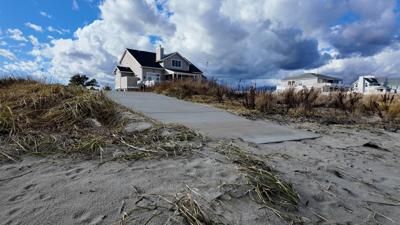
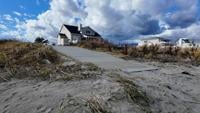

PRIME HOOK BEACH, Del. - A controversial concrete dune crossover at Prime Hook Beach is now one step closer to a final decision after a public hearing Monday in which the property owner made his case to keep the structure.
The hearing comes after the Delaware Department of Natural Resources and Environmental Control ordered the crossover removed earlier this year, citing violations of coastal construction rules and potential impacts to sensitive dune systems. As previously reported by WBOC, the roughly 10-foot-wide, 118-foot-long structure was built without a permit and later denied after-the-fact approval, with DNREC also pointing to environmental concerns.
Now, the owner, David Heffernan, is appealing that decision, arguing the structure should remain in place despite acknowledging he should have obtained a permit before construction. During the April 6 hearing, Heffernan told officials the crossover has been in place for more than a year without damaging the dune and, in his view, actually helps limit foot traffic across sensitive areas. He also noted that a similar wooden crossover existed at the site for more than a decade before it was converted to concrete.
Much of the testimony focused on safety and emergency access. Heffernan and several witnesses said the crossover provides faster access for first responders, including fire crews that may need to draw water from the bay in an area without fire hydrants. Supporters argued that seconds matter in emergencies and pointed to past incidents where responders were called to the beach.
One renter described being swept far into the bay while kayaking and needing to be rescued by emergency crews, including a helicopter. She said improved access could help speed response times in similar situations.
Accessibility was another major theme during Monday’s hearing. Witnesses said the concrete structure makes it easier for elderly residents, people with disabilities, and families with mobility challenges to safely reach the beach. They described the previous wooden structure as harder to navigate and more prone to deterioration, while the current crossover provides a smoother and more stable path.
Heffernan and his supporters also pushed back on DNREC’s environmental concerns. The agency’s denial cited the potential for increased vehicle traffic over dunes and possible impacts to wildlife such as horseshoe crabs and red knots. During the hearing, however, supporters argued there is no evidence the structure has caused environmental damage, saying dune grass is continuing to grow and the area remains stable. They also claimed the defined crossover may actually reduce harm by preventing people from walking directly across the dunes in multiple locations.
In an effort to find middle ground, the homeowner proposed several possible compromises. He suggested the state could allow the structure to remain under a conditional permit with monitoring, modify the portion over the dune to use wood instead of concrete, or require its removal if any future problems develop. He argued there is little risk in allowing it to stay unless issues arise.
The hearing record will remain open through April 13, giving parties time to submit additional information. After that, DNREC will review the record and make a recommendation to the agency’s secretary, who will issue a final written decision. That ruling will determine whether the crossover can remain in place or must be removed as originally ordered.