
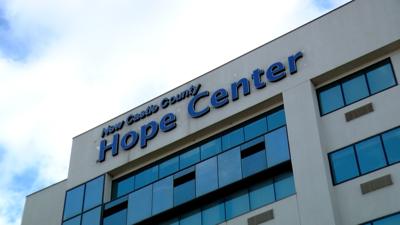

DOVER, DE- The Delaware State Housing Authority is looking to expand the Hope Center model from New Castle County into Kent and Sussex counties to address gaps in services and resources for people experiencing homelessness. The agency is seeking $4 million in its fiscal year 2027 budget to help establish the centers downstate.
The Hope Center in New Castle County has become a model for housing and supporting people experiencing homelessness, providing shelter, services, and navigation resources all in one location. The plan for Kent and Sussex counties would replicate this model, using existing buildings rather than constructing new facilities, wherever the new centers are ultimately established.
DSHA Director Matthew Heckles says the Hope Center model is designed to provide support to individuals across Delaware who might otherwise go without necessary services.
"There are too many people falling through the cracks. And so when I think about the Hope Center, what I'm really thinking about is a place for people to go when they don't fit into the criteria that the rest of the system is looking for."
Heckles noted the urgent need to bring these services to Kent and Sussex counties, where access to support for those in need is especially limited.
"There aren't enough shelter beds, there aren't enough programs to help people avoid becoming homeless, eviction prevention programs and things like that. And there certainly aren't enough exit strategies out of the homelessness system."
The $4 million request would allow DSHA to pursue Hope Centers in Kent and Sussex counties, supplementing the $23 million earmarked for the Housing Development Fund, which supports affordable rental units and homelessness prevention programs.
Milford Mayor Todd Culotta says that while he fully supports efforts to help the most vulnerable, he cautions that there is a fine line between helping and enabling.
"We want people to get on their own feet and support themselves. And that's the point of the centers. When there are lax rules or not clearly defined goals, sometimes that can create a dependency situation that then doesn't really help anybody and causes more problems."
He also emphasized that the center's approach and setup are critical to its success and to its impact on the community and the Lower Delaware.
"It's never the center itself. It's how it impacts the surrounding environment that can become a problem. And those are hard to control once they're in place."
While Milford sits between Kent and Sussex counties, Culotta says the city’s rapid growth may complicate hosting a Hope Center, even though no locations have been decided yet.
"We're growing like crazy. The Hope Center took advantage of a closed hotel. We don't have anything like that around us right now. We are growing. You know, like I said, probably 200-500 residents per year."
State Senator Eric Buckson says a downstate center could have a meaningful impact, but it must prioritize a treatment-first approach over a housing-first approach.
"What you see on the streets right now from many folks is an illness problem. These folks are mentally ill or addicted to drugs. Both of those are diseases. You need a policy that says shelter the sick and house the healthy. So that's what I think the focus has to be."
He emphasized that prioritizing treatment could have lasting benefits for both individuals and the broader community.
"The families who have loved ones on the streets, the communities who see it every day, are the ones that will benefit greatly from a Hope model that seeks treatment first, that there then begins to drive down the numbers of folks that are ill on the streets, and then you can identify who on the streets left that actually is dealing with a housing issue and isn't just choosing to be there."
Buckson also noted that while the plan is based on New Castle County's model, modifications will be necessary to address the specific needs of lower Delaware, particularly for those dealing with illness and addiction.
"With respect to the New Castle Hope Center, there are things that they're doing that I think could be replicated. But no, I would not look for an exact model such as that because it again focuses a lot on the homeless situation and what I see on the streets of Dover, the streets of Georgetown or other towns — many times those folks are dealing with addiction and mental illness."
Heckles says the $4 million request is needed to bring Hope Centers to Kent and Sussex counties, adding that Governor Meyer has been supportive of addressing homelessness across the state.
I think last year's budget was the largest regular budget the state has approved for housing purposes. I expect this year's budget will be at that level or higher. This governor recognizes that this is a crisis, that affordability is a big issue for families all across the state.”
However, Buckson says the state can repurpose and redirect money it already has to support initiatives in this space.
"We have money coming to this state outside of Delaware's budget right now that if we have a focus, a laser focus, can directly impact it in the area of detoxification, in the area of robust inpatient treatment facilities, we could repurpose some of these underpopulated prisons, redirect the funds and create committed care that leads to robust recovery."
Leaders agree that lower Delaware needs more support for people experiencing homelessness, but deciding the best approach remains a challenge.