
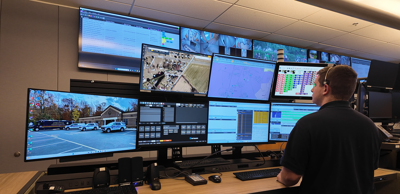

DELAWARE - Delaware is preparing to modernize its emergency communications system with the rollout of Next Generation 911, a statewide upgrade officials say will help dispatchers respond more quickly and accurately when people call for help.
Governor Matt Meyer recently signed legislation supporting the transition, which will replace the state's aging emergency communications system with newer technology capable of handling voice calls, text messages, photos and videos from callers.
State officials say the upgraded system will also improve caller location accuracy, strengthen communication between dispatchers and first responders, and make Delaware's emergency communications network more resilient during major emergencies and natural disasters.
To help pay for the transition, the monthly 911 surcharge will increase from 60 cents to 90 cents per covered phone line beginning Oct. 1, 2026. Officials say it marks the first increase since 2001 and will fund new equipment, cybersecurity, software, training and infrastructure needed for the statewide rollout.
According to the state, Delaware's emergency dispatchers answer more than 700,000 911 calls and process at least 20,000 text-to-911 messages each year.
At the Kent County Emergency Communications Division, officials say the investment is about giving dispatchers better tools when every second counts.
"This technological advancement will allow the information to come in quicker and much more accurate information," said Chief John Tinger with the Kent County Department of Public Safety. "Our legacy system, we kind of could figure out where you are. With this new Next Generation, we can pinpoint your location and we can get the people there to help you much quicker."
Tinger said the new technology will improve the information telecommunicators can gather and quickly pass along to police, firefighters and EMS crews before they arrive on scene.
"Every call starts with the 911 telecommunicator, and this investment assures that the first link in the chain of survival is as strong, reliable and technologically advanced as possible," he said.
The county has already incorporated several advanced communication tools, including Text-to-911 and automatic text translation for callers communicating in other languages.
Robert Watts, who oversees the Kent County Emergency Communications Division, said those capabilities continue to expand.
"We've had text messaging now for probably around eight years," Watts said. "We recently rolled out the ability to text a foreign language and automatically translate to English for our staff."
Watts said one of the biggest improvements with Next Generation 911 is more precise location information for callers using cell phones.
"Next generation has increased the accuracy of the location from the wireless 911 callers on their cell phones," he said. "That's very beneficial in many circumstances, including Route 1, where folks traveling through from out of state aren't exactly sure where they are."
While the upgrade comes with a 30-cent monthly surcharge increase, many Delaware residents say it's a worthwhile investment.
"If it's an extra 30 cents a month and it's going to save more lives, then I think it's worth the extra 30 cents a month," said Dover resident Victoria Lech.
Lech said having dispatchers automatically receive a caller's location could also ease some of the stress people experience during emergencies.
"I know when I call 911, I'm frazzled," she said. "If they can somehow get my location, that would take a lot of stress off the caller, too."
State officials say the transition to Next Generation 911 is expected to roll out later this year as Delaware continues upgrading emergency communications infrastructure statewide.