
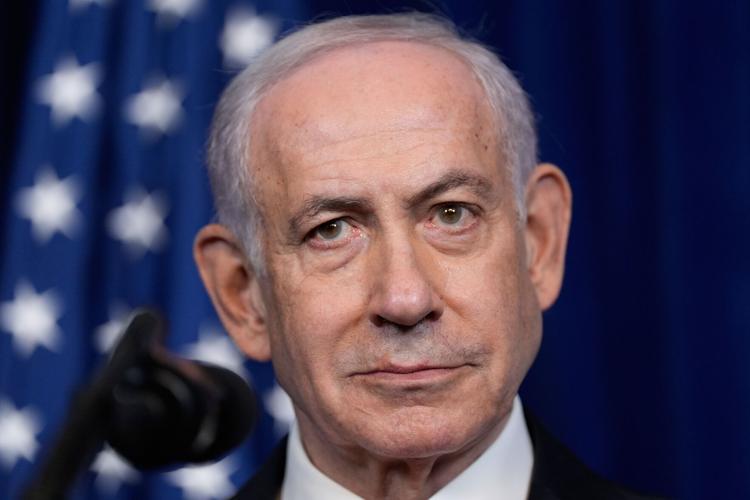

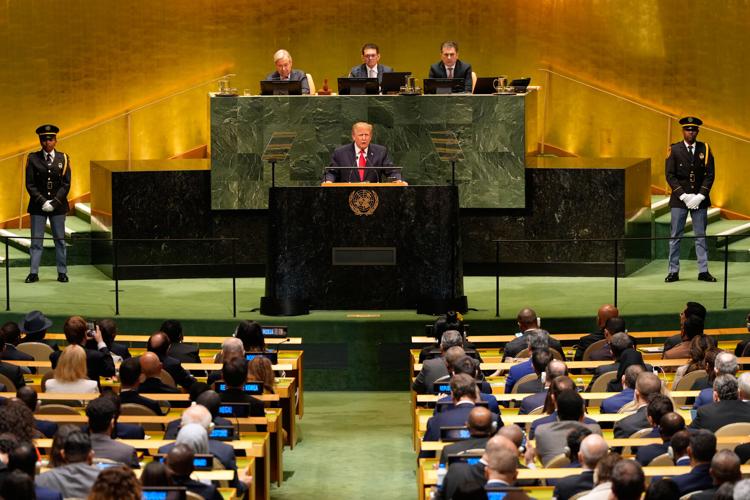
JERUSALEM (AP) — Israeli Prime Minister Benjamin Netanyahu began the year declaring that he stood “shoulder to shoulder” with U.S. President Donald Trump as the two countries launched a war against Iran. But this week, as world leaders gather in New York for the United Nations General Assembly, there are no plans for the two men to be in the same room, or even in the same city.
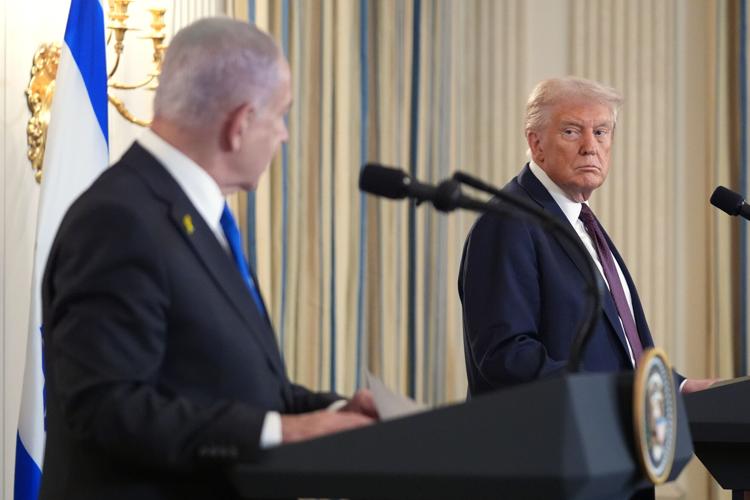
As the war with Iran has dragged on, Trump and Netanyahu have split over how to prosecute it, straining a relationship between the two allies. Netanyahu has also faced global criticism both for Israel’s war in Gaza and settler violence in the occupied West Bank. Instead of a packed itinerary, Netanyahu, who arrived on Thursday, was scheduled to meet only a handful of leaders before giving his speech.
The apparent snub underscored how badly the relationship between Trump and the prime minister has fractured. Many in Washington associate Netanyahu with the increasingly unpopular fight with Iran and Trump has labored to avoid the appearance that the Israeli leader forced him into a war that Trump said would be a “little excursion” lasting only weeks.
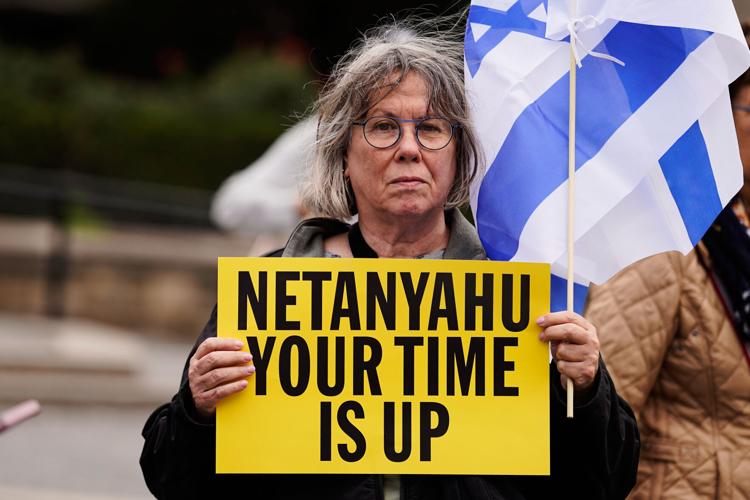
Netanyahu's brief visit also demonstrated how isolated he is globally, three years after launching a punishing war in Gaza in retaliation for the Hamas-led attacks on Oct. 7, 2023. He faces reelection next month in polls widely seen as a referendum on his responsibility for the security failures surrounding the attacks and his ability to defend its reputation on the world stage.
Day after day this week, as other heads of state have stepped to the podium, many have harshly criticized Israel's actions, particularly in Gaza. Ahead of his visit, New York City Mayor Zohran Mamdani urged his arrest, saying the U.S. should honor a warrant for Netanyahu issued by the International Criminal Court. He is wanted for war crimes and crimes against humanity allegedly committed in Gaza, though the U.S. is not a member of the court and New York City lacks the authority to arrest him.
Still, the prime minister is a master showman, and often turns to props and visual aids during speeches in flawless English to drive home his message. Last year at the summit, scores of diplomats walked out while he was speaking. But that is unlikely to faze him, as he speaks primarily to an audience of Israeli voters.
“He times his speech so that it is broadcast here in primetime,” said Michael Oren, a former Israeli ambassador to the U.S. who served under Netanyahu and lives in Israel.
But experts say without the usual high-profile meetings, the trip could hurt Netanyahu’s image at home.
“I think the trip is a mistake, because it exposes his weaknesses,” said Eytan Gilboa, an expert on U.S.-Israel relations and professor at Israel’s Bar-Ilan and Reichman universities.
While many Israelis view the U.N. as hostile toward Israel, he added, the fact that he could not secure a meeting with Trump only highlights how poorly Netanyahu has managed the relationship with his nation's strongest ally.
In 2023, U.S. President Joe Biden was reluctant to host Netanyahu at the White House but still made time to sit down with him on the sidelines of the U.N. General Assembly.
“Israel cannot survive without the United States,” Gilboa said.
The slight in New York follows sharp criticism from Mike Huckabee, the U.S. ambassador to Israel and a longtime supporter of Israeli settlements, of the settlers attacking Palestinian communities in the West Bank. In unusual remarks for an ambassador, he referred to the attackers as “terrorists."
“It’s significant of a deeper rift,” Oren said of Netanyahu's slim itinerary.
When Trump was in New York on Tuesday, he met with an array of leaders from Arab nations, as well as from Denmark, Japan, Greenland, Ukraine and Venezuela, among others. He then quickly returned to Washington to roll out the red carpet for Chinese President Xi Jinping.
For a leader who likes to portray himself as a global statesman, it is a “big, big miss for him at a time where he can’t afford misses,” Natan Sachs, senior fellow at the Middle East Institute in Washington, said of Netanyahu.
On other past trips, Netanyahu met with a slate of high-profile leaders, including Ukrainian President Volodymyr Zelensky, Turkish President Tayyip Erdogan and then-German Chancellor Olaf Scholz.
This year, though, the prime minister's office said “many world leaders” asked to meet with Netanyahu during his brief visit, but that he was on a “tight schedule” and needed to return to Israel before the start of the Jewish holiday of Sukkot, which begins at sundown on Friday.
On his schedule, the statement said, were leaders from Argentina, Bolivia, Paraguay, Panama, Ethiopia, Greece, Slovenia, and Papua New Guinea.