
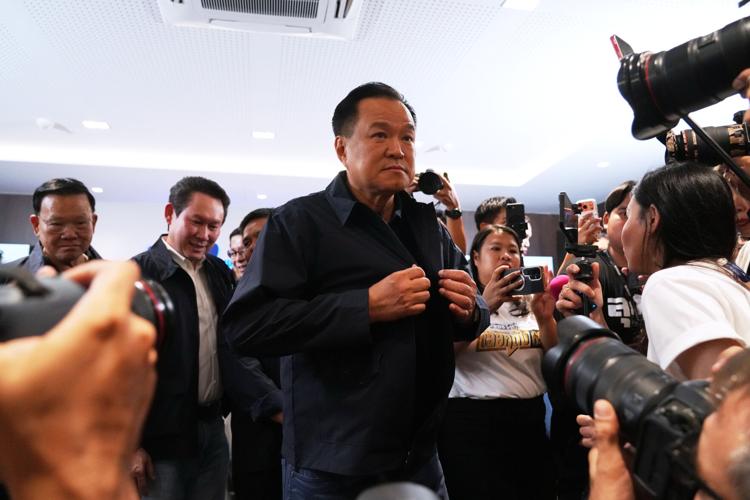
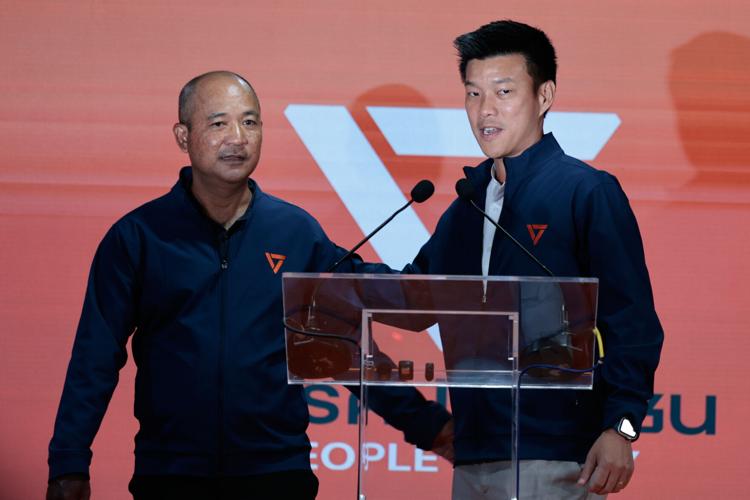

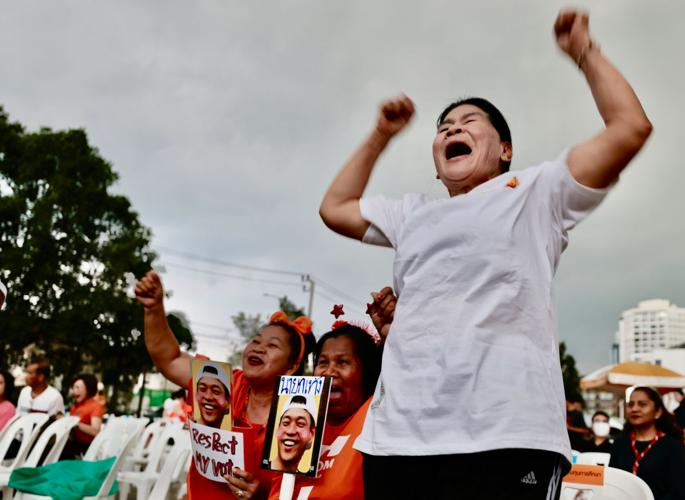
BANGKOK (AP) — The Bhumjaithai Party of Prime Minister Anutin Charnvirakul is on track to win the most seats in Thailand’s general election, according to unofficial results released by the state Election Commission after about 94% of polling stations had reported Monday.
It’s the first decisive victory of a conservative party in Thailand in years. Sunday’s election came against a backdrop of slow economic growth and heightened nationalist sentiment. Voter turnout stood at around 65%, significantly lower than in the 2023 election.
The commission’s running count, shown on its website, indicated that Bhumjaithai won about 193 seats in the 500-member House of Representatives.
The House comprises 400 lawmakers directly elected based on constituencies, while 100 others are chosen from “party list” nominees, who gain seats according to each party’s proportional share of the vote on a separate ballot indicating party preference.
A simple majority of 251 seats is needed for the body to elect a prime minister. The figures indicate Bhumjaithai will have to seek one or two partners to form a coalition government with Anutin returning as its head.
The progressive People’s Party, which had been tipped to win the most seats, was holding down second place with 118 seats. It swept all constituencies in Bangkok and a majority in the capital’s neighboring provinces. The party also took a lead in the party list totals, taking about 3.8 million more votes on party list ballots than Bhumjaithai.
Pheu Thai, the populist party representing the political machine of former Prime Minister Thaksin Shinawatra, trailed behind with 74 seats. It’s considered a disappointing result for a political force that has often dominated Thai elections.
It’s widely believed that Pheu Thai will accept, if asked, to join a coalition government led by Bhumjaithai.
Anutin has been prime minister since last September, after serving in the Cabinet of his immediate predecessor, Paetongtarn Shinawatra, who was forced out of office for an ethics violation regarding mishandling relations with Cambodia. Anutin dissolved Parliament in December to call a new election after he was threatened with a no-confidence vote.
Subsequent border clashes with Cambodia allowed Anutin to recast himself as a wartime leader after his popularity initially slipped because of floods and financial scandals. His campaign focused on national security and economic stimulus.
While the result diverged from what earlier polls suggested, Bhumjaithai’s victory didn’t come as a surprise, said Napon Jatusripitak, director of the Center for Politics and Geopolitics at Thailand Future, a Bangkok-based think tank.
Beyond the nationalist boost from the border clashes, Napon said Bhumjaithai capitalized on traditional patronage networks outside Bangkok and major urban areas. He said the party strategically positioned itself as a natural home for well-connected local politicians and worked with provincial allies to avoid vote splitting.
“The result may have resolved a recurring dilemma in Thai politics, whereby conservative interests have repeatedly intervened to curtail democratic politics after losing at the ballot box. Whether this configuration produces genuine stability, however, remains to be seen,” he added.
Sunday’s voting included a referendum asking voters whether Thailand should replace its 2017 military-drafted constitution.
The vote wasn’t on a proposed draft, but rather to decide whether to authorize Parliament to begin a formal drafting process, which would require many further steps before coming to fruition. About 60% voted in favor, delivering a clear mandate for starting work on a new draft.