
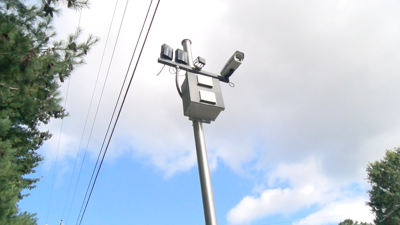


OCEAN CITY, Md. - A Maryland bill aimed at protecting pedestrians, bicyclists and other vulnerable road users could eventually bring speed cameras to parts of Ocean City if it becomes law. House Bill 256, known as the Vulnerable Road User Protection Act of 2026, would allow the State Highway Administration to place speed monitoring systems in state-designated safety corridors identified as high risk in Maryland’s vulnerable road user safety assessment. The bill has already passed the House and is now in the Senate Judicial Proceedings Committee.
State Highway Administration spokesman Charlie Gischlar told WBOC the agency strongly supports the legislation and sees it as a safety tool for people outside of cars.
“This bill is going to help a lot of people,” Gischlar said. “We want all of our highway users from people driving vehicles to the big rigs to motorcycles to pedestrians, scooter riders, bicyclists. We want everybody to get to and from their destination in one piece and safe.”
According to SHA and the state’s 2025 vulnerable road user safety assessment, Worcester County already has identified corridors that could fit into the discussion, including stretches of Coastal Highway in Ocean City and Baltimore Avenue. Gischlar said those areas already reflect the kinds of places where walkers, cyclists and vehicle traffic mix closely, especially as tourism ramps up. SHA’s fiscal analysis says the bill would authorize cameras on state highway segments identified as safety corridors and would allow local governments to operate them too if SHA grants permission.
Gischlar also pushed back on the idea that the measure is mainly about raising money. Under the bill’s fiscal note, revenue collected through SHA-operated safety corridor cameras would first cover implementation and administrative costs, with remaining funds going to the Transportation Trust Fund for highway safety purposes and SHA system preservation.
Still, not everyone is convinced cameras would be the most effective answer in Worcester County.
Worcester County Commission President Ted Elder said he can see the idea working in certain places, including parts of Ocean City, but believes local conditions should drive those decisions. He said the larger challenge is getting drivers to slow down as they approach a crowded beach town where cars, pedestrians and cyclists all compete for space.
“We need to really hammer in the message that we got to get you slowed down because we are coming into a very tight resort area for traffic,” Elder said.
Elder said he believes local governments know their trouble spots best and should have a major role in deciding where any future enforcement would go.
If the bill passes, the process would not mean cameras appear overnight. SHA’s fiscal note says corridors must first be identified through the vulnerable road user safety assessment, and citations cannot be issued until required signage is installed and at least 15 calendar days have passed. The bill’s effective date is Oct. 1, 2026.
For Ocean City, the debate may now come down to a simple question: whether speed cameras are the right next step in the state’s effort to make some of its busiest corridors safer.