
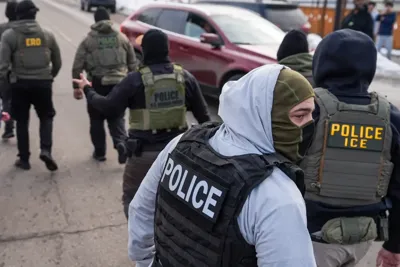

MARYLAND - A new Maryland law restricting when law enforcement officers can cover their faces while on duty took effect Thursday, drawing mixed reactions from Eastern Shore law enforcement and civil rights leaders.
Senate Bill 1 generally prohibits uniformed law enforcement officers from wearing opaque face coverings while performing their duties and requires identifying information to be visible. The law includes exceptions for circumstances such as undercover work and certain health, safety and tactical needs. The measure was approved by Gov. Wes Moore in May and took effect Oct. 1.
The law also attempts to apply its requirements to federal law enforcement officers, an issue that is now being challenged in court.
The U.S. Department of Justice sued Maryland on Thursday, arguing state and local governments cannot regulate what federal officers wear or require them to identify themselves in the manner prescribed by state law. The department also argues the requirements could put federal officers and their families at risk.
Wicomico County Sheriff Mike Lewis said the law is not expected to significantly change how his deputies operate.
"It's not going to affect us a whole lot at all," Lewis said.
Lewis said he understands concerns about officers concealing their identities but also understands why some law enforcement agencies have used face coverings when officers or their families could be targeted.
"I'm all about accountability, and I'm all about transparency," Lewis said.
Worcester County Sheriff Matt Crisafulli said he opposes the law, arguing decisions involving protective equipment and officer conduct should generally remain with individual law enforcement agencies.
"I think what the law does is it takes away the discretion of the men and women in Maryland's law enforcement," Crisafulli said.
Crisafulli said the Maryland Sheriffs' Association and Maryland Chiefs of Police Association formally opposed the legislation. He said agencies already have policies and disciplinary procedures in place to hold officers accountable.
Supporters of the law say requiring officers to show their faces and identification can increase public trust.
Monica Brooks, president of the Wicomico County NAACP and a state representative for Eastern Shore NAACP branches, said the legislation gives people a clearer way to identify officers during encounters with law enforcement.
"Black communities know what masked enforcement means: fear, and no one to hold accountable. Now everyone including our immigrant neighbors know it too," Brooks said. "When you can see an officer's face, name and badge number, you can hold them accountable when they step out of line."
We Are CASA also supported the legislation during the General Assembly session. The organization said its immigration enforcement hotline received more than 2,000 calls during the final six months of 2025, with many callers referencing encounters involving masked officers. CASA argued the practice can create fear and make it difficult for families to determine who detained someone or where they were taken.