
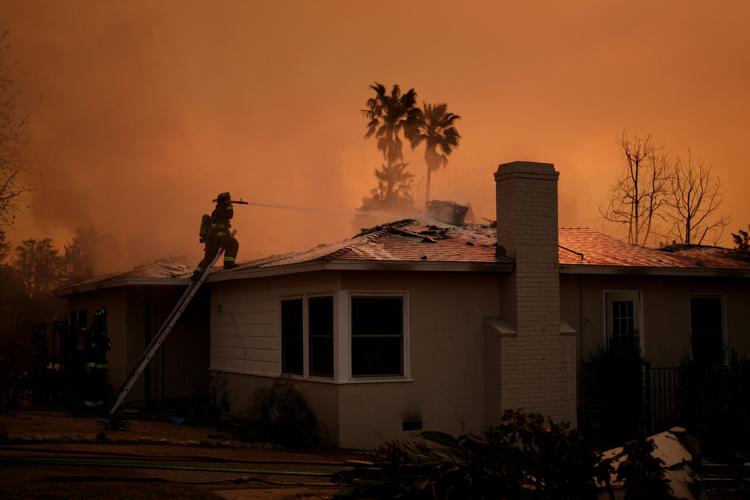
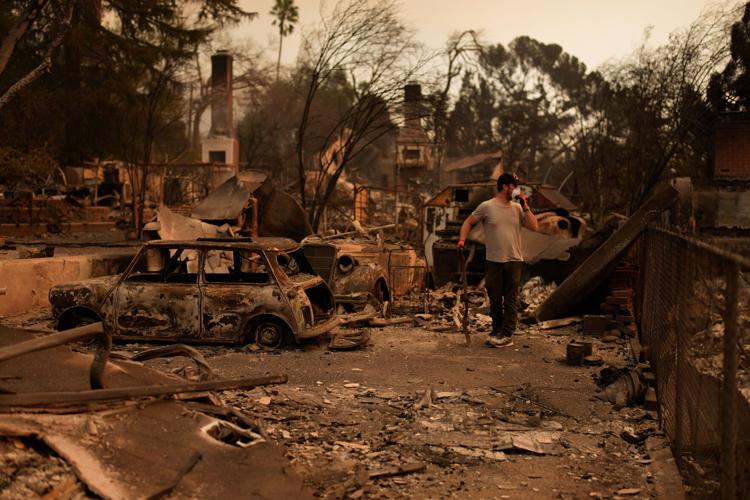
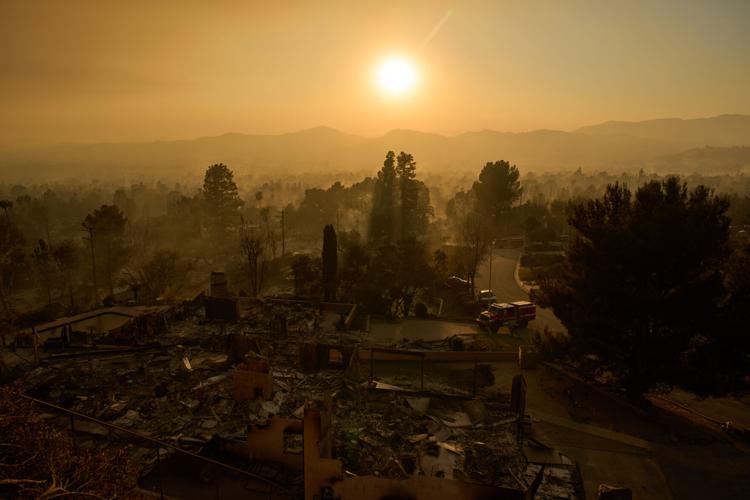
LOS ANGELES (AP) — At the height of the Los Angeles fires in 2025, millions of residents were exposed in a 24-hour period to toxic lead levels from smoke that were 80 times higher than the typical background level, according to a new study.
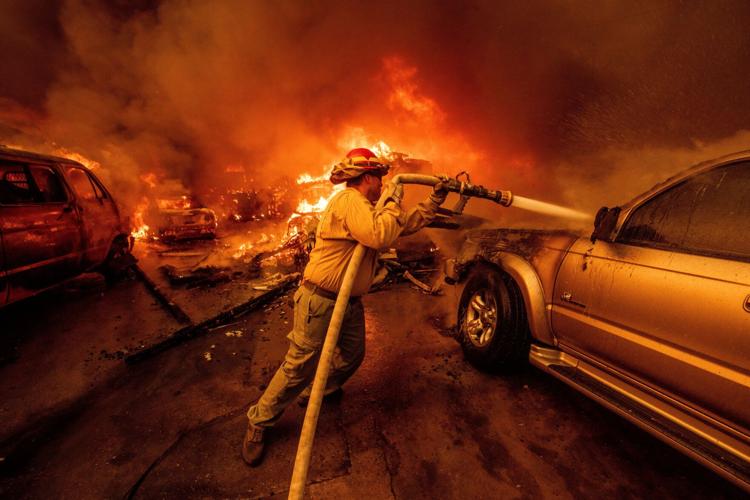
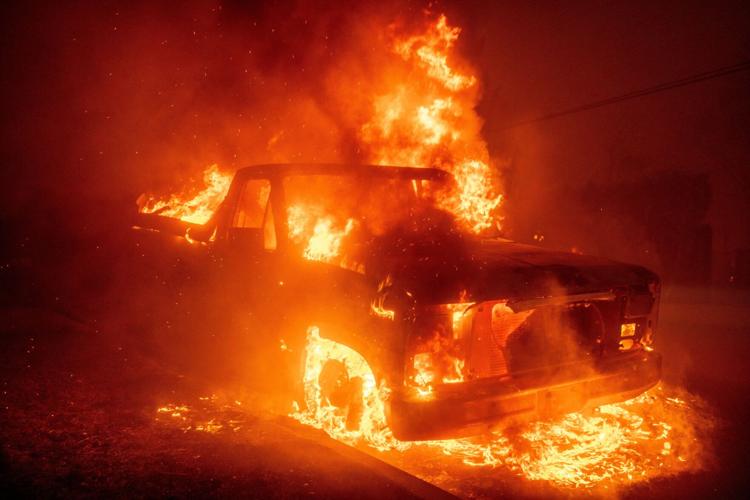
Researchers from the California Institute of Technology compared the chemical composition of smoke from the Eaton Fire with that of a wildfire and found that the urban plume had more lead, arsenic and halogens (which include chlorine and bromine) linked to burning vehicles, building materials and electronics.
“The main, key finding is really that wildfire smoke is very different fundamentally from the urban smoke,” said Nga Lee “Sally” Ng, an author of the study published Wednesday in the journal Science Advances. With the new technology they used to measure what was in the smoke, they were able to “actually see the very detailed component of these particles that we are breathing.”
Co-author Haroula Baliaka said understanding the different chemical compositions of smoke from an urban versus a wildland fire helps bridge a missing gap in research. Wildfires are growing larger, more intense, faster-moving and more frequent largely because of drier and warmer weather associated with human-caused climate change. As urban growth and climate change push more fires into cities, researchers said monitoring and emergency response will have to adapt.
Ed Avol, professor emeritus in the Keck School of Medicine at the University of Southern California who has researched the health effects of air pollution for decades, said significant exposure to heavy metals is consistent with what he'd expect, “but certainly surprising because we haven’t been able to document this sort of thing.”
“One of the real advantages of this study is that it had the opportunity to make measurements sort of hour-by-hour across the sampling network. And typically we make measurements of airborne particulates and so forth a couple of times a week, at best,” said Avol, who wasn’t involved in the study.
Thousands of structures burned, releasing toxic chemicals
The two wind-whipped infernos in Altadena and the Pacific Palisades that ignited on Jan. 7, 2025, killed at least 31 people and destroyed more than 16,000 structures, mostly homes, and everything in them — cars, paint, furniture, chemicals under sinks and more. Millions of people were exposed to smoke, which across the entire United States has been linked to tens of thousands of deaths annually. A recent study found that metal mixtures in the leftover smoke, ash and debris from the deadly 2023 Maui wildfires were harmful to the lung health of people living nearby long after the burning ended.
During the fires, researchers measured trace elements of fine particulate matter, or PM2.5, every hour reported by instruments in the Atmospheric Science and Chemistry mEasurement NeTwork ( ASCENT ), a relatively new network of air quality monitors across the U.S. that measures the size and chemical composition of these particulates in real time. Ng said ASCENT is the U.S.'s first measurement network able to measure the chemical composition of airborne particles in real time.
Researchers were able to see what chemicals were in the smoke, track how its composition changed over the fire's course, and distinguish emissions coming from burning structures. From there, they estimated how many people across Los Angeles were exposed to the heavy metals, particularly lead, during the fire's first days.
They compared the typical value of lead before the fires and the chemical makeup of smoke from a 2024 fire in Riverside County that burned mostly vegetation with data from the Eaton Fire plume. Contrasted with the wildfire smoke, the plume from the LA fire contained 50 times more lead, three times more arsenic, and seven times more halogens. At the peak of burning, about 7 million people were exposed for 24 hours to lead levels more than 80 times what's typical.
Lead is a neurotoxin that can stunt children’s development, lower IQ scores and increase blood pressure in adults. Scientists still don’t know how short-term, high exposure to lead impacts human health. Arsenic exposure is associated with various cancers.
Yaguang Wei, assistant professor in the department of environmental medicine at Icahn School of Medicine at Mount Sinai who researches the health impacts of air pollution, wildfire smoke and severe weather, said their findings reinforced some conclusions of a recent study he co-authored that found, in part, that PM2.5 from wildfire smoke was more toxic than particulates from other sources.
“I think their findings are not surprising,” said Wei, who was not involved in the study. When fires burn properties, they're also burning “a lot of lead on your wall paint and the plastics and electronics and those are very toxic” when they burn, he said.
Monitoring, policies and emergency response need to adapt, experts say
Wei said the study has “important policy implications.” He thinks governments should take stronger actions to protect public health during these fires by investing in more wildfire monitoring and public alerts, and having more prescribed fires.
For Avol, the study is a reminder of our “strange and increasingly dangerous new world” where urban and wildland intersect — and increasingly catch fire.
“It reminds us to be cautious and be concerned and, you know, think about what we can do to minimize this. We’re not going to stop using all these materials containing metals and halogens and so forth in our homes,” he said. “How do we protect people from being exposed to that?”
The Associated Press receives support from the Walton Family Foundation for coverage of water and environmental policy. The AP is solely responsible for all content. For all of AP’s environmental coverage, visit https://apnews.com/hub/climate-and-environment