
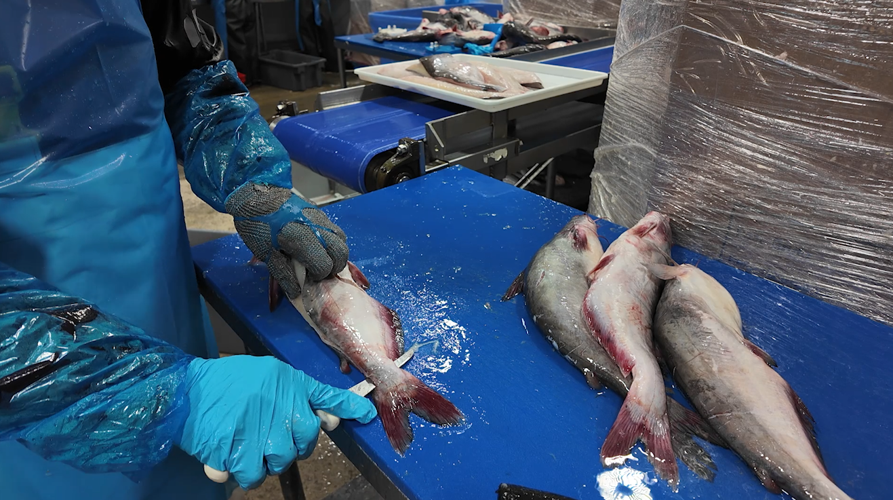

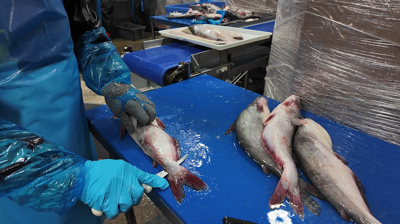
CHESAPEAKE BAY – Blue catfish, an invasive species that has spread through the Chesapeake Bay and preys on blue crabs and other native species, could soon face a bigger fight — thanks to new federal funding aimed at the processors trying to take them out of the water.
Congressman Andy Harris announced $6 million in U.S. Department of Agriculture funding that will go toward expanding processing capacity for invasive, wild-caught catfish. Processors could receive grants ranging from $50,000 to $2 million, money that can be used to expand facilities, buy new equipment and increase the number of catfish they're able to process.
Nick Hargrove is president of Tilghman Island Seafood, the largest blue catfish processing facility in Maryland. He estimates there are a billion pounds of blue catfish swimming in the water, and in the company's best year, it processed around 3 million pounds.
"I think we're currently losing the battle against blue catfish," Hargrove said.
Hargrove said the company's current capacity forces it to turn away watermen at certain times of year.
"We still have times of the year where we're turning down watermen, because we just don't have the capacity to take all their fish at the moment in our current facilities, and that’s how the fishery is going to grow," Hargrove said.
He said the new funding could be a turning point for processors.
"So this money is actually the first real substantial money that's been given to the processors," Hargrove said. "You know, once you can get the processing up off its feet and it opens up more avenues for the fishermen to be able to come in and sell their fish."
There was similar funding offered last year, but Hargrove said he was not able to take advantage of last year’s funding.
Last year’s funding required recipients to match 50 percent of the total project cost. This year’s funding requires successful applicants to be able to cover 20 percent of their total project cost.
Hargrove said building up processing capacity is critical not just for his business, but for the watermen who rely on them to buy their catch.
"It's important to have these places where we can take our products, where we can add value to them, and then send them out to the markets or to the end consumer," Hargrove said. "Without that, you're really just paralyzed on what you're going to be able to pay for the product, or what you're going to be able to sell for the product. And, it's the only way to really kind of control your own destiny."
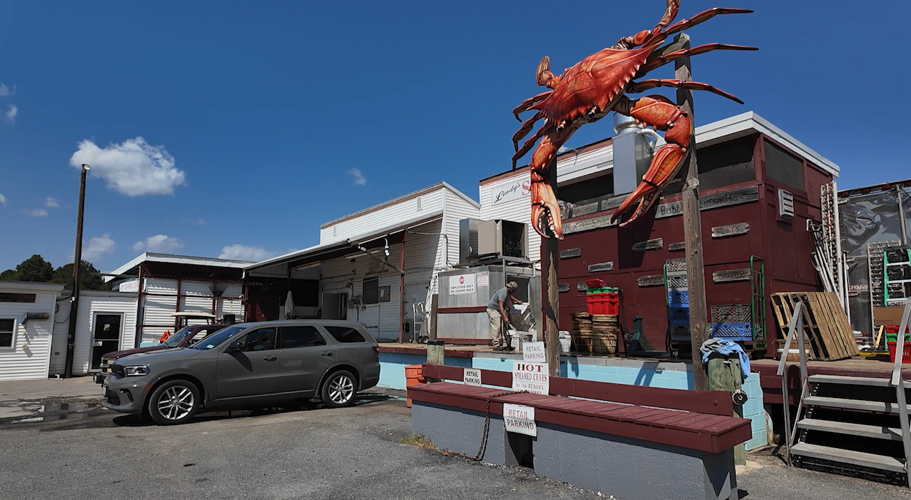
The opportunity is also drawing interest from seafood businesses that don't currently process catfish. Aubrey Vincent, owner of Lindy's Seafood in Woolford, said the grant offers a chance to expand into the catfish market and break out of a business built around a seasonal catch, such as blue crab and oysters.
"Blue crab is very seasonal, and I think blue catfish, with the economic and also environmental impacts, would really be a good benefit and kind of help us maybe transition more of year round processing," Vincent said. "So I really think it would be great for us and for our employees and also our watermen."

Lindy's Seafood in Woolford, Maryland is looking to break out into the catfish processing business.
Vincent is even asking Dorchester County Council to write a letter in support of her business expanding to process catfish and going after these funds. She says she already has support from some of the watermen she regularly works with.
Vincent says the grant money would allow her to be able to upgrade equipment to meet the requirements of processing catfish. Catfish are a USDA-regulated product which requires inspectors to come on site. Crab meat on the other hand, which Vincent’s business focuses on , is regulated by the FDA.
“We've been processing blue crabs now since ‘92,” Vincent said. “So we just really need to kind of upgrade that equipment, make it more efficient. And then that way it's easier for watermen and also for us, we can process a lot more efficiently than we are now and really be able to meet the requirements.”
Applications for the USDA funding are due Dec. 7, 2026 through Grants.gov.