

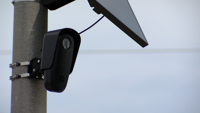

MILFORD, Del. - License plate reader cameras, also known as Flock cameras, installed throughout Milford are drawing attention online and sparking a community conversation about privacy, surveillance and crime prevention.
The cameras, mounted on poles along roadways throughout the city, are designed to capture license plate numbers and vehicle descriptions as cars pass by. Police say the technology helps investigators identify stolen vehicles, locate suspects and develop leads in criminal investigations.
But not everyone is comfortable with the growing presence of the cameras.
Some residents have taken their concerns a step further, posting signs around Milford identifying locations where the cameras have been installed. The signs have become a visible symbol of the debate playing out both online and in the community.
For driver Darrell Wire, the concern isn't necessarily the technology itself, but the lack of awareness surrounding it.
"It's just being tracked without your knowledge," Wire said. "You know, at least if you're driving through toll booths, they can track you, but you know you're doing it. Here, you don't know. So that would be my biggest concern."
Others worry the cameras could eventually be used for purposes beyond criminal investigations.
Milford resident Tristen Wolfe said he fears the technology could expand over time.
"At the end of the day, it's going to get worse then say, maybe we put speedometers on these things. And then now it's everybody on the line, right?" Wolfe said.
City leaders say those concerns do not reflect how the cameras are currently being used.
Milford Mayor Todd Culotta said the cameras were funded through state grants as part of Delaware's "Flock Camera Program" and are intended to serve as an investigative tool for law enforcement.
"In the event of a crime or tracking down a crime, they can be helpful for that. Other than that, there's really no other use for them," Culotta said.
According to city officials, the cameras do not use facial recognition technology and cannot identify drivers or passengers. Instead, they record license plates and vehicle characteristics, such as make, model, and color, which can be used by investigators when searching for vehicles connected to crimes.
Culotta acknowledged that residents should continue asking questions about how the technology is used.
"It's important that we as the individuals and residences keep our government accountable," he said.
As the use of license plate reader technology continues to expand across the country, Milford's discussion reflects a broader debate over how communities balance public safety with privacy concerns.
For now, the cameras remain in place, quietly recording vehicles as they travel through the city. Whether residents see them as a valuable crime-fighting resource or a potential privacy concern, the conversation surrounding them shows no signs of slowing down.