
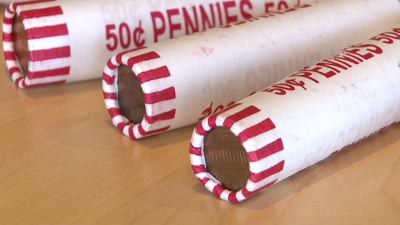

BERLIN, Md. - A souvenir penny from Berlin may look like a simple keepsake, but it now represents a bigger shift happening at cash registers nationwide.
The U.S. Mint has ended production of the circulating one-cent coin, marking the conclusion of the penny’s long run in everyday commerce. The Mint says pennies already in circulation remain legal tender, and collector versions will still be produced in limited quantities.
For many small businesses, the practical impact is less about losing a coin and more about how people pay. Chauncey Rhodes, owner of Viking Tree Trading Co., said cash transactions have become increasingly rare as customers rely on cards and mobile options.
“Cash paying customers are very little these days,” Rhodes said. “Between credit cards and tap on your phone, tap on your watch- it’s becoming a regular thing now.”
Still, for the customers who do pay with bills, the penny’s departure can change how totals are handled when a purchase ends in one or two cents. Federal guidance and economic analysis have pointed to rounding cash transactions to the nearest nickel, while electronic payments continue to settle to the exact cent.
Some business owners say rounding is not new. Rhodes said he has seen stores simplify change before, and expects that approach to continue as pennies become harder to come by through normal transactions.
In Snow Hill, Diana Nolte, owner of Snow Hill Toys, said cash still plays a role in smaller communities and during busy shopping stretches. She said she is less worried about a few cents at the counter and more focused on the behind-the-scenes transition for banks and payment systems.
“I wonder how my point of sale terminal is going to work,” Nolte said. “The changes will come for a software upgrade and my bank account. That’s when this will change”
The shift comes as the Mint reports it produced and shipped about 3.2 billion pennies in fiscal year 2024, and has said suspending the coin is expected to save roughly $56 million per year in production costs.
For now, shoppers can still spend pennies, save them, or drop them back into the change jar. But as the smallest coin fades from circulation, more stores may be forced to decide what makes ‘cents’ at checkout when exact change is no longer guaranteed.