


SNOW HILL, Md. - A Snow Hill man is launching a series of history projects in 2026 aimed at preserving the town’s stories, images and documents for future generations, including recreating bicentennial-era audio recordings, building a downtown photo archive and sharing long-forgotten public records he has been reading at the local library.
Nick Anthis said his interest grew after moving to Snow Hill with his family in April 2022. He said they relocated so they could be closer to family on the Eastern Shore and because of what he described as strong local schools.
Anthis said he did not enjoy history when he was younger, but that has changed over time. After settling into town, he said he began talking with neighbors, learning local names and traditions and spending more time researching in Snow Hill’s public library. He now serves on the mayor’s Round Table, an informal group he described as a way to discuss ideas that could help the town outside of what elected leaders and town management handle.
Through those conversations and library visits, Anthis said he has begun collecting and sharing stories he hears from longtime community members, from memories of segregated schools to how parts of the region have changed over decades. One of his biggest goals for 2026 centers on the 50th anniversary of a project completed during the 1976 bicentennial.
Anthis said the library has a collection of audio recordings from that time, stored in a section known as the Worcester Room, which includes materials that cannot be checked out. He said he is not sure how many people were recorded for the original project, but he believes the recordings include interviews that capture everyday life in Snow Hill half a century ago.
“You can go over there and listen to hear what people were 50 years ago,” Anthis said. “What were they doing? What were their ambitions? Where did they live? Things like that.”
For 2026, Anthis said he wants to recreate that concept by recording as many people in town as possible and ensuring those recordings ultimately become accessible to the public through the library.
“It's important to actually document the people of the town,” he said. “People are dying off. So I'm kind of in a rush to get it done before they die off, because there's some great people in town.”

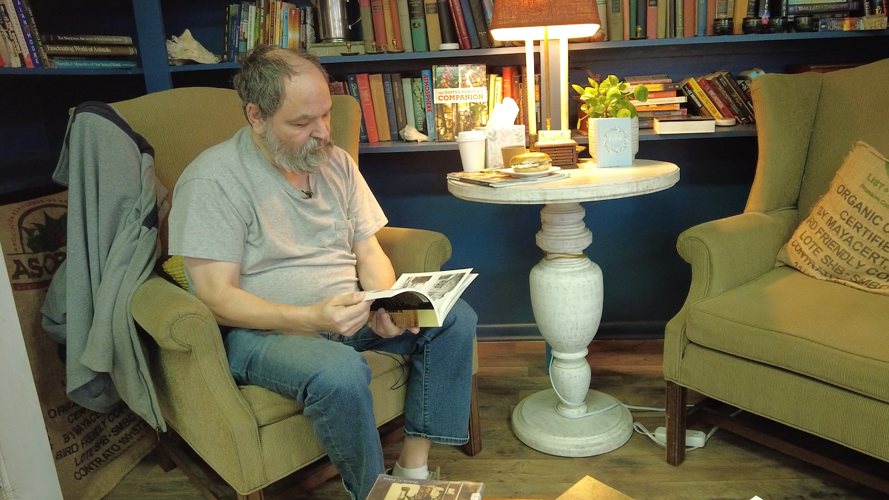
Nick Anthis reading a book on Snow Hill's history at Fika Coffee Roasting.
Anthis said his goal is not only to capture prominent figures, but also to preserve the voices of everyday residents and families who have been in Snow Hill for generations. He referenced local surnames he said have deep roots in the area and believes those long-running family histories are part of what makes the project valuable. He said his outreach strategy will have to go beyond social media.
“Social media is a great way of doing it, but there are a lot of folks who are technology-challenged in the town,” Anthis said. He said he has talked with local leaders about how to connect with people who may not be active online and expects the effort to include a mix of phone calls, mail, door-to-door outreach and word-of-mouth.
Anthis said he is also hoping to learn how the original 1976 recording project was organized, including who was involved and how participants were recruited. He said he is looking for guidance from anyone who remembers the bicentennial effort, along with volunteers who may want to help coordinate interviews and catalog the audio. He said he expects to begin recording soon, even if the project starts informally.
“Even if I use my smartphone or a video camera from my computer or anything, just to see if I can get these recordings and kind of make it informal and let people tell their story,” Anthis said.
Alongside the audio project, Anthis said he wants to build a website that would allow users to scroll through images of downtown Snow Hill across decades, showing how storefronts and streetscapes have changed over time. He said he has been reviewing photo collections and local history books at the library as part of the early stages. His hope is to create a visual timeline where users can compare the same location from different eras.
“I thought I would put together a website where you could scroll back in time looking at the front of the storefront and see what it looked like 50 years ago,” he said. “What was it 100 years ago, what it is today.”
To do that, Anthis said he will need community help.
He is asking people to share old photos of downtown that could be scanned and added to the archive, including pictures of businesses, parades, schools, streets and everyday life. He said he understands many families have collections that never make it online and he wants to make participation simple for those who may not be comfortable using digital tools. Anthis said he is also tracking down books and reference materials he believes could strengthen the project.
He said he recently found a book titled “The Itty Bitty History of Snow Hill,” written by Gladys Gibbons, but it is housed in the Worcester Room and cannot be checked out. Anthis said he posted online asking whether anyone in town had a copy he could borrow, and he later heard from someone connected to the author’s family. He said he was contacted by a relative of Gibbons who plans to return to town in February, and Anthis said he expects to borrow the book then to continue his research.
Anthis also said he has been reading older public records and planning documents that reflect how Snow Hill operated and envisioned its future in previous eras. He said one of the items he reviewed was a book listing town ordinances from May 1912. Another was Snow Hill’s comprehensive plan from 1966.
He said he plans to share portions of what he finds in those documents periodically, both to spark conversation and to encourage people to consider how the town has changed.
“I want to make sure that people get a chance to see this stuff, so that we don't forget history,” Anthis said.
While the bicentennial recordings and the downtown photo site are his two main projects for 2026, Anthis said the broader purpose is to build connections across town and create an accessible record that will outlive any one person. He described his approach as community-oriented and said he wants the final products to be available to the public rather than stored privately.
“I want to do it for the town and make sure that they're available for the people of the town,” Anthis said.
Anthis said he has already been collecting stories informally through conversations with neighbors and community members, including during seasonal events he hosts at his home. He compared his holiday decorating style to a Clark Griswold display and said he has used that as a way to invite neighbors over, offer refreshments and ask them to share personal memories and local history. He said those conversations have ranged widely, from stories about businesses and recreation sites that no longer exist to memories connected to segregation and how schools and public spaces were organized decades ago.
Anthis said those early conversations reinforced his belief that Snow Hill has a deep well of stories that are worth preserving, and that some of the people who hold those memories are now in their 80s, 90s and beyond. He referenced plans to speak with a local man who recently turned 100, saying he hopes those types of interviews can provide first-hand accounts of what life was like across multiple generations.
Looking ahead, Anthis said success by the end of 2026 would mean having a meaningful number of interviews recorded and made available, as well as a functioning online photo timeline that continues to grow as more people contribute images. He said he hopes the effort will also encourage more community participation in town life, particularly among people who want to help but are not sure how to get involved.
Anthis said anyone who wants to contribute can start by reaching out with old photos, offering to be recorded, or connecting him with people who remember how the original 1976 recordings were organized.
He said the long-term value is what matters most. Fifty years from now, Anthis said he wants people to be able to listen back and understand Snow Hill through the voices of the people who lived it.
“I want to hear everybody's stories in the town,” he said. “I think it'd be kind of fun and nice to have all that stuff recorded for memory sake.”
Anthis said he hopes the projects will create an enduring archive that helps Snow Hill preserve its identity while also giving future generations a clearer view of what the town was, and what it chose to become.