
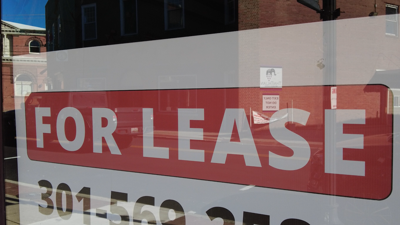

CAMBRIDGE, Md. - Cambridge Mayor Lajan Cephas-Bey has rejected a proposal aimed at addressing long-vacant storefronts along Race Street, a corridor that city officials describe as central to downtown’s economic health.
Ordinance 1262 would have created a new “Vacant Commercial Storefront Registration” program, requiring owners of ground-floor commercial spaces that sit unused to register with the city within 30 days of a property qualifying as vacant.
In January, City leaders said vacant commercial spaces can contribute to public safety issues and slow economic revitalization efforts. Commissioner Brett Summers said the proposal was intended to “activate downtown retail spaces” that, in some cases, have been empty for decades.
“It’s trying to activate downtown retail spaces that have been vacant for years,” Summers told WBOC in January. “Some have been like 25 years plus.”
Summers said the registry is designed to give the city an up-to-date picture of which spaces are vacant and who is responsible for them, while adding an incentive for owners to move properties toward active use. Under the ordinance, owners would have had to register and provide basic information, including contact details and the date the space became vacant.
If a storefront were to remain vacant through its first annual renewal, the ordinance called for an interior inspection to ensure compliance with applicable codes and identify potential hazards. Summers said the inspection component was intended to address safety concerns, including fire risks.
The ordinance also included enforcement provisions. Violations would be treated as municipal infractions, with fines starting at $250 for a first offense and $500 for subsequent offenses. Each day a violation continues could be treated as a separate offense.
On Monday, Feb. 9, Cambridge City Council held a public hearing on the proposed ordinance, during which the mayor's office said multiple neighbors expressed concern over new fines and a lack of timely information.
Ultimately, the City Council approved the ordinance.
On Wednesday, Mayor Cephas-Bey vetoed 1262, citing a lack of of public dialogue on the issue. The ordinance, the mayor argued, created paperwork over producing results, and needed to address the issue in a fair and consistent manner citywide.
Cephas-Bey also pointed to a lack of exceptions for disaster-related vacancies in the ordinance.
Ordinance 1262 now returns to Cambridge Commissioners for reconsideration.
This article was originally published on Jan. 12. It has been updated to reflect Mayor Cephas-Bey's veto on Feb. 11.