
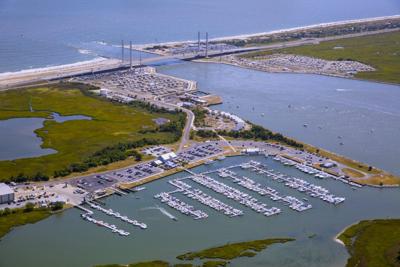
MILLSBORO, Del. - The Delaware Department of Natural Resources and Environmental Control has announced an extended closure of the Indian River Bay to clam and mussel harvesting due to a sewage release. WBOC spoke with people working in the shellfish industry about the temporary closure.
What Happened
On Jan. 15, DNREC said the sewage release has been linked to Millsboro’s sewer system, and the bay will remain closed to clam and mussel harvest for at least three weeks. The closure was put in place to protect public health, according to the agency.
Over 25,000 gallons of wastewater were released from a manhole in the area of 361 East State Street. The release was discovered on Jan. 15, and the Town of Millsboro estimates 25,000 gallons have been released per day, according to the Delaware Environmental Release Notification System.
It is unknown when this first began. DNREC said the release was caused by a mechanical failure, and contractors are on site mitigating the release, assessing, and repairing damages.
The ban, which affects shellfish such as clams and mussels, is required under the National Shellfish Sanitation Program. According to DNREC, waters must remain closed for 21 days following the end of a sewage discharge to protect public health and allow natural cleansing. Since the discharge is still ongoing, the 21-day countdown will begin only after the flow has stopped.
DNREC says crab, conch, and finfish harvests remain open in the Indian River Bay. The Rehoboth Bay is not affected, according to officials. Shellfish harvesting in Rehoboth Bay is not affected, and oysters grown under commercial aquaculture leases there remain safe for raw consumption by healthy individuals, according to DNREC.
As a precaution, DNREC is urging people to limit contact with the water in Indian River Bay and nearby areas in the coming days, especially in locations potentially affected by the sewage discharge. Delaware Natural Resources Police will be patrolling the area to enforce the closure and notify the public, while DNREC will continue to keep commercial leaseholders informed.
WBOC reached out to Millsboro town officials for comment on Friday, but did not hear back.
Aqua-Culturists React
Mark Nardi, the President of Delaware's Aquaculture Association, met with WBOC on Friday and reiterated that no local shellfish that end up on anyone's plates will be affected by the spill. Nardi said there is very little commercial shellfish harvesting in the Indian River Bay, and that harvested shellfish go through rigorous sanitation testing.
"So we're still able to provide a safe, sanitary, and delicious product for our customers," Nardi said. "The way that the waters work in Rehoboth Bay and Indian River Bay, there's not a lot of mixture."
Nardi also applauded DNREC for their quick response to the incident, and said he and other growers in the area were immediately notified.
Jordan Nally, a farmer with Nancy James Oysters, said he was also notified by DNREC and reiterated that any shellfish that are up for sale are safe to eat.
However, Nally said the spill has prompted him to worry about its potential effects on the industry.
"I was very frustrated when I logged onto Facebook. I see articles, and our businesses getting tagged, and I think about the reputational impact that this has," Nally said. "Public perception is that the bay's are contaminated now."
The sewage release prompted Nally to send the following letter to local legislators:
"Dear Members of the Delaware General Assembly,
I am writing to express serious concern regarding the most recent sewage spill reported by the Delaware Department of Natural Resources and Environmental Control (DNREC), discovered on January 15th, indicating that more than 25,000 gallons per day of wastewater have been released into the Indian River Bay.
While DNREC has stated that Rehoboth Bay has not been directly impacted at this time, the broader perception created by repeated sewage discharges into Delaware’s inland bays is deeply damaging. For oyster farmers and those invested in sustainable aquaculture, public confidence in the cleanliness and safety of our waters is critical. Even the implication that Delaware’s bays are polluted has immediate and lasting economic consequences for our farms, our livelihoods, and the reputation of the state’s growing aquaculture industry.
This email is being sent to other local farmers and stakeholders because this is not an isolated concern. Unfortunately, this is not the first wastewater release into the inland bays, and without meaningful accountability and investigation, it will not be the last. The cumulative impact of these incidents threatens years of progress made toward environmental restoration, water quality improvement, and sustainable economic development in coastal Delaware.
We are asking for your leadership and support in the following areas:
Clear accountability for the source of this wastewater discharge - including financial accountability
A thorough and transparent investigation into how and why this release occurred
Stronger oversight and enforcement to prevent future incidents
Proactive communication that protects both public health and the livelihoods of those who depend on clean water
Delaware’s inland bays are a shared resource. Protecting them requires decisive action from our state representatives and legislators to ensure that violations are taken seriously and that those responsible are held accountable.
We appreciate your attention to this urgent matter and are available to discuss these concerns further. Our goal is not only to protect our businesses, but to safeguard the long-term health, reputation, and sustainability of Delaware’s coastal waters.
Respectfully,
Jordan Nally"
Nally told WBOC he sent the letter in hopes of gaining more transparency and getting stakeholders together to find solutions for the future. Nally said he is frustrated that this is not the first time this location has been an issue.
"We should be holding folks accountable when there is pollution and when there is a spillage. We need to understand what happened and how to prevent it from happening further, whether it be because of overdevelopment or not having proper infrastructure as we're developing, we need to be on top of that," Nally said. "If there is a financial impact to farmers, I think that should be compensated for that. We work hard to to tell a story and share how much is positive is happening in the Bay, and this is a real setback."
Environmental Organization Reacts
WBOC also reached out to the Center for the Inland Bays for comment on the incident. The center's offices sit on the banks of the Indian River Bay. A representative with the organization sent WBOC the following statement:
"First and foremost, we support DNREC’s decision to act quickly to protect public health. Closures like this are difficult, but they are a necessary precaution whenever there is a potential risk to shellfish harvesting. We encourage everyone to follow DNREC’s guidance and updates as the agency continues monitoring and assessment.
We also want to recognize that situations like this are complex and can take time to fully resolve. Our focus is on ensuring the leak is contained, repairs are completed, and the Bay is protected—while local partners work through the immediate response.
At the same time, this incident is a clear reminder of a larger issue facing Sussex County and the Inland Bays watershed: growth and development have moved quickly, and critical infrastructure must keep pace. Wastewater systems are not optional—they are a critical part of the foundation of a healthy coastal community. If capacity, maintenance, and redundancy do not keep up with the demands of a growing population, the risk of failures increases, and the Bay pays the price.
Closures like this also have real consequences beyond the environmental impact. Southern Delaware’s oyster farmers, watermen, and seafood businesses depend on public confidence. Even when the closure is targeted and precautionary, it can create confusion and concern among consumers and restaurant partners, and it can affect the reputation of the local aquaculture and Delaware seafood more broadly. Protecting water quality is essential not only for the ecosystem, but for the livelihoods tied to it and for maintaining trust in the safety and quality of local seafood.
We appreciate DNREC’s continued communication and oversight, and we remain committed to working with partners across the watershed to support long-term solutions—investments in wastewater and stormwater infrastructure, responsible growth planning, and proactive measures that reduce the likelihood of future releases."