
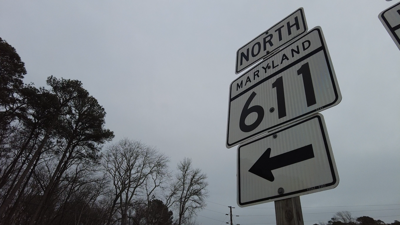

WORCESTER COUNTY, Md. - Worcester County officials are moving forward with the first phase of a planned shared-use path along Route 611, a project intended to create a safer option for cyclists and pedestrians traveling between West Ocean City and destinations toward Assateague.
Dallas Baker, the county’s director of public works, said the county has secured grant funding to cover the design work for the first segment, which would run from Route 50 to Mystic Harbour Boulevard.
“It’s a bike path, essentially off-road bike path,” Baker said, describing a longer-term vision that could eventually extend the route toward Assateague.
Baker said the project is being pursued in response to existing bicycle and foot traffic along the corridor and the safety concerns that come with using the roadway shoulder.
“There’s a lot of bike and pedestrian traffic out there already,” he said, adding that people often drive even short distances because “there’s no safe way to walk other than on the roadway.”
County officials say the planned path could bring multiple benefits, including improved safety, reduced congestion on Route 611, and stronger connections for visitors traveling to businesses, campgrounds and recreation spots along the corridor.
A county feasibility study on the Route 611 corridor has cited gaps in pedestrian infrastructure and highlighted safety limitations that can discourage casual cyclists and walkers. The study also references Maryland’s bicycle stress mapping, which can rate some roadways as comfortable only for experienced riders, reinforcing the county’s goal of creating a separated facility that is more accessible for a wider range of users.
Baker said the county is currently waiting for final state signoffs on agreements tied to the grant. Once those documents are completed, he said the county must receive approval on the scope of work and cost estimate before putting the design contract out for bid.
He said traffic impacts would be addressed through traffic control plans developed during the design phase, but drivers should still expect added disruption once construction begins.
During the interview, Baker cautioned that the project timeline depends on future funding for construction after the design phase is complete.
“Be patient,” he said. “You probably won’t see it getting built for about three years.”
Baker said that estimate assumes roughly a year for design, followed by the pursuit of construction funding and about a year for construction, though the schedule could shift based on state funding levels and the pace of approvals.