
February is Black History Month and throughout the month WBOC is sharing the stories of 10 men who were lynched on the Eastern Shore of Maryland during the 19th and 20th centuries.
In our multi-part series: Shameful Past: Lynchings on Delmarva, what follows is a profile of one of those men executed by mob justice.
James Reed was an African American laborer who was lynched by a mob in Crisfield, Md. in July 1907. Reed was from North Carolina, and lived in Maryland for eight months before his murder, archives say.
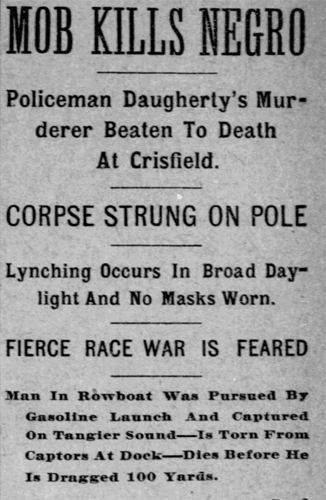
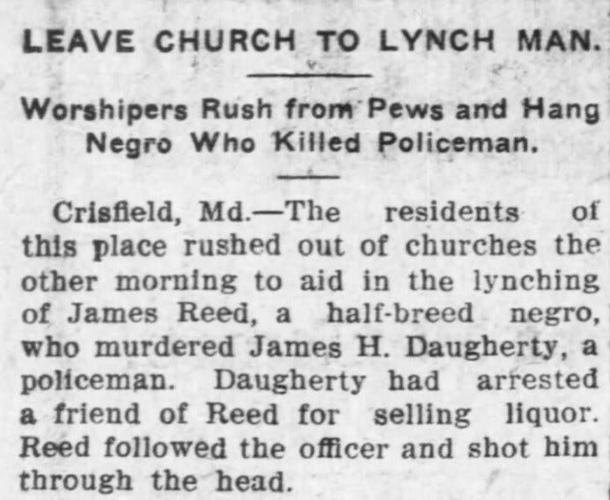
Reed was accused of shooting and killing Chief of Police John H. Daugherty. According to the Baltimore Sun, Daugherty and Officer Evans arrested Reed's business partner named Hildred for selling whiskey.
"The two officers, with the prisoner between them, were walking through a negro district in the business section of the town toward the jail when the deed was committed," the Sun reported.

News article says race war is feared after Reed's death
The newspaper went on to say that after seeing his business partner arrested, Reed headed to a local African American billiard hall and borrowed a .44-caliber revolver from Lemuel Showers, owner of the establishment. He followed the officer several blocks before firing the revolver, killing Daugherty instantly.
Local historian Linda Duyer said, "Three men were being sought, Reed, Hildred and Lemuel, for providing [Reed] with the gun. I was never able to find out what happened to Lemuel."
The Maryland State Archives say Reed and Hildred fled the scene and Reed headed to local waterways to escape. He headed toward Coulbourne Creek, where he stole a small boat.
After police launched boats to capture Reed, he was spotted by Captain Chelton of the Ercliff Vessel. Reed tried hiding in the boat and even tried jumping in the water to get away. He was quickly taken into custody by Captain Chelton.
Duyer says Reed may have also been trying to commit suicide, knowing he would be captured.
He was taken back to Crisfield shortly thereafter.
Duyer said that when Reed arrived, the town was enraged, as the Daugherty family was very popular in Crisfield.
"Apparently, the Daugherty's were a big law enforcement family. Their names appear frequently as police and patrol men, which was typical of a family that devotes their life to policing," Duyer said.
When Reed arrived back in Crisfield, he didn't even make it back to the police station; he was killed from blows to the head that resulted in a fractured skull from the lynch mob.

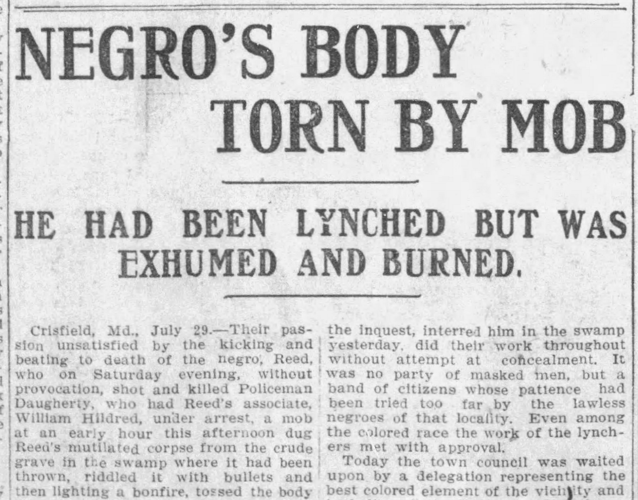
James Reed Headline courtesy of Linda Duyer

News clippings reporting people leaving church for lynching
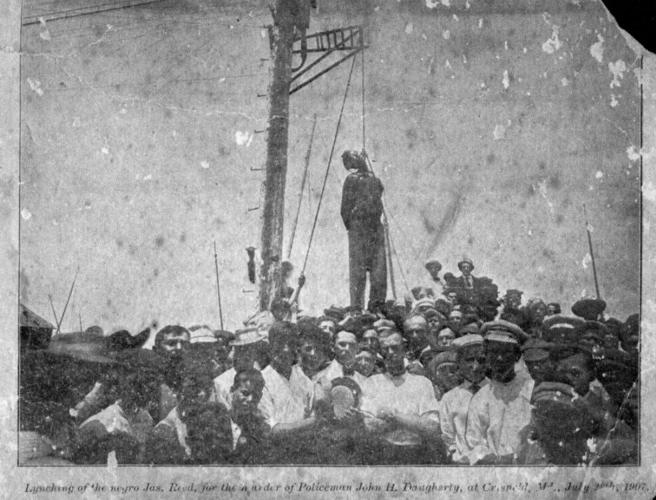
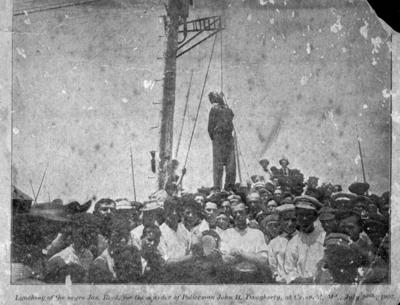
His body was hung from a telegraph pole as people celebrated his lynching. Duyer says it's unclear if he was dead at the time, but the mob posed for pictures with Reed's body.
"Reed's body was then buried in presumably a marsh somewhere, but mob members dug his body up, shot is several times and set it on fire, so it wasn't enough to just kill him off the boat," Duyer said. "It was overkill."
The Maryland State Archives reports that the mob then threatened other African Americans in nearby neighborhoods, pulling them out of their houses and threatening them to leave town.
Duyer, who is white, says she can't imagine being black during this lynching and being told to leave one's house. To come back and live life afterwards, looking at those who ordered you out must have been impossible, she said.
The Baltimore Sun said of Reed's lynching:
"There are abundant reasons why the people of Crisfield should deplore the lynching of James Reed, a negro murderer. In the first place, the murderer would have been hanged by due process of law if the courts had been left to deal with him. Maryland justice lacks, in such cases, neither swiftness nor sureness...No mob is capable of administering the law in a way that will strengthen our civilization or add to the security of society. Lawlessness begets contempt of the law and of orderly procedure. The lyncher of today may be the victim of mob law tomorrow. The safety of every community rests upon the prompt and rigid enforcement of the law in courts of justice. To encourage Judge Lynch is to place a premium upon acts of violence and to expose every citizen to vengeance of a mob incapable of acting calm and discriminating justice. Let the courts of Maryland punish lawbreakers in Maryland."4
Duyer says she hopes these stories will help heal the racial divide we see today.
"Some day when I give these descriptions to white people, and they say, 'How horrific or how awful,' without adding, 'But he was guilty,' maybe white people will begin to understand the history," Duyer said.
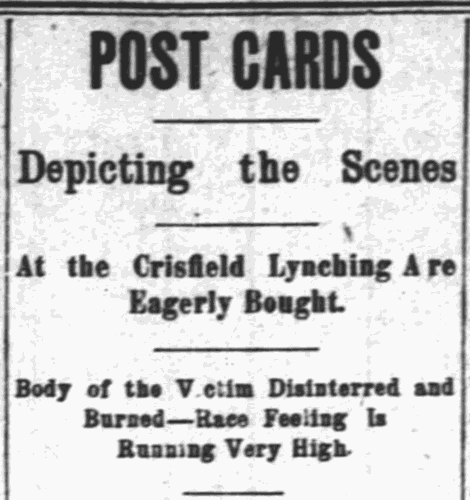
Showers, who gave Reed the gun, was arrested and taken to the Princess Anne jail to await trial, but no record can be found on the outcome. Hildred is believed to have escaped. No one was ever charged in the murder of James Reed, though many were present to witness it and their pictures were documented in post cards sent around town.

Post cards showing Reed's body at local stores