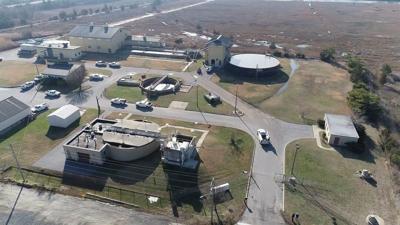
LEWES, Del. - The Lewes Board of Public Works says it has asked employees at Tidewater Inc. to work 24/7 to make repairs at the Lewes Wastewater Treatment Plant. A failed filter has caused partially-treated wastewater effluent to be discharged into the Lewes-Rehoboth Canal.
The Delaware Department of Natural Resources and Environmental Control says an equipment malfunction at the Lewes wastewater treatment plant was reported Wednesday, Dec. 18. DNREC says the malfunction could not be quickly fixed, so the WWTP began bypassing treatment stages and discharging partially-treated effluent on Thursday.
DNREC says the facility has been providing as much treatment as possible since the bypass began. Lewes BPW says people who live in Lewes are encouraged to reduce their water usage to alleviate any unnecessary strain on the plant. The BPW says drinking water has not been contaminated and that the canal is connected to the Delaware Bay but that the Indian River Bay will not be affected.
BPW Board President D. Preston Lee says one of the plant's four filters failed and that its backwash began to contaminate all of the filters.
"That's when it became a major problem because it really impacted our entire flow and we had to shut it down," says Lee.
DNREC says it was initially believed that repairs would be a relatively quick fix and that the severity of the situation was not understood by the facility operator until they were unable to put corrective measures in place. The agency says the bypass situation began when a system failure resulted in membranes that normally provide a very high level of treatment being contaminated during an automated backwashing process. The Lewes WWTP held the effluent flow as long as possible, utilizing all storage capacity at the facility, and only started discharging once they exceeded capacity.
Lee says facility operator Tidewater Inc. and nature itself will disinfect the water. "Fortunately the water that's being discharged will wash through the marsh, which will help renovate it actually before it reaches the canal," says Lee.
DNREC has issued an emergency shellfish closure order for harvest areas from the Mispillion River Inlet south to the Point at the Cape Henlopen State Park, and Delaware jurisdictional waters east to the New Jersey State line in the Delaware Bay. This will last for 21 days after the bypass situation has ended.
This closure applies to clams, oysters and mussels. DNREC says crabs, conch and fish species are not affected. The agency's Delaware Shellfish Program says based on location commercial oyster beds will not be impacted either.
John Doerfler with the Delaware chapter of the Surfrider Foundation still worries about a negative impact to the shellfish industry and in turn the local economy.
"We need to see improvements that consider the environmental and the economic impact," says Doerfler. "If this had happened in the middle of the summer season, what kind of headlines would be out here? That's going to impact our tourism industry heavily and that's what we really rely on out here."
Doerfler also wonders if the plant needs upgrades to handle the area's growing population.
Lee says Tidewater Inc. is disinfecting the wastewater but that nutrients and organics are still being discharged. He says contamination levels are being tested in the canal but that those results won't likely be in for a few days.
Lewes BPW and DNREC both say it is unknown how long it will take for repairs to be completed. Both are working with the facility and its owner to help expedite the work. Tidewater is waiting on new filters to be delivered while working to clean the ones here in the plant.
DNREC says it's important to note that since this is a municipal WWTP that accepts waste continually from multiple sources, the facility cannot stop accepting effluent flow.