
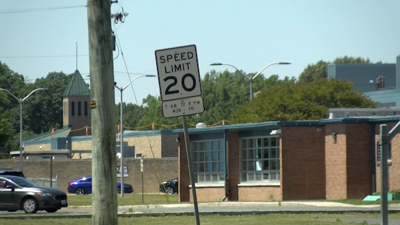

CAMBRIDGE, Md. — Cambridge leaders are considering the use of portable speed cameras as they look for new ways to address speeding complaints across the city.
City officials say neighbors have increasingly raised concerns about drivers traveling too fast in neighborhoods and school zones. Under the proposal, the cameras could be moved to different locations depending on where speeding complaints are most common.
Glenn Steckman, Cambridge's city manager, says the city and police department have heard from many residents concerned about traffic safety.
“The police department and the city have been receiving a number of complaints about speeding,” Steckman told WBOC.
Steckman says the technology could allow officers to focus on other public safety priorities rather than dedicating manpower to traffic enforcement in a single location.
“This is a way to better utilize our police department,” Steckman said. “They cannot work on more activities and engage in crime in the community than sitting at monitoring stop signs, which is very expensive.”
Under the proposal, drivers caught traveling 12 miles per hour or more above the posted speed limit would receive a $40 citation in the mail.
Cambridge Police Chief Justin Todd says the cameras could help officers respond to complaints in more parts of the city while maintaining traditional traffic enforcement.
“Unfortunately, we can't cover all the complaints at one time, and we cannot be in one place at long periods. Just due to our call volume,” Todd said. “So therefore we will have this as a tool. However, I think it's important that the public knows we're not going to stop our traffic enforcement that we are doing.”
City leaders are also discussing whether similar technology could eventually be used to address drivers who repeatedly fail to stop at stop signs.
“We would be targeting areas where we are seeing, getting complaints of people running constant stop signs,” Steckman said. “Hopefully this technology can be just as portable as the speed cameras.”
Any speed camera program would still require approval from the Cambridge City Council before moving forward. Steckman says the city hopes to begin that process sometime this summer.