



This film won the Grand Jury Prize at the 2025 Sundance Film Festival in the category of World Cinema - Dramatic. It was also nominated at the 37th GLAAD Media Awards for Outstanding Film - Limited Release. It lost to A Nice Indian Boy (2025) and Plainclothes (2025). It's interesting because this film has a few things in common with A Nice Indian Boy. Both films have a protagonist raised in the culture of India. This film, written and directed by Rohan Parashuram Kanawade, is certainly more serious, whereas A Nice Indian Boy is a romantic comedy. Kanawade's film is about grief and a child dealing with the death of a parent. A Nice Indian Boy is more about interracial relationships, and its same-sex couple is more the focus. Kanawade's narrative has the same-sex couple as a significant component here, but it's more about the rituals and customs that come in a funeral in this culture.
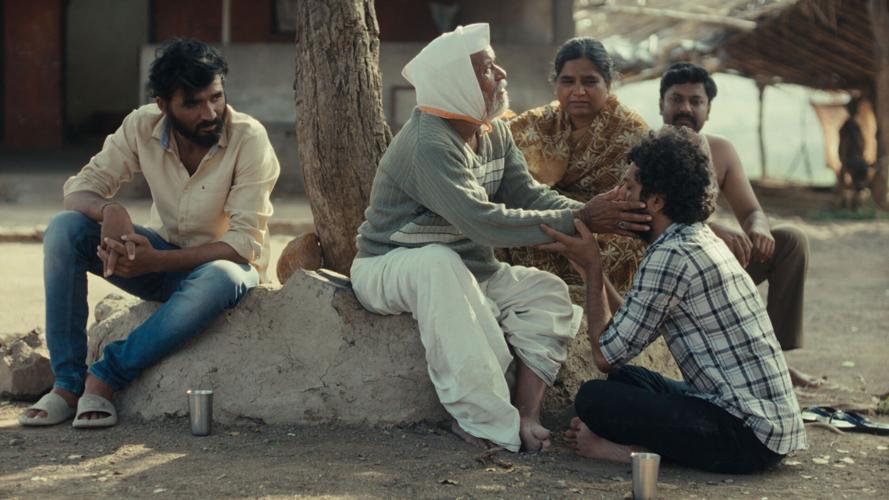
Bhushaan Manoj stars as Anand, a 30-year-old man who lives in Mumbai, which is the biggest city in India. Anand returns home to where he was born and raised, which is in a highly rural area that is way out in the countryside where the main work is farming. Anand returns home because his father has died. It's obvious that he doesn't want to stay there, but his family forces him to stay for nearly two weeks, so that he can participate in the 10-day Hindu mourning period. It consists of certain rituals and customs that he has to perform. He doesn't want to stay because he knows his family will ask why he left to Mumbai and why he isn't married, which is a concern of the protagonist in A Nice Indian Boy.

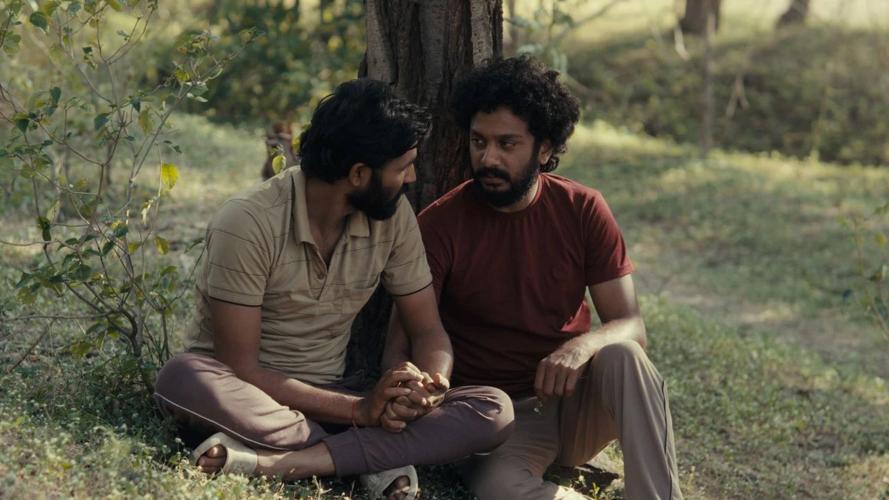
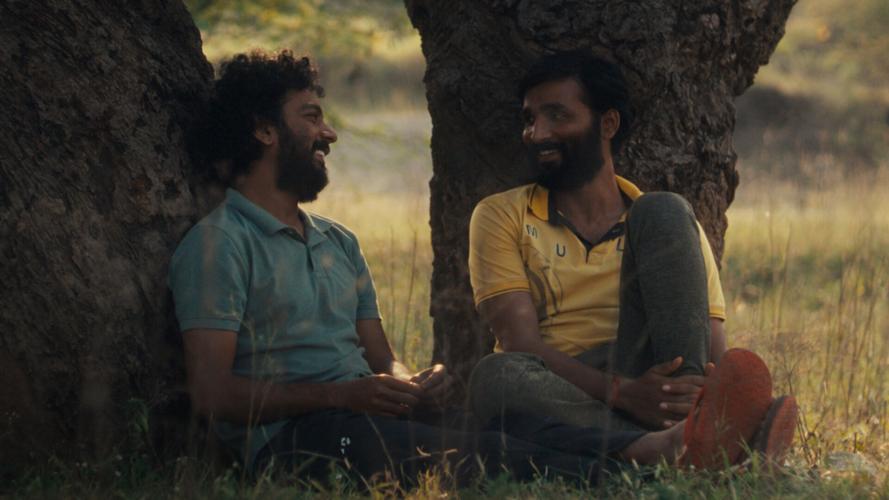
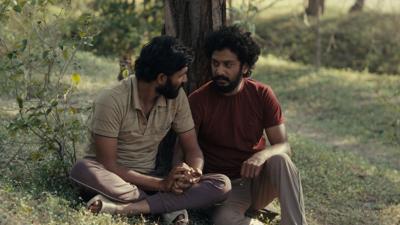
Suraaj Suman co-stars as Balya, a childhood friend of Anand who is also secretly gay. However, Anand knows Balya is queer and probably has known since they were younger. It's not sure how he knows that, but it's not difficult to figure out because like Anand, Balya has no interest in girls and doesn't want to get married. His parents, particularly his father, want Balya to marry, but he keeps resisting, which should clue them in. Many in their small village don't grasp these men's obvious homosexuality.
Neither Anand nor Balya want to come out and say they're gay because they're worried about the backlash, either from family members or from community members. Therefore, this film is about the homophobia in India. In certain ways, it's critical of that culture. Yet, in a lot of ways, the film is respectful of that culture as well. If one isn't familiar with the 10-day funeral ritual, this film shines a light on that ritual and not in a cynical way. This ritual isn't singularly unique. It's comparable to the 7-day funeral ritual, known as shiva, which has been depicted in films like This Is Where I Leave You (2014) or the multi-day funeral in Zambia, depicted in On Becoming a Guinea Fowl (2025).

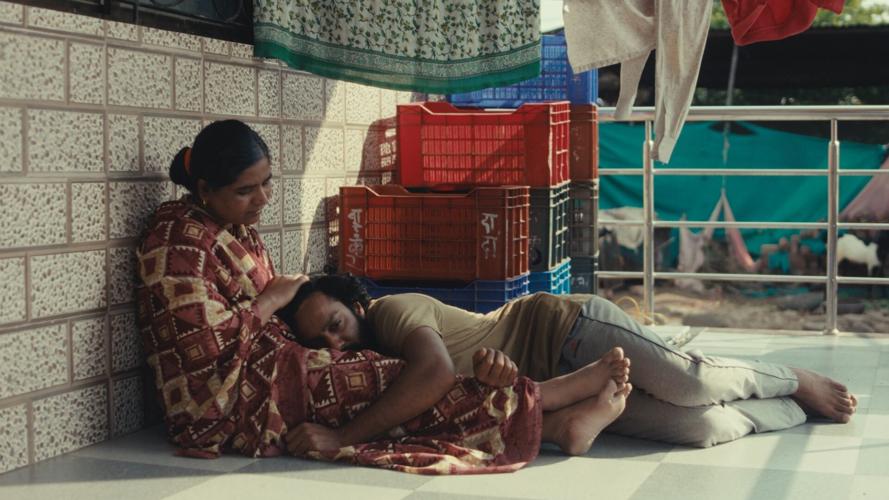
Jayshri Jagtap rounds out the cast as Suman, the mother to Anand who is heartbroken. She misses her son who lives far away. It's revealed early that she knows her son is gay and she's fine with it. She fears the backlash, so she doesn't say anything in public or in groups. Yet, privately she supports her son. It's a bittersweet dynamic, but beautiful in its own way.
Kanawade shoots the film in distinct ways. Many scenes are done in wide-shot and in long, continuous takes. This seems to be done because Kanawade wants us to sit and stew in these moments. Use of mostly wide shots does create a distancing effect from the characters in a literal and emotional way. While that can be a negative in some aspects, here it works. Yet, Kanawade utilizes close-ups in effective ways that brings us intimately into Anand's headspace.

Not Rated but contains full-frontal nudity.
Running Time: 1 hr. and 52 mins.
Available on VOD.