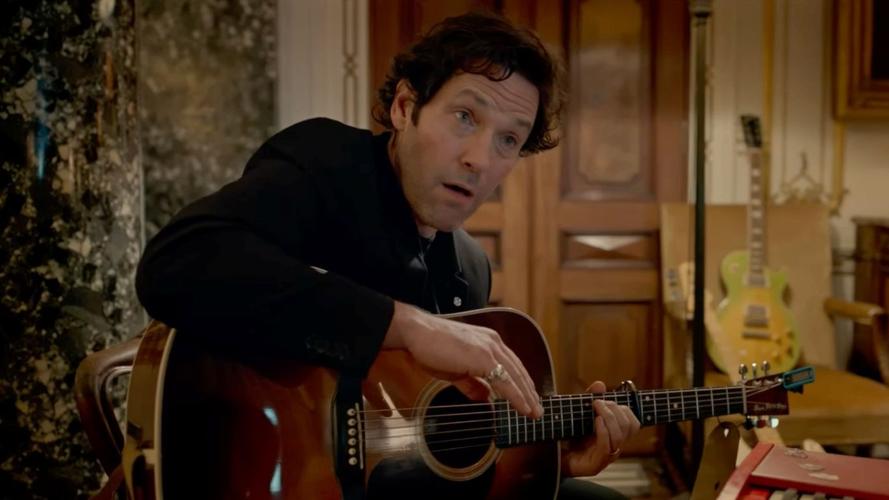

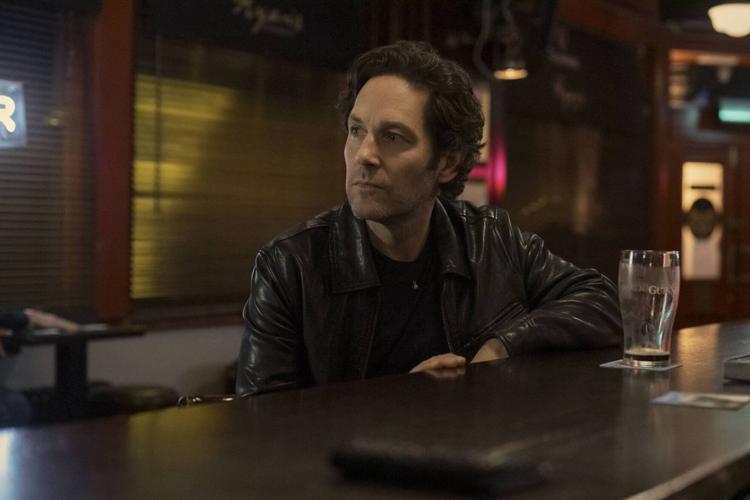
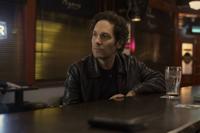
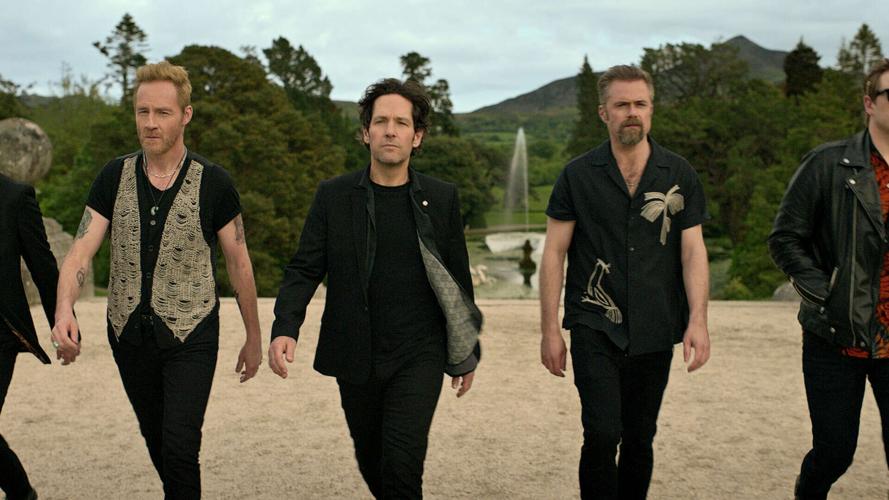

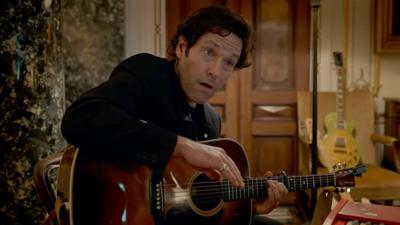
Paul Rudd (Ant-Man and I Love You, Man) stars as Rick Power, an American singer-songwriter who abandoned his music career to marry an Irish woman whom he had impregnated. He moved to Ireland where he's spent the past 15 years working to make ends meet as the lead vocalist of a cover band that exclusively performs at wedding receptions. He dreams of being a rock star, but being in his mid 50's, it's clear that his time has passed. Yet, he has trouble accepting it. It doesn't stop him from writing songs and desiring something more.
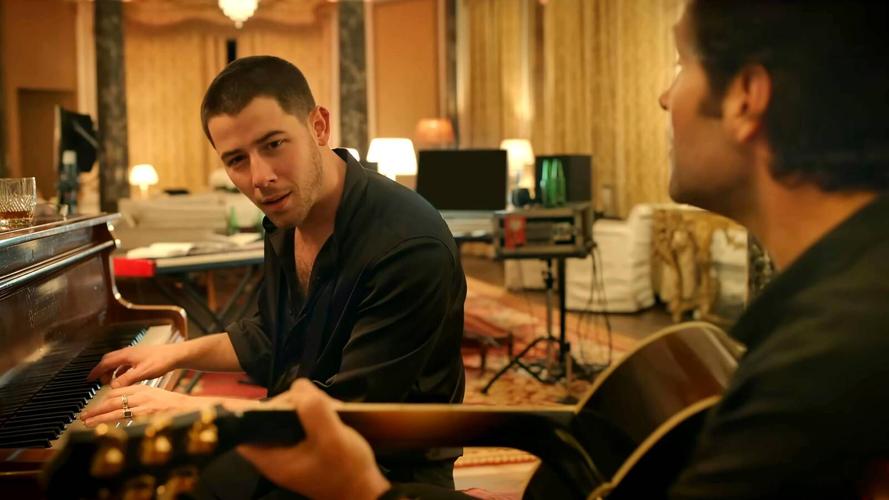
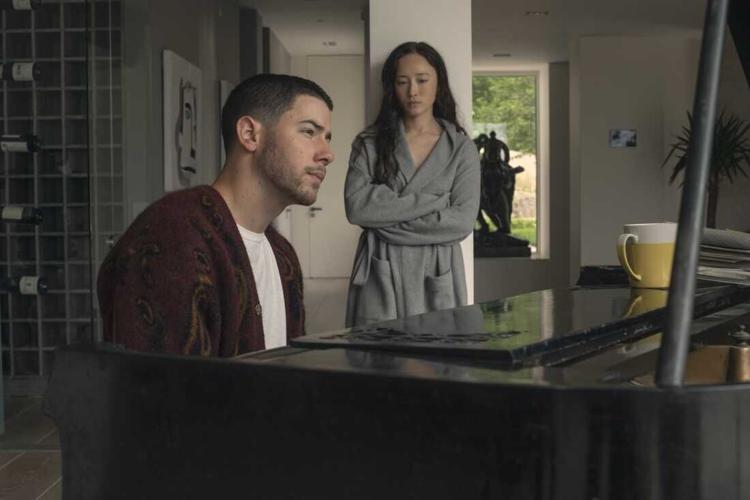
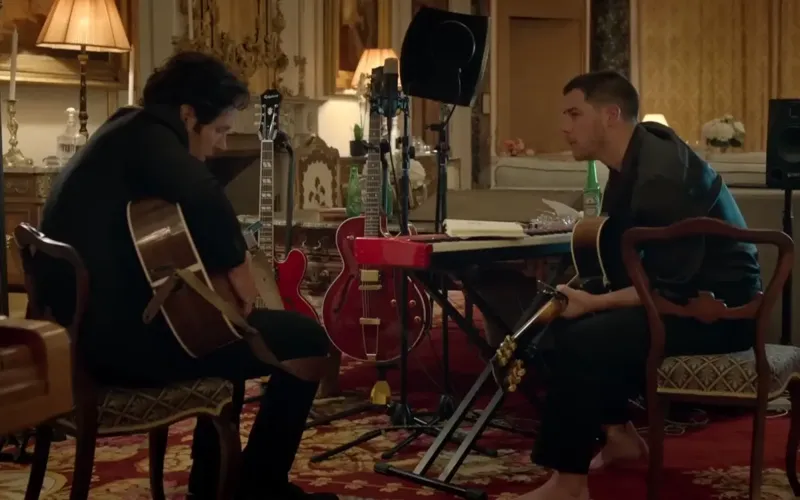
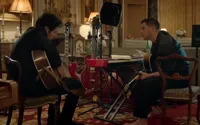
Nick Jonas (Jumanji: Welcome to the Jungle and Midway) co-stars as Danny Wilson, a pop star who used to be part of a boy band. He was a child star who has grown up to be quite the heartthrob. He's since gone solo and is currently working on his own album. While in Ireland, he meets Rick. They spend one night sharing their music with one another. Some time later, Danny has recorded a hit song that tops the charts and becomes a phenomenon. However, Rick realizes that it's a song that Danny stole from him.

The rest of the film is Rick trying to get Danny to admit that he stole the song, so that Rick can get credit and possibly royalties. The film then becomes about how chasing fame and fortune or holding onto them can be a disheartening and destructive thing. It's also about what a person values if they exist in the music business and what's most important. It's about what one is willing to sacrifice or what one is willing to do, or how far one will go.
As a parable, it's fine. I'm sure it will tap into a lot of people who are of a certain age and who think that their time for glory is gone. It will help to re-center their priorities and second guess the idea that the lifestyle of the rich and so-called successful person isn't all that it's cracked up to be. It also suggests that getting to the top and staying there might require moral failings that one perhaps shouldn't embrace. The film makes you not want to embrace the wealthy people on display but instead the impoverished and working class. All of that is well and good, and Rudd's performance buttresses it incredibly.

However, there are things about this narrative that I didn't quite buy. When it comes to the dilemma facing most in the music business, the dilemma here feels like a straw man or the least of all the concerns. I don't know if there's a big problem with pop stars stealing songs from unknown artists or songwriters not getting credit for their work. The true issue seems to be any artist's struggle to find a hit, which is real. Danny is shown struggling to come up with a hit song. What I didn't buy is that he's shown struggling alone. He says he's signed to a record label. I'm not an expert on how songs are produced, but Danny would have professional songwriters either from the label or independent producers pitching him ideas.
Director and co-writer John Carney, along with co-writer Peter McDonald suggest that Danny is so desperate or so in need that he would steal a song. I didn't feel as if Carney and McDonald made the case for Danny doing what he did. There is a scene where Danny's agent and manager, Mac Darling, played by Jack Reynor (Sing Street and Transformers: Age of Extinction), tells him that he needs to make a hit song or he could lose everything, which is a bit ridiculous.

In real life Nick Jonas was part of a boy band that broke up by the time Jonas turned 18 and he started working on solo material. Jonas teamed up with other musical acts and went on tour with them. He also started acting in film and TV, all while continuing to build up his solo music career. Jonas had hit songs or songs that did well, but with just his solo album as an adult, he wasn't headlining a solo tour. He joined one with Demi Lovato but wasn't headlining it himself. Mac seems to suggest that Danny needs something that will allow him to headline a concert tour solo or else he'll lose everything, which I didn't buy because in real-life Jonas didn't have that. He in fact pivoted to acting until he did.
Even if Danny had a hit song, he would also need additional songs to perform at that concert. We perhaps get a little bit of a sense of those songs, but those songs are described as average tracks that fill out an album, which is perhaps a bigger problem that Carney's film should be examining. There is some critique of that album-filling problem, but it's basically just a toss-away line. Yes, Mac is the one who criticizes Danny's songs. If that's the case, then why isn't Mac getting Danny better songwriters or songwriters that Danny would like? This is a film about songwriting and songwriters. Yet, there is no mention of professional songwriters. It's also suggested that while Rick came up with the idea for the song, it was Danny who turned it into a hit. Yet, that process is never shown. There is a whole aspect of music production and music recording that is simply ignored here. It's also the case that I didn't personally like the song that is stolen. I didn't like Rick's song called "How to Write a Song (Without You)."

It's odd because Carney makes a reference here to his film Once (2007), which won the Oscar for Best Original Song. The music from that 2007 film has some of the best tracks I've ever heard. A lot of that music was from Glen Hansard and Markéta Irglová. None of the songs in subsequent Carney productions have ever been as award-worthy or as emotionally powerful. The song here feels more meta than meaningful. Given that this film is about writing a song, to have the song called "How to Write a Song" feels a little too on-the-nose.
Rated R for language and some drug use.
Running Time: 1 hr. and 38 mins.
In theaters.