

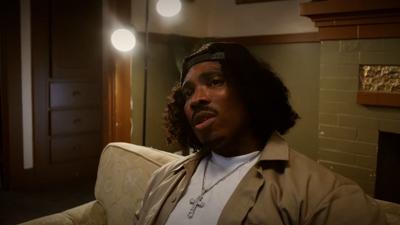
Page Kennedy is an actor you may recognize from the hit film The Meg (2018), opposite Jason Statham. One might have jammed to his hip hop albums that he's been releasing as a recording artist since 2017. However, Kennedy has mostly been an actor on television for the better part of 25 years. He's appeared in a variety of hit shows from Desperate Housewives (2004), Barbershop (2005), Weeds (2005), Blue Mountain State (2010), to most recently The Upshaws (2021). Mainly, he's been in front of the camera and continues to do so here, but now he's doing some work behind the camera, as writer and director of a short film that is standing as a proof-of-concept for a TV series he wants to produce. The series is tentatively titled Tales From the Bard, a riff on Tales From the Hood (1995), an anthology horror show that featured a predominantly African American cast. Kennedy wants to do his own anthology series with a predominantly Black group of actors. Except, instead of horror, his show would be interpretations or indeed adaptations of various works from classical literature. His focus for the initial season will be that of William Shakespeare, aka "the Bard."
Kennedy was inspired after seeing Baz Luhrmann's Romeo + Juliet (1996). He could never connect with Shakespeare's writing. He couldn't relate. Yet, seeing Luhrmann's film helped him to get into it because Luhrmann set that play's story in a modern-day context and utilized contemporary things that are recognizable for people in the 90's. Kennedy wants to continue this kind of adaptation of Shakespeare where his stories are set in 20th century settings, possibly in present-day, American cities like Detroit or Los Angeles where Kennedy was raised. However, when Shakespeare is adapted, there's always one crucial question that needs to be answered. Do you use Shakespeare's dialogue as written or do you modernize that as well? People like Luhrmann and even Riz Ahmed who starred and produced Hamlet (2026) are those who answer by keeping Shakespeare's dialogue as is. Yet, films like West Side Story (1961) or 10 Things I Hate About You (1999) ditch Shakespeare's dialogue for their own.

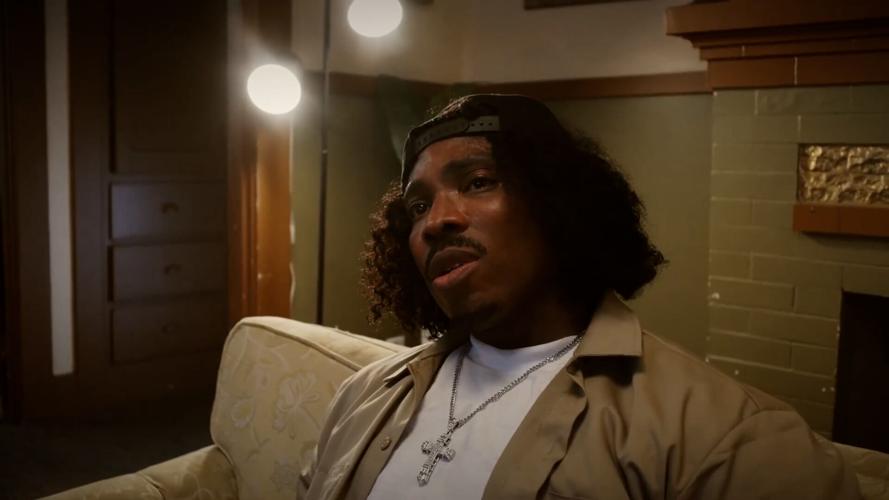
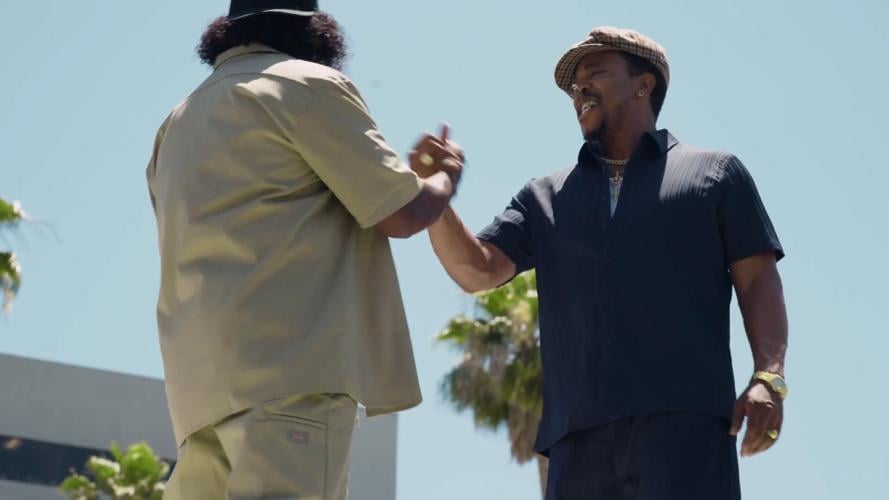
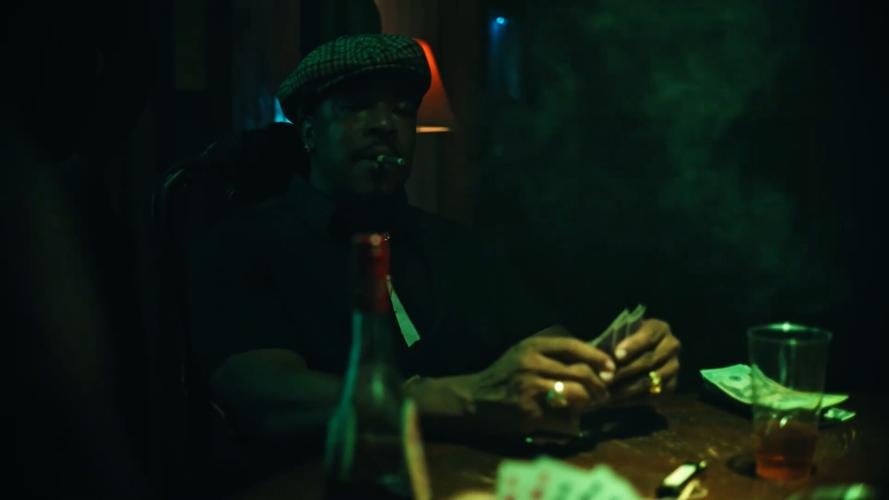
Kennedy's answer is to do both. He and his fellow actors here speak the Shakespeare dialogue as written. However, there are also subtitles that Kennedy has written that translates that 16th century text into 20th century slang. If you can't follow what's being said vocally, there is essentially a cheat sheet at the bottom of the screen. This film consists mostly of Act I, Scene 7, from Shakespeare's Macbeth, which is essentially the ending of Act I. There's also a little bit of the beginning of Act II. Page Kennedy stars as Mac, the Macbeth equivalent, a rapper in 1990's southern California. The song played at the beginning is "California Love" by 2Pac and Dr. Dre from N.W.A., which is clearly an inspiration because Mac is styled after Eazy-E from that rap group. The first line that Mac says is, "If it were done when ’tis done, then ’twere well, it were done quickly," which is taken exactly from Shakespeare's text. Yet, the subtitles underneath read, "If we gon' do this sh@#, we need to do it fast."
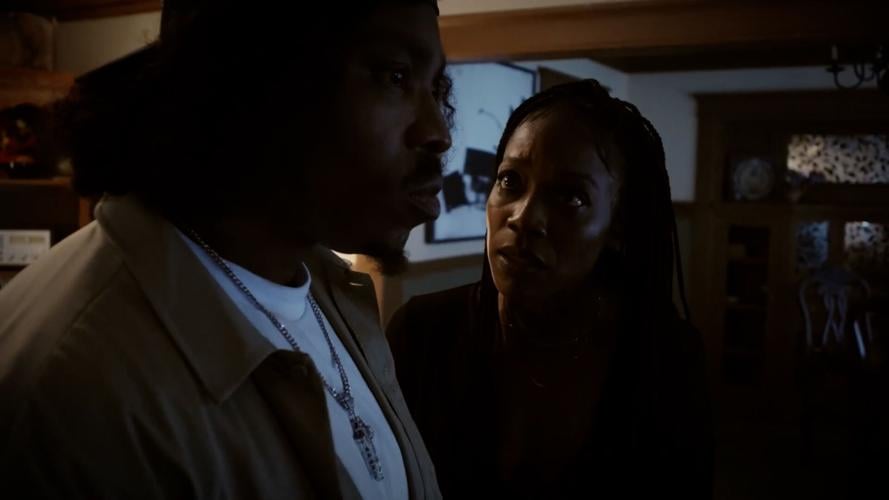
These subtitles make Kennedy's efforts here truly like a bridge or gateway that invites those who couldn't connect with Shakespeare's material, especially Black people, and makes that material more accessible. Like with Ahmed's film, it also injects more representation and diversity into Shakespeare's works, beyond the various depictions of Othello. Kennedy's series will open the door to Shakespeare's plays when historically it's been closed to young and even older African Americans. The subtitles aren't totally necessary. Most of what's being said comes across clearly, mainly due to the performances of the actors like Kennedy and his co-star Candice Renée (Tyler Perry's Bruh) who plays Lady M, the equivalent to Lady Macbeth here. Even if she were speaking a totally foreign language, her performance is so strong that you get the essence and emotion of what she's saying. The subtitles only add technical specifics, if you were totally ignorant of what the story here is.

Beyond that, Kennedy directs this short film by stitching together a series of one, long, continuous takes, aka a "oner." There are basically four scenes to this short film. They're done where the camera starts and doesn't stop until the scene is over. This means the camera runs for ten minutes without any edits or visible transitions between various shots. Kennedy keeps his camera fluid and rolling as not to break the flow. He did create new hip hop music for this film, so he clearly is a man who understands the concept of having a good flow. Doing a oner is an excellent way to keep the audience immersed in the action, almost as if they were watching a play by Shakespeare. It's a powerful and thoughtful tactic, which signals him to be a director to keep an eye on. Hopefully, his series will get the green-light and be on the air soon.
Not Rated but for mature audiences.
Running Time (Short Film): 19 mins.
Currently playing in film festivals. Official website.