
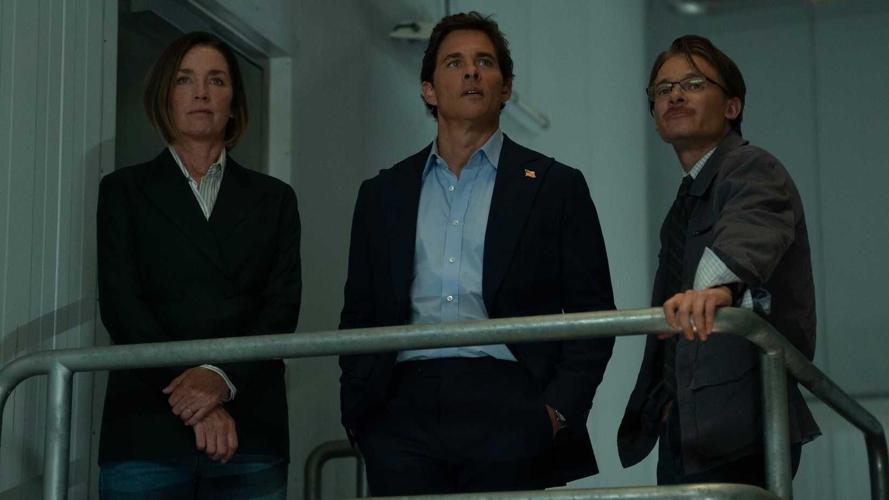


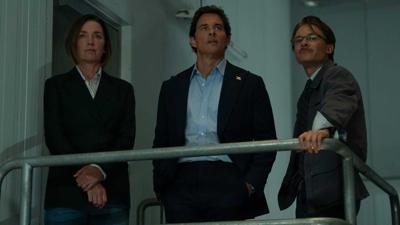
I really loved the first season. It was an interesting, political, murder mystery that turned out to be a sci-fi, post-apocalyptic thriller. It wasn't like other post-apocalyptic thrillers in that it stayed centered on a protected society and examined how that society could be manipulated and controlled. In other words, the show didn't really show the outside world to give us a sense of the post apocalypse. The driving force was instead unraveling the murder mystery and the connected conspiracy behind it all. A large chunk was also about the power of Sterling K. Brown and James Marsden as this interesting duo. Julianne Nicholson contributed a lot too as the first season's antagonist. The dynamic was really strong as it was focusing on people trapped in an underground bunker that looked like suburban America. It had a lot of potential, but the ending of the first season set up that this original dynamic would change and something totally different was in store. Basically, this second season throws a lot of what made the first season great out the window.
This second season reminds me of the second season of The Last of Us (2023). A good number of people criticized the second season of The Last of Us for changing its dynamic and making choices that didn't help to endear us to the new characters or even old ones. While those criticisms can't exactly be applied to this second season, the vibe of this second season does feel like that second season of The Last of Us. There's an absence of zombie-like monsters, but the image of scavenging survivors through a veritable wasteland is certainly here.
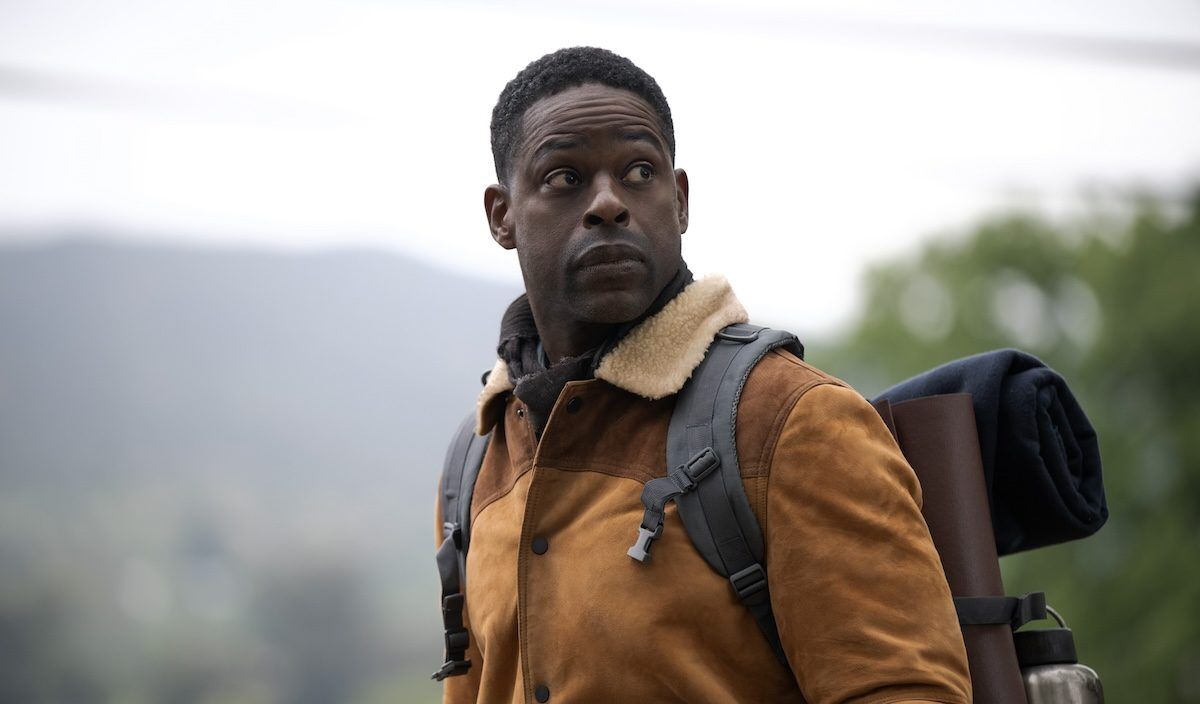
Yet strangely, the wasteland here isn't that much of a wasteland. The so-called post apocalypse isn't that much of a post apocalypse. I'm not sure if we're supposed to think that the world here is worse than what's depicted. It seems worse at first, but it gets to a point where things become fine, which is where it starts to diverge from The Last of Us. This show gives us hope, whereas The Last of Us doesn't. There literally is an episode that shows people outside the bunker living in a happy and thriving community. There are still scavengers, but when people need help, those scavengers offer assistance. Aside from one new character who turns out to be a bit psychotic, the post apocalypse seems like it's not that bad. Therefore, it feels at odds that the narrative is taking us back to the bunker, which struggles to be interesting any more.
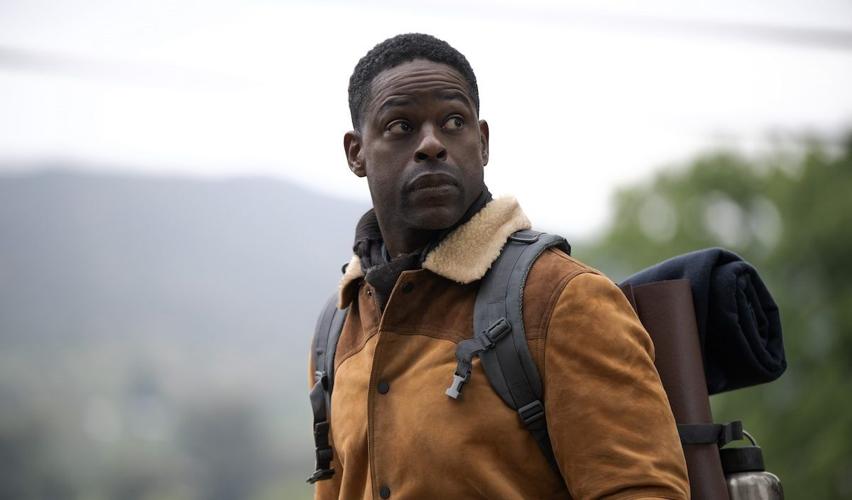
The show creates a new mystery, a literal, mystery box. It's difficult to care about that mystery because Sterling K. Brown's character doesn't care. Brown's character of Xavier has been absent for large swaths of this season. This includes Marsden's character. Marsden who brought so much to the first season is practically gone here, which makes sense, but I felt his absence more than anything. He injected a level of fun that makes this show feel less bleak. Again, it's not as bleak as The Last of Us, but Marsden's charm and brightness added something that haven't been replaced. Brown could've picked up the slack, but again, this season sidelines Brown's character, so that he can't pick up the slack as much. One of the criticisms of the second season of The Last of Us was that its lead character, played by Pedro Pascal, was largely absent. It's similar to this second season where Brown's character is largely absent, and with Xavier largely absent, I struggled to care.

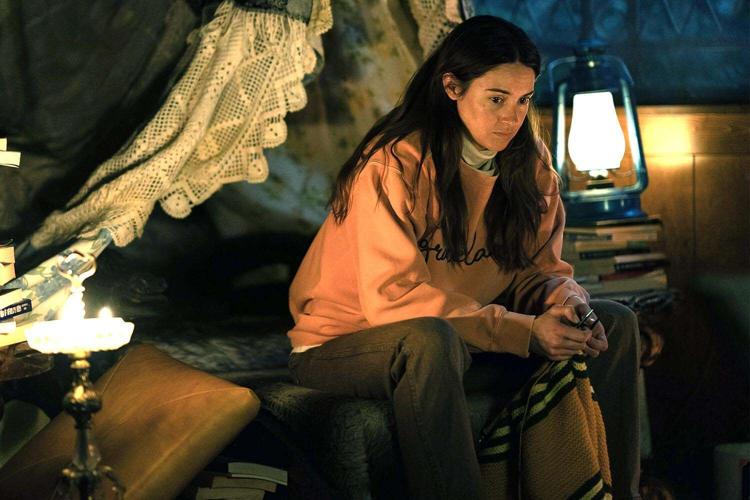
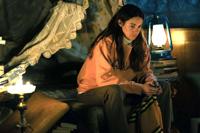
It's not to say that the non-Xavier episodes are bad. In fact, they're mostly acting showcases for the guest stars therein. Shailene Woodley (Big Little Lies and The Fault in Our Stars) plays Annie, a worker at Elvis' Graceland museum. She becomes trapped there or chooses to make it her makeshift bunker. Woodley gives a great performance, as a woman who cuts herself off and becomes distrustful of humanity. Cameron Britton (The Umbrella Academy and Mindhunter) plays Gary Jones, the mailman who also creates a makeshift bunker to protect himself from the post apocalypse. His performance of an older incel, not as misogynistic, but potentially as violent, was good, but ultimately again, I struggled to care.
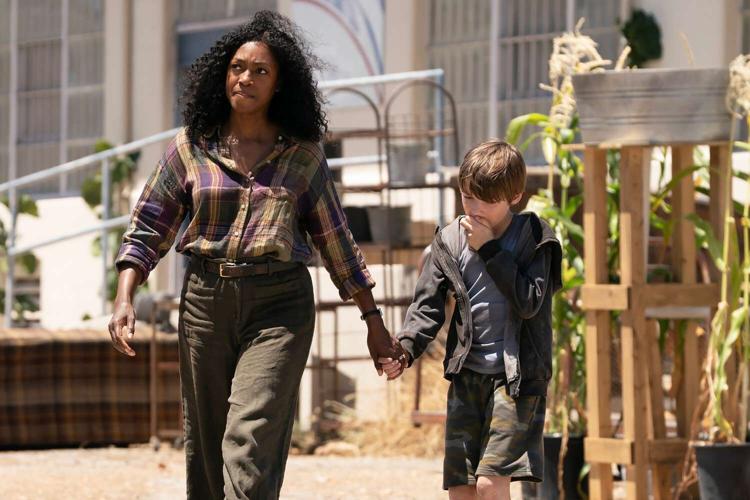
Britton's character is a bridge to introducing us to Terri, the wife of Xavier, played by Enuka Okuma (Rookie Blue). The show gives us flashbacks to Xavier meeting Terri and them falling in love or starting to fall in love. A lot of this show is about parents and children. Terri even gets a surrogate child, while in Gary's makeshift bunker, while also being separated from her biological children. Aside from a brief moment in the finale, that dynamic of Terri's connection to her children isn't played up. We should feel that connection to her kids. Yet, Terri's connection feels perfunctory at the end, if only to barely acknowledge that she's a mom. I should feel that connection as strongly as I felt the surrogate parent relationship for Pascal's character in The Last of Us, but I don't.
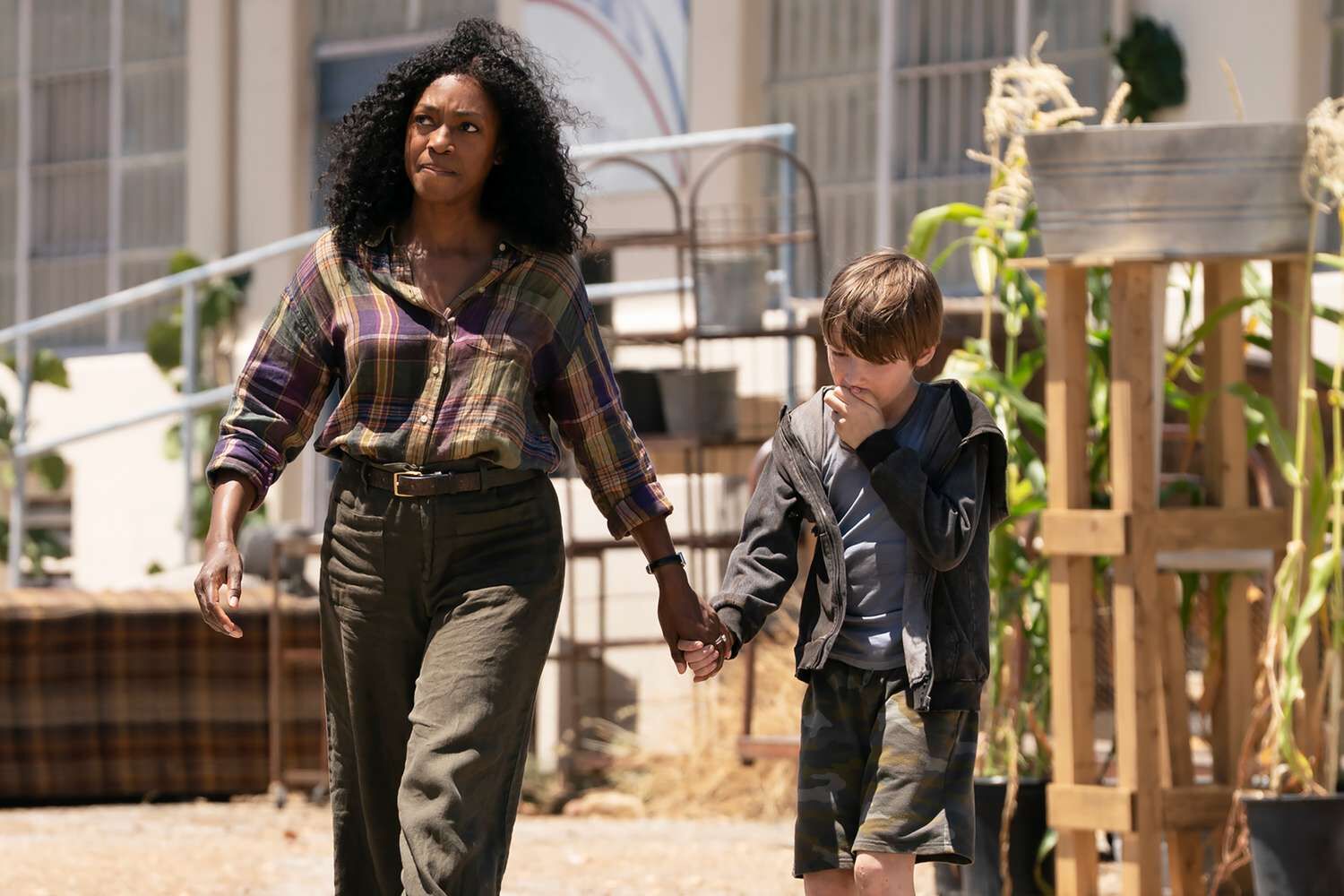
The season in the end rapidly changes the show into something else that feels totally different from where it started. The third season feels like it's going into A.I. territory, which is not where I thought it would go. There have been shows that have taken its premise and its characters into completely new directions. A series like Lost (2004) opened the door to that kind of left turn for a show. One of the best examples is The Good Place (2016), which took left turns every season. This show is attempting the same, but The Good Place maintained core characters of which it never lost sight, and same with Lost. This one rather does.
Rated TV-MA.
Running Time: 1 hr. / 8 eps.
Available on Hulu.