
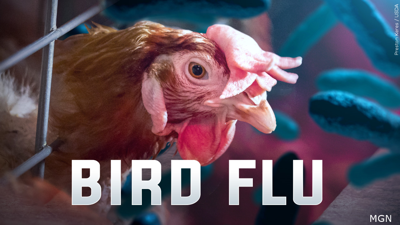
WICOMICO COUNTY, Md. - The Maryland Department of Agriculture announced a presumptive positive case of avian influenza, also known as bird flu, at a commercial broiler farm in Wicomico County on Saturday.
State officials say they have quarantined all affected areas, and the birds are being euthanized to prevent the spread. They say birds from the affected flock will not enter the food system.
The MDA says this is the first case on a commercial poultry farm in Wicomico County and the second case in Maryland this year.
They say confirmation is pending from the U.S. Department of Agriculture’s National Veterinary Services Laboratory, and final results will be released in the upcoming days.
James Fisher with the Delmarva Chicken Association said the discovery of this case came from routine safety testing in the affected commercial flock.
"It means the food safety system is working," Fisher said. "The food safety system is designed to make sure that no chicken with avian influenza ever gets to a shelf or restaurant. No one in the chicken community enjoys having to handle these cases, but the fact that we catch them at the farm level is a good sign."
Bird flu is a highly contagious airborne respiratory virus that spreads easily to birds through nasal and eye secretions and manure. The virus can be spread through wild birds, contact with infected poultry, by equipment, on the clothing or shoes of caretakers.
Fisher said that, through quarantine, depopulation, and other safety measures, there is very little likelihood of this case affecting a nearby flock.
"Everybody has an interest in seeing that this is addressed the right way, and addressed quickly," Fisher said. "We are very successful at preventing farm-to-farm spread."
The illness affects chickens, ducks, and turkeys, along with some wild bird species like ducks, geese, shorebirds, and raptors.
The MDA says the following are key biosecurity practices to prevent the spread of bird flu:
Clean and disinfect transportation. Don’t walk through or drive trucks, tractors, or equipment in areas where waterfowl or other wildlife feces may be. If you can’t avoid this, clean your shoes, vehicle, and equipment thoroughly to prevent bringing disease agents back to your flock. This is especially important when visiting with farmers or those who hunt wildfowl, such as when gathering at a local coffee shop, restaurant, or gas station.
Remove loose feed. Don’t give wild birds, rodents, and insects a free lunch. Remove spilled or uneaten feed right away, and make sure feed storage units are secure and free of holes. Wild birds can carry HPAI.
Keep visitors to a minimum. Only allow those people who take care of your poultry to come in contact with your birds, including family and friends. Make sure everyone who has contact with your flock follows biosecurity principles.
Wash your hands before and after coming in contact with live poultry. Wash with soap and water. If using a hand sanitizer, first remove manure, feathers, and other materials from your hands because disinfectants will not penetrate organic matter or caked-on dirt.
Provide disposable boot covers (preferred) and/or disinfectant footbaths for anyone having contact with your flock. If using a footbath, be sure to remove all droppings, mud, or debris from boots and shoes using a long-handled scrub brush BEFORE stepping into the disinfectant footbath, and always keep it clean.
Change clothes before entering poultry areas and before exiting the property.
Visitors should wear protective outer garments or disposable coveralls, boots, and headgear when handling birds, and shower and/or change clothes when leaving the facility.
Clean and disinfect tools or equipment before moving them to a new poultry facility. Before allowing vehicles, trucks, tractors, or tools and equipment - including egg flats and cases that have come in contact with birds or their droppings - to exit the property, make sure they are cleaned and disinfected to prevent contaminated equipment from transporting disease. Do not move or reuse items that cannot be cleaned and disinfected, such as cardboard egg flats.
Fisher said that most growers abide by these rules year-round and that the abundance of caution helps the chicken community stay safer.
"It's tough on the affected farmer, but we do know how to support that farmer by now. It's amazing to see how the whole chicken community kind of rallies in response to it," Fisher said. "The USDA is involved in reimbursing the chicken community for cases like this. And farmers certainly work with their chicken company as well to make sure they're ready for the next flock."
Maryland poultry owners who notice the signs of avian influenza in their flocks are asked to call the Maryland Department of Agriculture at 410-841-5810. Commercial chicken growers and backyard flock owners can email questions about the outbreak to MD.Birdflu@maryland.gov. The department also suggests looking for signs of illness and knowing the warning signs of infectious bird diseases.
Members of the public are also asked to report any sick wild birds they may find, but are urged not to handle the wildlife. To report a sick wild bird in Maryland, call the Maryland Department of Natural Resources Wildlife Services hotline at (877) 463-6497between 8 a.m. and 4:30 p.m. Monday through Friday.