
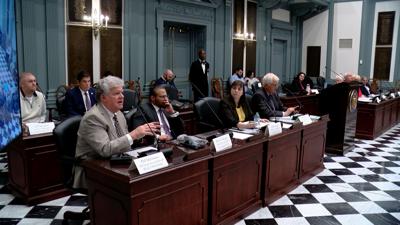

DOVER, DE- Delaware lawmakers heard from the state’s business and housing communities Tuesday during the Special Reassessment Committee’s hearing on the statewide property reassessment. Representatives from small businesses, farms, restaurants, housing providers, and early childhood education described the significant challenges posed by rising property taxes.
The bipartisan Special Reassessment Committee held its fourth of five hearings, convening to review the first statewide reassessment in more than 40 years. Lawmakers said they wanted to hear directly from residents and business leaders after sticker shock from steep property tax increases swept all three counties.
Sydney Grossnickle with the Delaware Farm Bureau said Delaware’s top industry, agriculture, which employs roughly one in eight residents, was among the hardest hit.
“We saw farms that went as high as a 500% increase, 600% increase. We saw folks in Kent County see an 80 to 200% increase."
Grossnickle detailed farmers’ experiences during the reassessment process, citing triple-digit tax increases on farm parcels, unequal treatment of farm structures, and inconsistencies in how farms were classified.
Grossnickle said the rising property taxes are already affecting farm operations and could worsen, potentially forcing farmers to increase prices, reduce investments, take on more debt, or even exit the industry.
“Long term, we see this deterring some young and new farmers from getting into the industry. Because if you think about it, agricultural land is already so expensive in the state. And to tack on an additional annual, high-dollar amount, that’s just hard for long-term stability and sustainability.”
But the agriculture industry wasn’t the only sector raising concerns.
Carrie Leishman, president and CEO of the Delaware Restaurant Association, said the reassessment is adding pressure to an industry already facing rising expenses and operating on razor-thin margins.
“Restaurants are the largest small business employer in the state, and so what impacts small businesses impacts restaurants in greater proportions.”
Leishman said restaurant owners need transparency and predictability in the tax process, warning that without it, the industry could face failures.
“Restaurants really want a fair playing field. They want transparency. And most of all, businesses need predictability.”
The housing sector raised concerns that taxing properties at the non-residential rate is driving up costs for renters and manufactured homeowners, often passed on to tenants.
They highlighted the financial strain on residents, especially seniors on fixed incomes, due to rising lot rents, healthcare costs, inflation, and property taxes.
Thomas Healy, of the Kings Cliffe Homeowners Association, said many manufactured homes were over-assessed and advocated for a more equitable tax system.
“They should be classified as a manufactured home, but with a different tax basis, because they’re not — they don’t own the land unless you have it on your private land. You have it in a community. You do not own the land.”
Also present was Jamie Schneider, executive director of the Delaware Association for the Education of Young Children, who raised concerns that higher property taxes on childcare businesses could harm workforce stability, access, and quality of care.
The reassessment committee’s final hearing is next Tuesday, with school districts and school funding set to take center stage.