
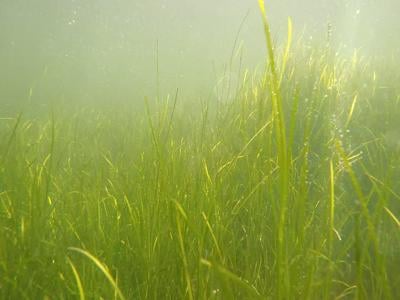

CHESAPEAKE BAY - Officials with the Chesapeake Bay Program say the total acreage of underwater grasses in the Bay increased from 2024 to 2025 and brings grass abundance closer to its 2030 goal.
Specifically, officials say underwater grasses increased in 2025 to an estimated 89,385 acres across the Chesapeake Bay and its tidal tributaries. This marks a 7% increase from 2024 and places the Bay's underwater grass abundance just 615 acres shy of a 2030 interim milestone of 90,000 acres. It also represents 45% of the long-term goal of 196,600 acres as set by the Chesapeake Bay Watershed Agreement.
The Chesapeake Bay's underwater grass is also known as Submerged Aquatic Vegetation, or SAV. Officials say the Bay's SAV is monitored each year by researchers at William & Mary's Virginia Institute of Marine Science across four distinct salinity zones. In 2025, they say SAV expanded significantly in the high and moderate salinity zones, with record abundance in the high salinity zone. However, officials say modest decreases were also seen in low-salinity and tidal fresh zones.
SAV levels depend heavily on several environmental factors, such as water clarity, nutrient and sediment runoff, temperature, and salinity. All of these factors impact different species of underwater grasses throughout the estuary. Officials say 2025 saw historic gains in the high salinity zone as a result of eelgrass continuing to expand into deeper waters where improved water clarity better supports plant growth. However, declines in the tidal fresh zone were driven by losses of Hydrilla.
Officials say underwater grasses are critical to the overall health and stability of the Chesapeake Bay ecosystem and the amount of grasses in the Bay is a direct indicator of its overall health. When this monitoring program began in 1984, the Bay was estimated to contain only 38,958 acres of SAV. A long-term average of 70,978 acres has been maintained since the program began, with a high of 108,078 acres in 2018.
The 2025 total of 89,385 acres is well above the long-term average. Officials say it marks the sixth-highest acreage recorded in the program's history.