
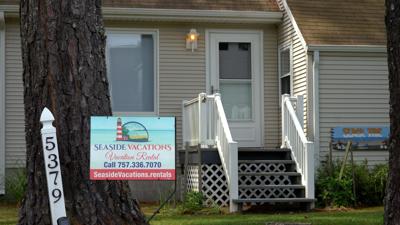


CHINCOTEAGUE, Va. — A proposal to ban new short-term rentals in Chincoteague's R-1 Districts has been put on hold while town officials study the potential impacts of such a measure.
Dozens of residents gathered at the Chincoteague Community Center on Monday night for a public hearing on the proposal, which would have halted new short-term rental licenses in R-1 residential districts. A short-term rental is classified as anything rented for 30 consecutive days or less, according to town regulations.
After a couple of hours of discussion, council leaders ultimately voted to table any ban on new short-term rentals until a study could be done. Town leaders said the study would assess the need for any such ban to be enacted.
According to town officials, the proposal was prompted by the growing number of short-term rentals on the island. The measure was intended to serve as a pause rather than a permanent ban, giving officials time to evaluate how short-term rentals affect neighborhood character, affordable housing, infrastructure, and public services.
“We're seven miles long and a mile and a half wide. You can only put so many houses on here," Chincoteague Mayor Denise Bowden told WBOC. “We love that people are coming here to visit. We love that. We also recognize that it is very hard to find affordable housing on the island. That's not just here; we know that's everywhere. Rent prices are outrageous. But we are trying to find that balance.”
However, several residents who live in the affected R-1 districts opposed the proposal during the hearing. Many argued that short-term rentals have not negatively affected their neighborhoods.
Under the proposal, existing short-term rentals would have been grandfathered in. Still, some residents said preventing new rentals would restrict property owners' rights.
“It's a solution in search of a problem. If they do that, it's going to have a tremendous impact on what people can and cannot do with their properties in our community. And that's something that we have a big problem with,” said East Piney Island property-owner Ken Hirschmugl.
Real estate professionals also voiced concerns, saying the proposal could reduce property values and negatively affect the local economy.
“If you can no longer get a rental license, your property is worth less than one that has a rental license. And if you've bought a property with the intent to build your second home, ultimately, you've just lost the potential right to rent, which is going to affect property values," Lance Stitcher with Seaside Vacation Rentals told WBOC.
Stitcher also said the proposal, along with a proposal to raise fees associated with owning short-term rentals in town, could hurt the local economy.
"The town generates 2.7 million a year from the transient occupancy tax. You can't have tourism without lodging, and they're attacking a source of lodging,” said Stitcher.
Town officials said there is currently no timeline for when the study will be completed.