
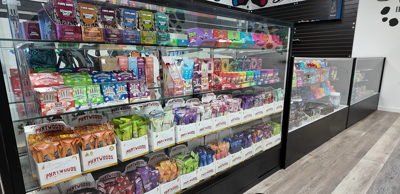

DOVER, Del. - A Delaware lawmaker is introducing new legislation aimed at clearing up confusion surrounding hemp products—after recent enforcement actions left some small business owners feeling targeted.
Supporters of the proposal say the issue isn’t the law itself, but how it’s being interpreted.
While Delaware allows the sale of hemp products containing no more than 0.3% delta-9 THC, advocates argue that businesses are still left guessing about what is actually permitted.
Sen. Kyra Hoffner, D-Del., is now pushing Senate Bill 298 to decriminalize hemp and hemp-derived products, with the goal of drawing a clearer distinction between hemp and marijuana.
"We need to really make lines clear what is legal and what is not, who's protected, who's not," Hoffner said.
The push comes as some business owners say they’ve been caught in a legal gray area—including Anthony Taylor, who says his shop was raided just last week.
According to Taylor, law enforcement entered his store, seized products and did not give him an opportunity to comply before taking action.
"It's not clear. It's a gray area. So with the regulations, we'll have a clear perspective of what the regulations are and what they should do," Taylor said.
Taylor says his path to business ownership wasn’t easy. After years of working long hours in low-paying jobs, he opened his store to build financial stability and spend more time with his two young daughters.
He says his goal is straightforward: to understand the rules, operate within them and set a positive example in his community.
Others in the industry say they’ve faced similar challenges.
Christopher Cannon, owner of Cannon Ball Dispensary in Selbyville, says his business was also raided by law enforcement last fall.
"As a disabled veteran and a family man, I built my business to operate transparently and within what I understood to be the law. I wasn't trying to cut corners, I was trying to do things the right way," said Cannon.
Cannon says he was forced to close his business while his case moves through the courts. He faces multiple felony charges, and in recent weeks, his wife and oldest daughter have also been charged in connection with the case.
For both, the stakes go beyond policy—they’re personal.
"That's what it would mean for me. A lot of freedom. Finally, not have to look over my shoulder and dealing with these situations," Taylor said.
Hoffner says stories like these are exactly why she believes change is needed, especially as hemp products grow in popularity.
"As it gets more popular, more people are consuming the product. So now law enforcement are thinking everyone's doing things wrong," she said.
She emphasized that the goal of the bill is not to remove oversight, but to create consistency and clarity for both businesses and regulators.
Delaware attorney Amit Vyas says this bill is needed now.
"Delaware's current framework has left too much uncertainty about what products are lawful, how they should be tested, how businesses should operate, and how law enforcement should respond," he said. "Senate Bill 298 clarifies that and protects business owners and consumers alike from ambiguity in the law and criminal prosecution."
As the bill moves forward, supporters argue it could better protect both businesses and consumers by clearly defining what is—and isn’t—legal.
However, some lawmakers have raised concerns about timing. With just 18 legislative days left in the current session, they say there may not be enough time to fully evaluate the proposal before lawmakers adjourn.
"This problem began when well-intended federal legislation led to unintended consequences. We risk repeating that mistake if these proposals are not carefully considered," said Joseph Fulgham, with the House Republican Caucus.
Fulgham described that the federal 2018 Farm Bill created a loophole that allowed manufacturers and retailers to develop and sell a broad range of intoxicating hemp-derived products. Because of this, more discussion is needed to strike the right balance between clarity, safety and regulation.