

SUSSEX COUNTY, Del. — Delaware has implemented emergency regulations for deer hunting as the state works to limit the spread of chronic wasting disease, or CWD, ahead of the upcoming hunting season.
Two cases of CWD were identified in Sussex County earlier this year, prompting the Delaware Department of Natural Resources and Environmental Control to establish a CWD Management Zone in the area where the disease was found.
The new regulations include a ban on using bait and feed to attract deer within the management zone. Hunters also face new requirements for handling and moving harvested deer out of the zone.
The regulations also prohibit the rehabilitation and relocation of rescued fawns originating within the management zone.
State officials say the measures are intended to reduce activities that could bring deer together, limit the movement of potentially infected animals and increase CWD testing and surveillance.
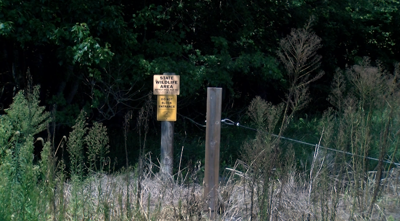
The management zone includes Wildlife Management Zones 14 and 16 in lower Sussex County, including areas around the Midlands Wildlife Area and Trap Pond State Park.
Some local hunters and business owners say they are concerned about how the new restrictions could affect the hunting community and businesses that rely on hunters.
Jeffrey Behney and his brother Chad own Range Time, a gun shop and range in Millsboro. Jeffrey said the restrictions could affect his business.
“For us, it's really going to hinder our business because the 10 or 12 pallets of corn that we sell a year, that's not going to happen anymore,” Behney said. “So we use that to subsidize our income to get people in the door to buy other stuff.”
Chad Behney says he worries the new requirements for moving harvested deer could also create additional costs for hunters.
“Fuel prices are already high,” Behney told WBOC. “I mean, how much…do I [have] to spend in this? Is it going to keep me from hunting? It might,” Behney said.
He also said he believes local hunters should have a role in addressing the disease.
“We should let our local hunters take care of the problem, and we should probably shut our out-of-state hunters out for a little bit,” Behney said.
DNREC says it is expanding CWD surveillance as deer season approaches and will continue evaluating testing results to determine the next steps in its response.
The agency previously said it would work with hunters and the community as part of its response, including increasing surveillance around where the disease was detected and encouraging people to report sick deer.
The emergency regulations took effect Aug. 17 and will remain in place for 120 days, with the possibility of a 60-day extension.