

WICOMICO AND DORCHESTER COUNTIES, Md. — Some Eastern Shore farmers are trying to make their voices heard about deer crop damage, saying they aren't getting enough help from the state to manage the problem.
The Dorchester and Wicomico County farm bureaus invited lawmakers and state leaders to a meeting Tuesday night to discuss ongoing crop damage caused by deer.
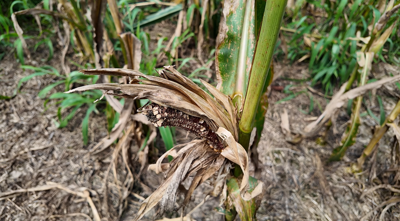
Seth Griffin, a Wicomico County farmer, said he has fields that have been a total loss. During the growing season, he said, deer bite the growing point out of corn stalks, stunting the plant's development.
"And when that happens it prevents it from going to a tassle, so without a tassle it's not going to pollinate properly. And when it doesn't pollinate properly you go from a good crop of corn to that," Griffin said.
Griffin said the state does offer farmers crop damage permits to hunt and kill some deer, but managing those permits has become another job on top of running a farm.
"It's very frustrating, you know, and they think they're doing us a great favor to give us these permits. Don't get me wrong. We were appreciative of what we have, but you know, we can't be everywhere," Griffin said.
Griffin said typical federal support, such as crop insurance, has also pulled back on covering deer-related losses.
"So typically, we would get help from the federal government on certain areas like this, just from crop insurance, but with crop insurance now is is trying to throttle back and not pay out specifically for deer damage or wildlife damage in general, they deem it's the state's responsibility that they are the state's deer. So they don't want to pay money to take care of the state's deer, essentially," Griffin said.
He said the permits alone aren't a practical solution given how many farms need attention and how limited farmers' time already is.
"We don't really get it much of anything other, they do allow us to get crop permits, which that in itself is just another job for us to have to, to manage. You know, it's, we don't have enough hours in the day to be going to every form and manage every form to expenses explicitly like that," he said.
He added that recruiting more hunters, rather than relying solely on existing permits, would make the biggest difference.
"So what would be a major help is to be able to bring more hunters to the table. The permits are alright, they help. And we are thankful for them. But there's not enough farmers out there to use them. We really need to enlist the deer hunting population to kind of step up and do their job to help manage," Griffin said.
DNR leaders said Maryland has one of the loosest season and bag limit policies in the Northeast, but acknowledged the state has to balance the concerns of both farmers and hunters.
Karina Stonesifer, with the Department of Natural Resources, said the agency is trying to find middle ground.
"It comes down to balancing the needs both on the ag side and on the hunter side, which we have to consider both. We need to sustain a healthy population for recreation but we also have to be responsive to our farmers," Stonesifer said.
Stonesifer said hunter numbers in Maryland have declined, though not as sharply as in other states, and said DNR wants to help farmers make better use of underutilized permits.
"I mean our hunter numbers have declined but they haven't dipped as drastically as other states have. Could we do better? Yes, we could and you know I'm hopeful that we can find a way to help our agricultural partners utilize these permits that are currently being under utilized," Stonesifer said.
She said DNR is working to expand access to permits that allow farmers to remove more deer, including opening up more Sunday hunting opportunities.
"We're starting to open the flexibility for people to get a permit to shoot on those, to help bring those numbers down to include expanding our Sunday hunting opportunities," Stonesifer said.
There were a number of questions raised during Tuesday's meeting. State Sen. Mary Beth Carozza suggested that a list of the concerns and suggestions be compiled and sent to farm bureau presidents for further discussion before any steps are taken.