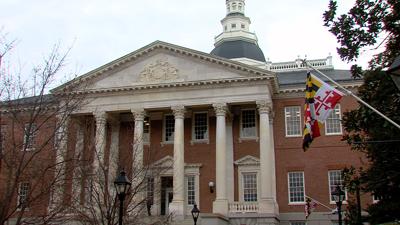
ANNAPOLIS, Md. -- Maryland Governor Wes Moore delivered his fourth State of the State Address on Tuesday, drawing a sharp contrast between his administration’s agenda and what he called a “damaging federal direction” out of Washington.
Moore told lawmakers the mission for 2026 was simple: "protect, deliver, and lead."
Moore opened by praising Maryland’s current legislative leadership, including House Speaker Joseline Peña-Melnyk, the first Afro-Latina to hold the position. He framed the moment as bigger than symbolism and told the chamber, "Making history isn’t the assignment. Making life better for Marylanders is."
Moore also acknowledged the ongoing disagreement in Annapolis over redistricting and urged lawmakers not to let the process stall out. His message was to debate it, amend it if needed, and still bring it to a vote. "Do not let the democratic process die in the free state," he said, pressing the House and Senate to resolve differences in the open.
Throughout the address, Moore repeatedly pointed to the White House agenda as a threat to Maryland families. He said federal actions have already cost the state thousands of jobs and warned that future changes could put health coverage and food assistance at risk. Moore said Maryland will respond by filling what he described as a $40 million gap in SNAP funding and keeping major investments in place, including $14 billion for Medicaid, which he said serves more than 1.4 million Marylanders. Moore also emphasized fiscal discipline, saying his proposed budget is balanced, the general fund is smaller than the year before, and it does not raise taxes or fees.
In one of the sharper policy pushes of the day, Moore said he wants Maryland to decouple vaccine authority from the federal government. He argued state decisions should be driven by science and not politics or misinformation.
Moore also highlighted flood recovery in Western Maryland and said the federal government declined assistance for Allegany and Garrett counties after historic flooding. He announced $12 million in state funding for recovery efforts in Allegany County, including $1 million to rebuild the Westernport Library. He stressed that party affiliation should not decide who gets help.
Moore said rising costs remain Marylanders’ top concern and pointed to national increases in energy, beef, and fertilizer. He proposed $100 million more in energy rebates, following last year’s $200 million, and called for reforms to strengthen the energy market and expand generation. He said Maryland should increase solar, wind, and storage while maintaining an approach that also includes natural gas and nuclear power.
He also criticized the regional grid operator PJM and said Maryland is urging a two-year cap on energy prices while pushing for data centers to cover the strain they put on the grid. Moore added a condition for future projects, saying data centers must hire local workers, engage local communities, and pay for their own power needs.
Moore leaned into economic development and the rise of artificial intelligence. He announced $4 million for worker training tied to AI and said the state plans to use AI tools to help residents navigate programs such as SNAP, Medicaid, unemployment, and child care subsidies. Moore said Maryland is focusing on three “lighthouse industries” that he believes the state is positioned to win, including information technology, life sciences, and aerospace and defense. He cited major private investments and partnerships as proof that the state’s strategy is attracting jobs and long-term growth.
With Maryland’s population growing, Moore said the state must increase housing supply and rejected approaches he described as limiting prices without building more homes. He highlighted recent progress in rental unit production and promoted his Maryland Transit and Housing Opportunity Act of 2026. Moore said the goal is to build more housing near transit and invest in transportation connections so Marylanders can get from where they live to where they work.
Moore also praised the state’s public school progress under Superintendent Dr. Carey Wright and pointed to gains in reading and math, improved graduation rates, and a drop in teacher vacancies. He proposed $10 billion for public schools and said the plan includes a new Academic Excellence Program with coaching support designed to strengthen classroom instruction.
Some of Moore’s most personal remarks focused on immigration. He described fear in immigrant communities and emphasized that Maryland is shaped by newcomers. He backed legislation aimed at holding federal agents accountable for unconstitutional actions while also emphasizing cooperation with federal authorities to remove violent offenders. Moore said state and local law enforcement will work with federal officials to take violent criminals off the streets, but they will always follow the Constitution.
He announced a new program called Citizenship Maryland that is designed to connect eligible residents with legal and community support to pursue citizenship. Moore said about 150,000 Marylanders could benefit. He also highlighted the story of Pastor Daniel Omar Fuentes Espinal, an Eastern Shore pastor Moore said was detained by ICE and held in Louisiana before community advocacy helped secure his release. Moore told him he is always welcome in Maryland.
Moore closed by reflecting on Maryland’s complex history and urged unity and follow-through, saying the state must protect people, deliver results, and lead through the moment. He ended with a call to keep working and to leave no one behind.
Republican response: Hershey says Maryland needs “results,” not more rhetoric
In the Republican response to Governor Wes Moore’s State of the State Address, Senate Minority Leader Steve Hershey argued Maryland families and businesses are not feeling the progress the governor described, saying the gap between “vision” and reality has only grown over four years.
Hershey pointed to what he called rising costs and expanding regulation as pressures making Maryland harder to afford and harder to do business in, and he warned about a looming multibillion-dollar budget deficit and what he described as delayed fiscal accountability. He said job creators are facing growing uncertainty, and he called for a new direction centered on affordability, fiscal discipline, reliable energy, streamlined regulation, and economic growth.
Hershey also took issue with Moore’s repeated references to national politics while explaining Maryland’s challenges, saying the state’s rising costs, energy policy problems, and fiscal instability are the result of decisions made in Annapolis over multiple years, not just recent changes in Washington. “It’s easy to blame Washington, but Marylanders know better,” Hershey said, adding that Marylanders expect the governor to focus on Maryland’s problems and take responsibility for decisions made “right here at home.”
In his message, Hershey framed Moore’s fourth State of the State as a turning point where Marylanders are looking for proof of change. He said the first address was “grand,” the second “ambitious,” and the third “hopeful,” but now the question is, “What has actually changed?” Hershey said too many Marylanders would answer no when asked whether life feels more secure and more affordable.
He also zeroed in on electricity costs, arguing Marylanders are paying some of the highest rates in the country due to state policy choices. Hershey said reliable and affordable energy was sacrificed and that families are paying the price every month. He said Republicans are offering what he called a better path that restores affordability, rebuilds accountability, delivers reliable and affordable energy, and grows the economy by allowing Marylanders to work and invest with less government in the way.
Hershey closed by turning one of Moore’s own lines back on the administration, referencing the governor’s call for Democrats to become the party of "yes" and "now." Hershey said the words may be right, but added that Marylanders are still waiting to see the yes and still waiting for the now.