
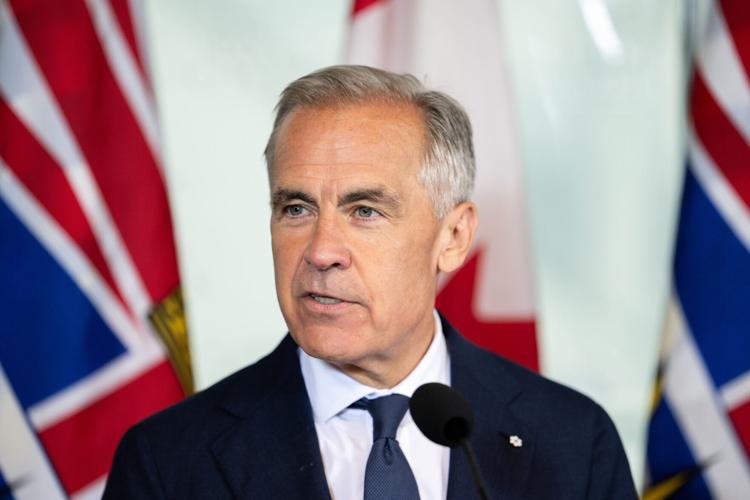
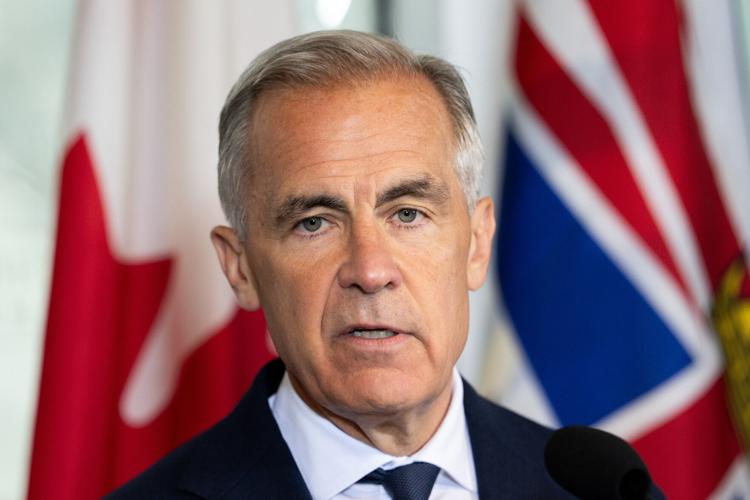
TORONTO (AP) — Canada moved Thursday to advance a new pipeline from Alberta to the Pacific Coast as Prime Minister Mark Carney seeks to reduce the country’s dependence on the United States as its main oil customer, while trying to ease separatist tensions in the energy-rich province without abandoning environmental protections on British Columbia’s northern coast.
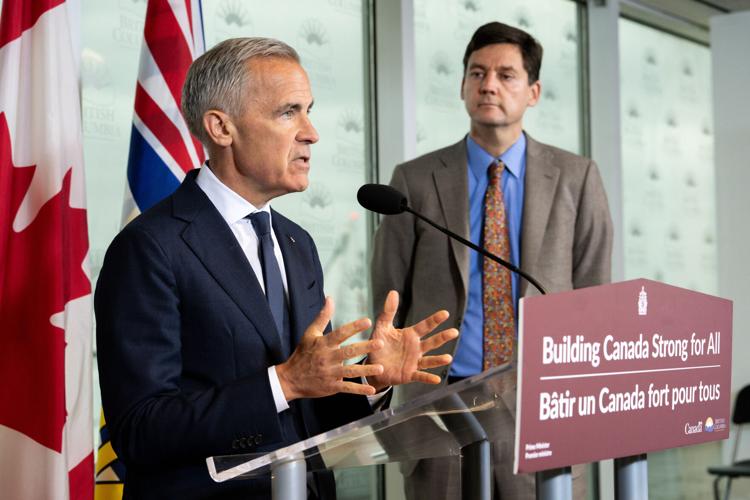
Carney and Alberta Premier Danielle Smith unveiled a proposed route through southern British Columbia, saying the project would open more Canadian oil to Asian markets while preserving a ban on oil tankers off northern British Columbia.
“The best route for a new pipeline is one that goes through one that already exists south through the Trans Mountain corridor, to our Pacific Coast, the gateway to the world’s fastest growing markets,” Carney said in Calgary.
Carney has set a goal for Canada to double its non-U.S. exports in the next decade and has said a pipeline can reduce the price discount on current oil sales to U.S. markets.
Smith wants Alberta to double oil production to eight million barrels per day over the next 10 to 15 years.
“The world is asking Canada to step up and provide stable, democratic and reliable energy supply that countries around the world are looking for,” Smith said.
“This is not just another energy project. It’s a nation-building project that will unlock wealth and opportunity.”
Smith said Pembina Pipeline Corporation will be involved as a partner with government. She said what the share of the private sector stake will be remains to be seen.
Smith has long complained that Carney’s predecessor, Justin Trudeau, hindered the province’s energy industry and fueled separatist sentiment.
Alberta is holding a public vote in the fall on whether to hold a referendum on leaving Canada.
British Columbia and some First Nations are against a pipeline through northern British Columbia.
“The tanker ban will remain in place. We will be protecting the northern coast of British Columbia,” Carney said earlier in Vancouver.
Carney also said Thursday he will compensate British Columbia for environmental risks if a pipeline is built in the southern part of the province.
A previous memorandum of understanding Ottawa and Alberta included an adjustment of an oil tanker ban off parts of the British Columbia coast, but British Columbia Premier David Eby also said Thursday he secured a commitment to keep the northern tanker ban in place, protecting the province’s pristine northern coast.
“It ensures that the northern tanker ban remains in place," Eby said.
Trudeau opposed a pipeline that could cross northern British Columbia and the Great Bear Rainforest. He approved one pipeline from Alberta to the British Columbia southern coast, the Trans Mountain pipeline, but rejected the Northern Gateway project amid opposition from environmentalists and Indigenous communities.
Since the Trans Mountain expansion opened through the B.C. southern coast in 2024, roughly two-thirds to three-quarters of the crude shipped from Canada’s Pacific Coast has gone to Asia, helping Canada reduce its dependence on the U.S. market.
The U.S. still buys most of Canada’s crude.
Alberta holds one of the world’s largest proven oil reserves, and Canada is seeking greater access to Asian markets.