
TORONTO (AP) — Prime Minister Mark Carney called Canada “the most European of non-European countries” early in U.S. President Donald Trump’s trade war. Now, he’s hosting European leaders to pursue an unprecedented alliance, but the proposed EU “associate member” designation faces resistance even as the EU’s top official champions it.
European Commission President Ursula von der Leyen and European Council President António Costa will join Carney in Montreal on Thursday for a two-day summit aimed at deepening trade, defense and economic ties as Canada and Europe seek to reduce their dependence on Washington in a changing world order.
European Union officials who briefed reporters ahead of the summit said the proposed partnership could bring Canada closer to the bloc than any previous arrangement with a non-European country. But its structure and even its name remain unsettled, with some member states questioning the “associate member” designation proposed last month by von der Leyen.
Arriving in Montreal, von der Leyen showed no sign of abandoning the proposal, posting on social media that Europe wanted to bring Canada closer than ever before “as Associate Member of the EU.”
Anand Sundar, a special adviser at the European Council on Foreign Relations, said France and Germany are among the countries unhappy with the designation and that it may not survive the summit.
Carney said Tuesday the summit would launch further negotiations over the next year.
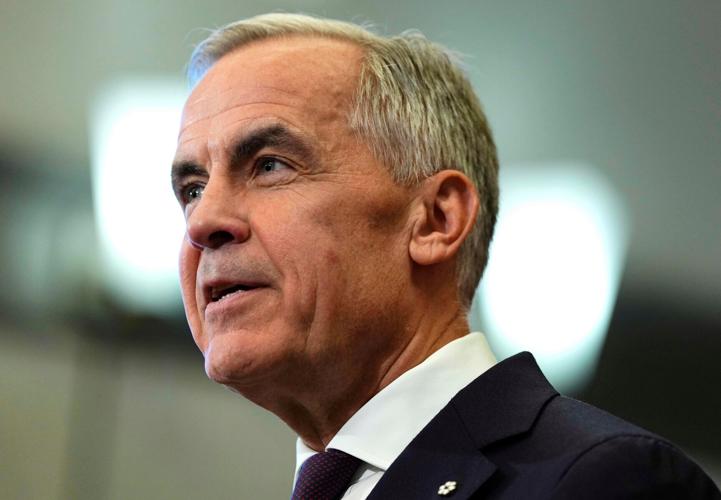
“It doesn’t matter about specific names or nomenclature,” Carney said. “What matters is the difference that it will make to lives of Canadians, young Canadians in terms of opportunities to study, work and travel, our Canadian businesses in terms of new opportunities, Canadian researchers in terms of depths of opportunity, and Canada as a whole becoming a more independent, more sovereign nation, so we can live our lives as we choose.”
Carney has ruled out formally joining the EU, which would require Canada to align its laws and regulations with the bloc’s. Canadian officials said Canada would not assume the EU’s membership-related budget obligations, although it could contribute to specific programs. Carney has said any enhanced partnership would face a vote in Canada’s Parliament.
The summit puts Carney’s vision for a new global order to the test. At the World Economic Forum in Davos, Switzerland, in January, he warned that the U.S.-led international order was breaking down and urged middle powers to unite against economic coercion.
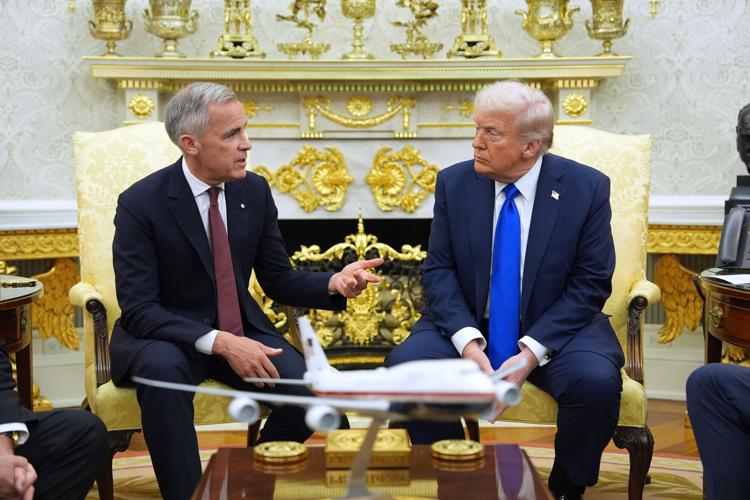
Trump has suggested Canada’s proposed EU arrangement could be a “hostile act” and threatened tariffs on Europe if he considered it unfriendly. Asked Wednesday about possible retaliation, a senior Canadian government official told reporters the closer relationship was not directed against the United States but reflected longstanding shared interests.
An alliance without membership
The summit is expected to launch an “Alliance for the Future,” a framework for closer cooperation on trade, defense, critical minerals, technology and research. Von der Leyen said the alliance would help Canada and Europe respond together to a world of growing rivalries.
The proposed relationship could include regular meetings between Canadian ministers and European commissioners and expanded opportunities for students through the EU’s Erasmus+ program, which supports international study and educational exchanges.
European commissioners and Canadian Cabinet ministers will hold sector-specific meetings, beginning with a business forum Thursday before formal leaders’ talks Friday. Officials hope to develop the broader partnership for possible endorsement in 2027.
Tobias Gehrke, a senior policy fellow at the European Council on Foreign Relations, said the disagreement over terminology was unlikely to derail closer cooperation.
“There is no magic shortcut to rapidly reducing Europe’s and Canada’s reliance on the U.S. economy and military — not least since Washington might retaliate,” Gehrke said. “But the political window is now wide open to take a much bigger step than was previously conceivable.”
Canada’s longstanding European ties
Canada has long looked to Europe to reduce its dependence on its much larger southern neighbor.
“It was the idea of not being alone with the Americans that drove it,” said Robert Bothwell, a University of Toronto historian.
Carney has deep personal ties to Europe. The former Bank of Canada governor led the Bank of England from 2013 to 2020. He chose Paris and London for his first foreign trip as prime minister rather than Washington, a break with tradition. He said the countries reflected Canada’s founding Indigenous, French and British peoples.
Daniel Béland, a political science professor at McGill University in Montreal, said Trump’s policies are accelerating Canada’s efforts to strengthen ties beyond the United States.
“The policies and rhetoric of the Trump administration are clearly pushing both Canada and the EU to imagine a world without strong U.S. leadership and to act accordingly,” Béland said.
A changing world order reshapes economic and defense ties
Ottawa is reviewing plans to buy 72 additional American-made F-35 fighter jets and considering Sweden’s Saab Gripen as an alternative. Canada has committed to an initial 16 F-35s.
Canada is the only non-European country participating in the EU’s 150-billion-euro ($167-billion) SAFE defense procurement program, allowing Canadian companies to take part in joint European military purchases.
But deeper defense cooperation faces obstacles. Sundar said France is pushing for strict “Made in Europe” rules that could limit Canadian companies’ access to future EU defense spending, while Germany favors broader participation by countries outside the bloc. He said negotiations over the EU’s next seven-year budget could matter more to Canada than anything announced in Montreal.
The two sides already have a sweeping free trade agreement, known as CETA, that eliminated most tariffs. Most provisions have been in force since 2017, although some EU member states have yet to ratify it.
The United States accounted for 71.7% of Canada’s merchandise exports in 2025. Carney wants to double exports to other countries over the next decade.
Canada and the EU are pursuing closer cooperation on digital trade and critical minerals, including possible European Investment Bank financing. Canadian officials said Wednesday they were exploring ways to stabilize mineral prices and encourage investment.
Gehrke said Europe’s growing trade confrontation with China is driving demand for Canadian critical minerals. Canada has the resources and mining expertise Europe needs, while Europe offers industrial demand, technology and capital.
Sundar said the shifting international order presents Europe with an opportunity to become a more influential global power.
“Trump’s predatory behavior is allowing the EU to position itself as an alternative geopolitical anchor,” he said.