

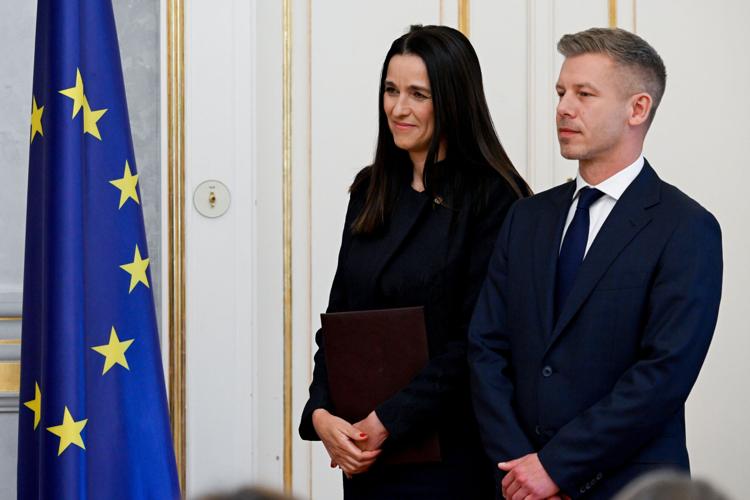
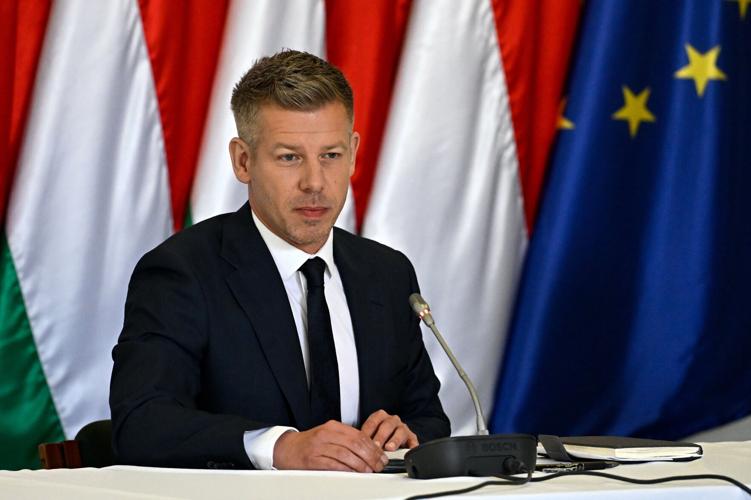
BUDAPEST (AP) — Russia's ambassador to Hungary was summoned Thursday over a massive drone attack in Ukraine, in a stark example of the about-face in relations with Moscow ushered in by the election of Prime Minister Péter Magyar after years of cozy ties under his predecessor, Viktor Orbán.
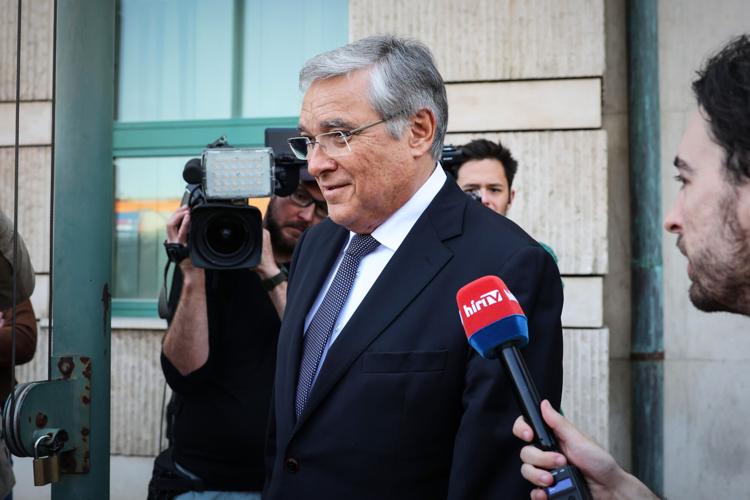
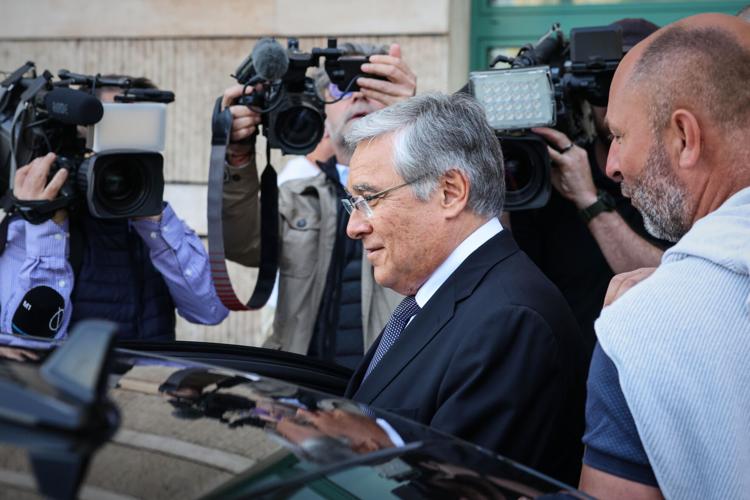
An Associated Press reporter saw Ambassador Evgeny Stanislavov leave the Hungarian Foreign Ministry less than 30 minutes after he arrived to speak with Foreign Minister Anita Orbán about strikes that hit the Ukrainian region of Transcarpathia on Wednesday. The region is home to a sizable Hungarian minority.
“I told the Russian ambassador that it was completely unacceptable for Hungary that they were now attacking Transcarpathia, home of the Hungarian minority," Anita Orbán said on social media. “I stressed that Russia should do everything for an immediate ceasefire and a peaceful and lasting end to the war as soon as possible.”
Russia fired at least 800 drones in a massive daytime barrage Wednesday targeting about 20 regions of Ukraine. At least six people were killed and dozens were wounded, including children. Lasting hours, it was one of the longest-lasting attacks by Moscow in the war now in its fifth year.
The attacks continued Thursday, killing seven in Kyiv alone including a 12-year-old girl, Mayor Vitali Klitschko said.
After the meeting, the Russian embassy issued a statement saying the Russian attack on Wednesday only targeted installations and infrastructure used by Ukraine’s army and not civilian sites.
Ukrainian President Volodymyr Zelenskyy said called the summons in Budapest an “important message” and thanked Magyar for his comments.
“Moscow has once again shown itself to be a common threat not only to Ukraine, but also to neighbouring countries and Europe as a whole,” Zelenskyy said.
The summons marks a stunning change after years of close relations between Hungary — both a member of the European Union and NATO — and Moscow, even following the Russia's full-scale invasion of Ukraine.
When the ambassador left the Foreign Ministry building on the banks of the Danube, an activist yelled at him in Hungarian, “Comrade, it’s over!”
After defeating Orbán in a historic vote in April, Magyar has vowed to undo much of the legacy built during Orbán’s 16 years in power, with a particular focus on alleged corruption.
Magyar announced Thursday that he was ending two crisis governing structures in Hungary set up in response to the war in Ukraine and the COVID pandemic.
Orbán had declared a “ state of danger ” in 2022 in the wake of Russia's full-scale invasion of Ukraine, and his Fidesz party granted him extraordinary executive power during the COVID pandemic in 2020. Both enhanced his powers and led to widespread allegations of democratic backsliding.
"We are returning to normality," Magyar said in a social media post. “As of today, after four years, the wartime state of emergency in Hungary is ending, and with it we are also putting an end to the decree-based emergency rule introduced by the Orbán government six years ago.”
McNeil contributed from Brussels.