
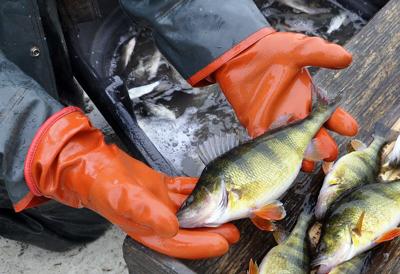

ANNAPOLIS, Md. — Maryland anglers heading out for yellow perch this winter are now limited to just five fish per person per day in tidal waters and rivers, a move state officials say is necessary to help the struggling population recover.
After a reported six straight years of poor recruitment, the Maryland Department of Natural Resources reduced the daily bag limit from 10 fish, effective Jan. 8. The minimum keeper size remains 9 inches, but the smaller limit is designed to protect key breeding fish, especially large females, and give the iconic Chesapeake species a better chance to rebound.
“Yellow perch face a lot of challenges, including habitat conditions, in order to successfully spawn,” said Carrie Kennedy, director of monitoring and assessment for DNR’s Fishing and Boating Services. “We believe this is an appropriate modification to improve the odds of better year classes.”
Surveys show yellow perch numbers in the upper Chesapeake Bay have fallen by more than 50% since 2009, according to DNR, largely due to repeated weak spawning years. Biologists say recreational fishing is not the primary cause of the decline, but reducing harvest pressure could help protect the remaining breeding stock.
Commercial yellow perch fishing has already been scaled back in recent years under a quota system that shrinks automatically as populations fall. Recreational rules, however, had not been tightened since 2009, until now.
DNR reports the 2025 juvenile perch index was the strongest since 2018, a sign that recovery could be possible if adult fish survive long enough to spawn.
The new five-fish limit applies in tidal waters, nontidal streams and rivers statewide but does not apply to reservoirs, lakes, ponds or upstream impoundments. Limits for popular freshwater perch spots, including Deep Creek Lake, remain unchanged.
DNR encourages anglers to release full-bellied pre-spawn females and target post-spawning fish when possible.
For many Maryland anglers, winter perch fishing is a seasonal tradition, and state officials hope the new limits will help protect that tradition for generations to come.