
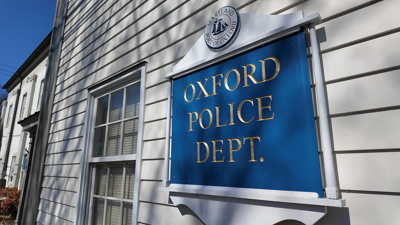


OXFORD, Md. - Oxford officials are weighing whether the town should continue operating its own police department or rely more heavily on the Talbot County Sheriff’s Office as leaders work through the next budget.
The discussion comes as the small Talbot County town faces persistent staffing challenges and rising costs tied to maintaining a local department. Commissioners say no final decision has been made, but they need to determine what policing in Oxford will look like before the next fiscal year begins in July.
Oxford Commissioner David Donovan said the town has struggled to fill openings in the department, even before the recent vacancy at chief.
“We’re not getting any applications,” Donovan said.
Right now, Oxford has one officer on its payroll, with Talbot County officers helping provide oversight and additional coverage under an existing agreement that runs through the end of June.
Donovan said town leaders are now looking at three broad options: rebuilding the local department, continuing a hybrid model with one town officer and county support, or closing the department and moving fully to sheriff’s office coverage.
He said the conversation is being driven by both staffing realities and cost.
“Operating a police department in a town this size is quite expensive,” Donovan said.
According to Donovan, expenses tied to running a department go well beyond salary. He pointed to the cost of replacing police vehicles, as well as equipment, uniforms and pensions. He said making Oxford’s pension structure competitive enough to attract applicants would likely require a major financial commitment for a town with an annual budget of about $2 million.
“If you’re talking about spending $250,000 or $300,000 on the police department, that’s a big deal,” Donovan said.
At the same time, Donovan acknowledged some residents place significant value on maintaining a local department with officers they know and see regularly in town.
“Not having our own police department is a kind of psychological loss,” he said. “I don’t want to demean that or diminish that sentiment.”
For some people in town, the biggest question is what a change in coverage could mean in practice.
James Fitzgerald, who keeps a boat in Oxford, said his first reaction to the idea was surprise, though he understands why officials are examining the issue.
“That sounds kind of crazy,” Fitzgerald said. “But then I understand, it’s a big part of the budget.”
He said his main concern would be response time if Oxford moved away from its own department.
“My question would be where the police would be stationed and how quickly could they get to the crime or whatever call,” Fitzgerald said.
Donovan said commissioners have not made up their minds and want more financial data before making a longer-term determination. He said the decision town leaders make this spring will help shape the next budget, but may not necessarily be permanent.
“We haven’t prejudged it,” Donovan said. “We really want to get everybody’s input before we make that decision.”