

SALISBURY, Md. - Maryland lawmakers are preparing for a session with a long list of issues, including data center regulations and a budget gap of nearly $3 billion.
Senate Minority Leader Steve Hershey (R-District 36) was re-elected to his leadership post Tuesday, but Democrats gained one seat in the midterms. There are concerns they will push for tighter state rules on data centers. The 2027 General Assembly convenes in January.
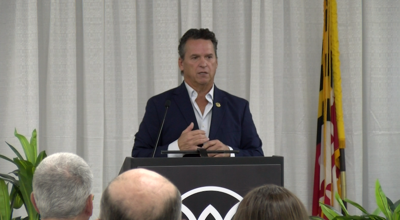
At a Salisbury Area Chamber of Commerce luncheon Wednesday, Hershey told WBOC the state should put up guardrails, but counties should make the final decision on whether data centers are allowed.
“This should be left up to the counties,” Hershey said. “I think each of the counties should determine whether or not they want to use data centers as their economic development tool. I know the state is now looking at a potential moratorium or ban on data centers. I just don’t think that's appropriate for the state to try to say that to other counties.”
Six of the nine Eastern Shore counties have enacted data center moratoriums.
Delegate-elect Josh Hastings (D-District 38B) was unavailable for an interview Wednesday. He spoke with WBOC before Wicomico County enacted a one-year moratorium back in August.
“After we get this, you know, moratorium put in place, which we think is probably going to happen, look to the state of Maryland to start to basically put larger bans or larger regulations on, where and how these things could occur both within counties and municipalities,” Hastings said.
When discussing state guardrails, Hershey gave the example of a state registry where data center developers identify themselves and the locations they’re considering within Maryland. The goal is to keep one developer from scouting multiple sites at once, since the power grid would have to be ready to serve all of them.
Sen. Mary Beth Carozza, (R-District 38), also said the decision should be in the hands of counties.
“So I’m a big believer that you have to look at individual projects and then turn to your local governments and local jurisdictions,” Carozza said. “So I know some are taking the approach that they are going to at the national level, just going to post all proposed data centers across the board. My belief is you should turn to the local governments, the local level, to see what do they want in their home counties.”
She said the issue will be front and center when lawmakers return.
“It's pretty clear that this is going to be a top priority issue for discussion,” Carozza said.
Governor’s position
Gov. Wes Moore said in September that he would “absolutely sign” a statewide data center moratorium if it reached his desk. He said in a statement:
“I believe that local jurisdictions should have say and they should not be told nor dictated, and I do understand there are certain local jurisdictions who want it. I just need them to understand I have very strict guidelines of what’s going to actually get state approval and state authority.”
Moore signed an executive order in September that outlines guardrails for transparent and accountable data center development in Maryland.
Budget gap
At Wednesday’s luncheon, Hershey also addressed the state deficit. The only bill the state constitution requires lawmakers to pass every year is a balanced budget, and Maryland faces a gap of nearly $3 billion this year.
Hershey said Annapolis has a spending problem, not a revenue problem. He acknowledged a recent joint statement from Moore along with House and Senate Democratic leaders about the deficit but criticized them for not mentioning taxes.
“There is a spending problem in Annapolis and the first way to address the budget deficit is to go back and look at those programs and see if they're still doing what they're supposed to be doing,” Hershey said. “And so that was again, fortunate that they (Democrats) said that. Unfortunately that press release did not say anything about not raising taxes.”
In the joint statement released last week, Moore, the Senate president and the House speaker said in part:
“...we agreed to work together to develop a four-year plan that addresses the state’s ongoing budget shortfalls and puts our finances on a more sustainable path. A more predictable state budget will be a stronger foundation for diversifying our economy and supporting the most vulnerable in our communities.”