
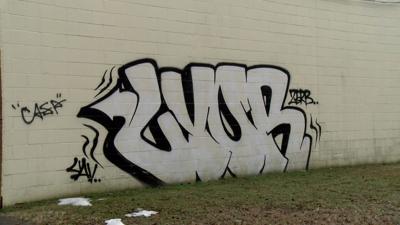


SMYRNA, DE- As graffiti becomes a growing issue across Smyrna, town leaders have moved forward a proposed ordinance that would require private property owners to cover the costs of graffiti remediation on their buildings. While officials say the measure is needed to protect the town’s image and property values, some small business owners worry about the financial impact.
During a council meeting earlier this week, Smyrna leaders held the first reading of this ordinance that would amend the town's property maintenance regulations, making private property owners responsible for graffiti cleanup.
Smyrna Mayor Tabitha Gott said graffiti harms the community beyond its appearance.
"Graffiti is destructive to the town and has a negative impact on the property values and aesthetic appearance of the town. Whereas graffiti has been found to be related to other illegal activities such as littering, theft and property destruction."
Gott, sponsor of the ordinance, said the measure is needed not only to maintain the town's image but also to protect public welfare.
"In the opinion of the town council, it is necessary for the public health, safety and welfare to establish regulations requiring property owners to remediate on private property."
During this meeting, Smyrna Town Manager Torrie James said the intent is to maintain standards, not punish business owners.
"What we're trying to do is preserve the property values of the homes within the town of Smyrna. We are not here trying to penalize anybody. What we are trying to do is not have the town look like it's falling apart."
But some small business owners in Smyrna said the ordinance does exactly that, making them responsible for vandalism they did not cause.
Jakai Hall, owner of House of Cuts, said he does not think it is fair for businesses to bear the costs of vandalism when they are the victims.
"If somebody is doing something illegal to my business, I don't think I should have to pay for the damages."
Ken Reynolds, owner of Red Mill Tackle, said the ordinance does nothing to prevent repeat vandalism, and even if owners repaint quickly, vandals could return, leaving businesses stuck in a costly cycle.
"The property owner could correct the problem tomorrow, and it becomes tagged yet again — I don't think really leaning into the property owners to repaint is quite the approach."
Reynolds added that many small businesses are already operating on tight margins, and the additional expense could have serious consequences.
"Having an additional expense such as that, I'm not saying there could be business-ending, but it's certainly not going to help the business."
During the meeting, town leaders acknowledged businesses would initially be responsible for covering the cost of graffiti removal. However, officials said the town is working to establish a fund to help offset those expenses.