
40 years ago, Mel Brooks wrote, produced, directed and starred in History of the World: Part I (1981). Brooks has only directed about a dozen or so films and History of the World: Part I was one of his least successful. It didn't do as well as his two biggest hits, which also garnered his Oscar nominations, that of Blazing Saddles (1974) and Young Frankenstein (1974). The difference between his 1981 flick and all the others in his decades of directing is that History of the World: Part I is basically a sketch comedy. It's essentially a series of scenes that tell different stories with different characters but using the same group of actors. It's akin to Saturday Night Live (1975). Except, Brooks' film had a bigger budget in order to spoof or parody the big-budget epic films like The Ten Commandments (1956), Spartacus (1960) or Doctor Zhivago (1965). As such the sketches were set in historical time periods like the Stone Age, depicting certain historical events, such as the fall of the Roman Empire, or re-telling tales from such writings as the Bible.
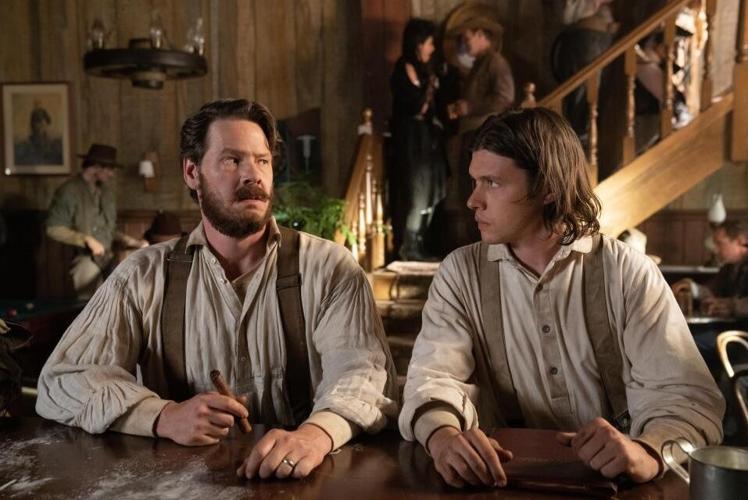
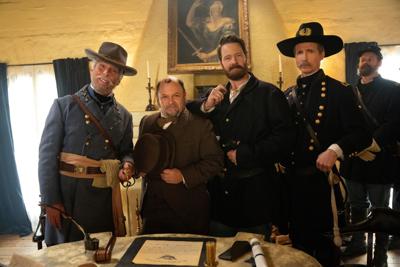
This sequel is noticeably different because the budget for this series doesn't appear to be on par. Brooks' production value in 1981 rivaled the cinematic genres that he was spoofing. His film had itself a strong cinematic look, which made sense since it got a proper theatrical release. This series is indeed a TV series and appropriately spoofing other TV series, programs or spots one would likely see on television. There's segments delving into the American Civil War. As such, one might assume that this show might try to mimic something like Steven Spielberg's Lincoln (2012), Dances With Wolves (1990) or Glory (1989), but that kind of cinematic authenticity isn't present. This series is instead more a throwback to cheap and fast, back-lot productions that one would see on TV in the 1970's and 80's.

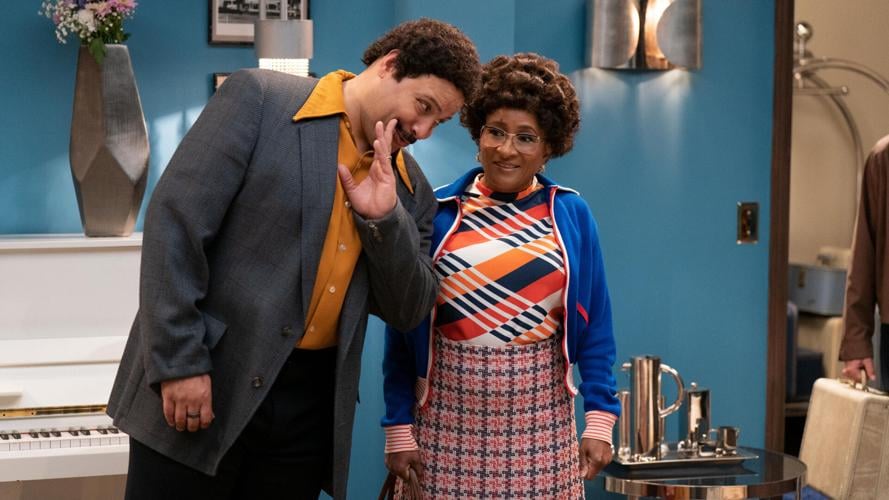
Wanda Sykes, for example, is one of the writers, producers and actors who is picking up where Brooks left off. Throughout the series, she plays several, historical and real-life people, such as Harriet Tubman. One consistent character is that of Shirley Chisholm, the first Black woman to run for President of the United States. However, her story is told as if it were a sitcom from Chisholm's own era. One could confuse Sykes' scenes here from something out of The Jeffersons (1975). Given that Sykes recently was cast in a remake where she played one of the titular characters from The Jeffersons, it's no surprise that this would be the format Sykes would choose.
I'm not sure that her sketches have the same bite as Norman Lear's iconic spin-off or even the original series that spawned it. The Jeffersons and even All in the Family (1971) were powerful pieces of comedy that attacked issues of racism and sexism with more of a punch than this show. The sketches here overall have a wacky and goofy tone that is typical of Mel Brooks' previous productions, but it doesn't jive with what Norman Lear was doing around the same time.

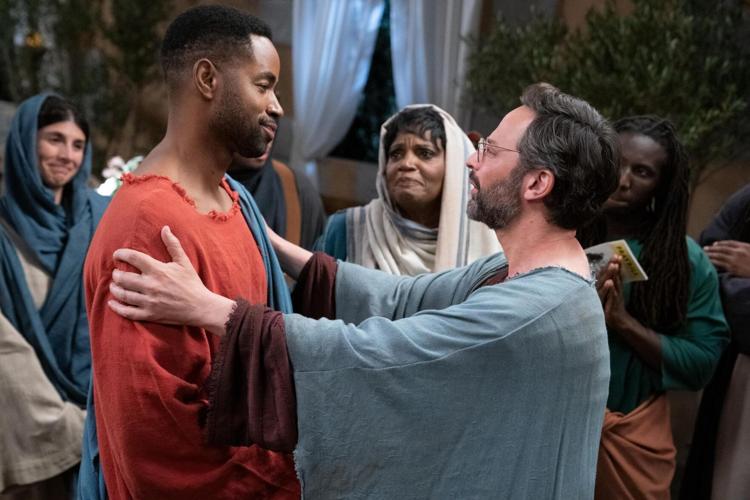
Nick Kroll is one of the other main writers, producers and actors who appears in the majority of the sketches here. A lot of his sketches or his role in the various sketches go to exposing and mocking antisemitism that has been consistent throughout history. Often, it involves Kroll playing infamous Jewish figures, such as Judas Iscariot and Japheth, the third son of Noah from the Book of Genesis. Kroll's typical shtick probably makes him the perfect Mel Brooks substitute throughout this series. Like Brooks, Kroll has Broadway experience that makes him a comparable showman when it comes to the kind of vaudeville that was the spirit of the 1981 film. Really, with the occasional song and dance, a lot of this is Kroll playing up Jewish stereotypes to their most exaggerated degree.
While a lot of it gets tired after the first episode, one example that worked was Kroll's spoofing of Larry David's Curb Your Enthusiasm (2000) in the second episode. Kroll again plays the character of Judas, the man who betrays Jesus Christ. Kroll's interpretation of the character mimics that of Larry David's in that hit HBO series. It's clever. Unfortunately, in episode six, Kroll plays Judas again but this time combined with a parody of the rock group, The Beatles. It felt a little repetitious and a tad lame. It was fun seeing these Biblical characters juxtaposed with modern-day objects. This series is one anachronism after the other. Having Princess Anastasia be a social media influencer or having Galileo be on the app, known as Cameo, are the kind of gags this series throws out.

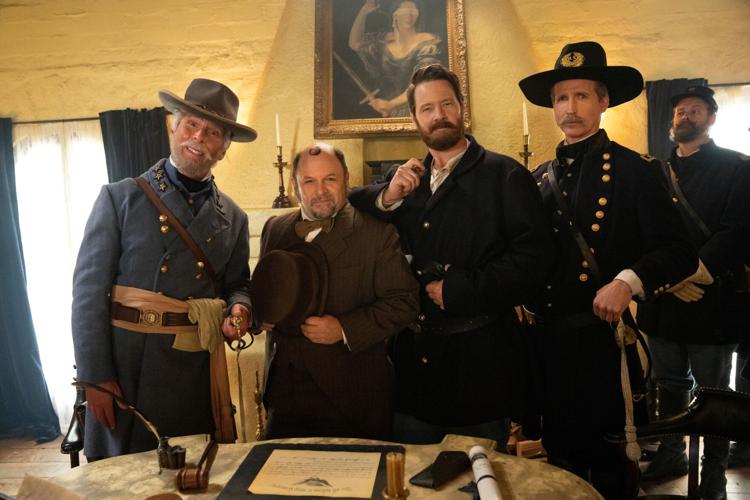
Ike Barinholtz is the other main writer, producer and actor that is leading in the creation of these sketches. The majority of the time, he plays the character of Ulysses S. Grant in a spoof of the Civil War that spent more time, depicting Ulysses as a lush and a bit of an idiot, as well as pairing him in a buddy cop parody that had him bouncing off of the son of President Abraham Lincoln, aka Robert Todd Lincoln, played by Nick Robinson (Jurassic World and Love, Simon).
Given what's been occurring in the country, particularly in the time since Brooks' initial film and in regards to race relations, exploring the Civil War in this way feels necessary. Barinholtz, if he was the creative force behind these specific sketches, might have missed the boat though. The essential conflict depicted in his sketches is reduced to a cultural dispute between the North and the South. The real issue regarding the Civil War was slavery. Yet, this series doesn't really tackle it with the exception of Sykes playing Harriet Tubman and joking that the Underground Railroad was an actual railroad with train tracks. It felt too easy a joke and it felt like a lame pun with which this series is very much riddled.

There is for example a sketch that depicted the building of the Egyptian pyramids as a pyramid scheme akin to what Bernie Madoff did. That same sketch floats the idea that the pyramids were built by aliens, or at least the sketch nods to that conspiracy theory. One possible theory behind the creation of the pyramids is that slave labor was used to construct them. Yet, this series doesn't touch that theory, again circumventing any real discussion about slavery here.
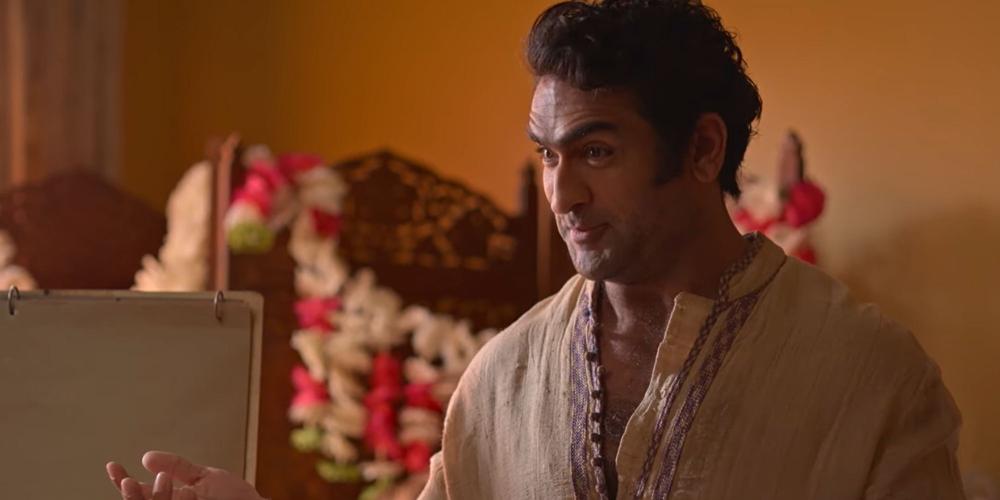
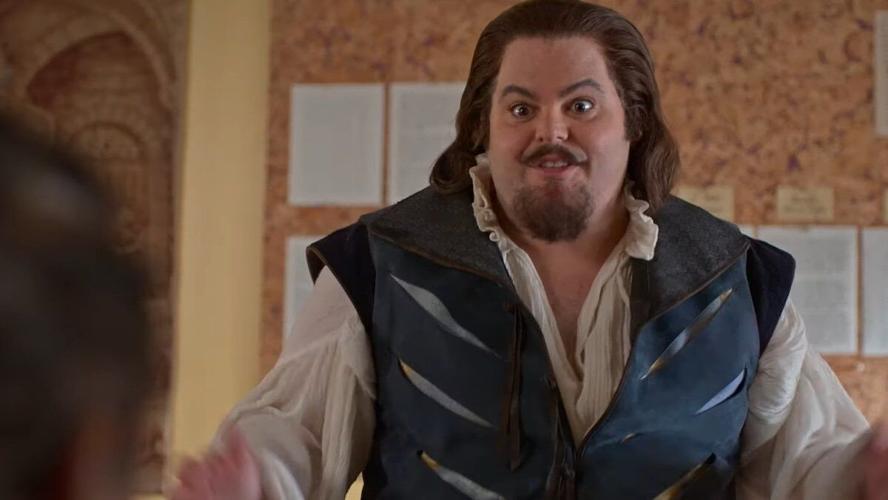
There are a lot of cameos, not from the aforementioned website, but brief guest appearances from well-known actors, including Danny DeVito, Taika Waititi, David Duchovny, Seth Rogen, Josh Gad, Kumail Nanjiani and Marla Gibbs, as well as a host of other comedians on TV that some are sure to recognize. Most of them get only one scene or one sketch. My favorite was probably Josh Gad who played a version of William Shakespeare that depicted the bard as being a man who wasn't an accomplished author but instead a man who stole ideas from others and gave no credit. My least favorite was probably Johnny Knoxville who played Rasputin in a series of sketches, but each one was a parody of Knoxville's own show Jackass (2000). Again, it felt lazy to have Knoxville do what he normally does.

It felt like a lot of this was thrown together rather quickly. Given there's been 40 years since the last film, one would think that more pointed and more clever takes on these historical incidents or historical people could have been developed. Yet, a lot of this series feels rushed, much in the way that Saturday Night Live sketches are rushed but the writers for that show only have a week to craft sketches, Sykes, Kroll and Barinholtz had arguably more time, but it's not much better in the quality here.
Rated TV-MA-LVS.
Running Time: 30 mins. / 8 eps.
Available on Hulu.