
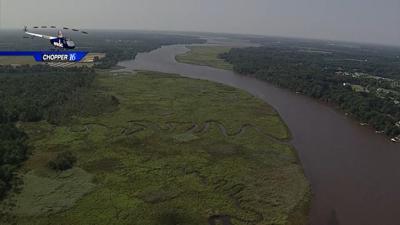

ANNAPOLIS, Md. - More than 9.2 million acres of land across the Chesapeake Bay watershed are now permanently protected from development, according to newly released data collected through 2024.
The figures, released by partners with the Chesapeake Bay Program, show protected lands now account for about 23 percent of the watershed’s total land area.
The milestone puts the region close to a long-standing conservation benchmark. While partners are expected to fall short of the original target set under the 2014 Chesapeake Bay Watershed Agreement, they’ve still achieved roughly 90 percent of the goal, conserving about 1.8 million additional acres between 2010 and 2024, a 21 percent increase, according to the Chesapeake Bay Program.
Conservation data were reported by Delaware, Washington, D.C., Maryland, New York, Pennsylvania, Virginia, and West Virginia and reflect work by state and local governments, land trusts, nonprofits and private businesses.
Protected lands include areas with ecological, agricultural, historical or cultural value that are permanently shielded from development through easements, donations or property purchases. Advocates say land conservation is widely viewed as one of the most effective tools for protecting the Bay, helping improve water quality, preserve wildlife habitat, reduce flooding risks and maintain the region’s cultural heritage.
State agencies currently hold the largest share of protected land, owning about 45 percent across the watershed. The federal government follows with roughly 23 percent.
Most protected areas are forests, accounting for 76 percent of conserved land, while wetlands make up about 6 percent, according to the Chesapeake Bay Program’s latest land-use data.
Pennsylvania has more protected land than any other watershed state, with nearly 3.7 million acres, followed by:
-Virginia: 3.1 million acres
-Maryland: 1.7 million acres
-West Virginia: 320,000 acres
-New York: 308,000 acres
-Delaware: 131,000 acres
-Washington, D.C.: 8,400 acres
“Pennsylvania is proud to lead the Chesapeake Bay watershed with the highest number of protected acres,” said Cindy Adams Dunn, secretary of the state’s Department of Conservation and Natural Resources, pointing to decades of collaboration and investment in forests, farms, and open space.
Virginia officials also highlighted recent gains, citing increased funding through the Virginia Land Conservation Fund that helped support 125 projects and conserve more than 89,000 acres statewide over the past four years.
Officials say decreases in protected acreage reported in places like Maryland, New York, West Virginia and D.C. are largely due to data refinements, not land being reopened for development. In several cases, boundary corrections led to updated totals.
A revised Chesapeake Bay Watershed Agreement, approved in December by the Chesapeake Executive Council, doubles down on conservation goals. The updated plan calls for an additional two million acres to be permanently protected, with specific targets for forests, wetlands, agricultural lands, urban green spaces and tribal homelands.
“Reaching 90 percent of the original conservation goal represents meaningful progress while underscoring the need for partners across the watershed to maintain the urgency of land conservation to achieve a healthy Chesapeake Bay,” said Susan Shingledecker, CEO of the Chesapeake Conservancy. “Strategic, data-driven land conservation remains one of the most effective tools we have amid unprecedented pressure for land conversion. By working together, we can strengthen local economies, expand outdoor recreation opportunities, protect vital wildlife habitat and restore the health of the Bay for future generations.”