
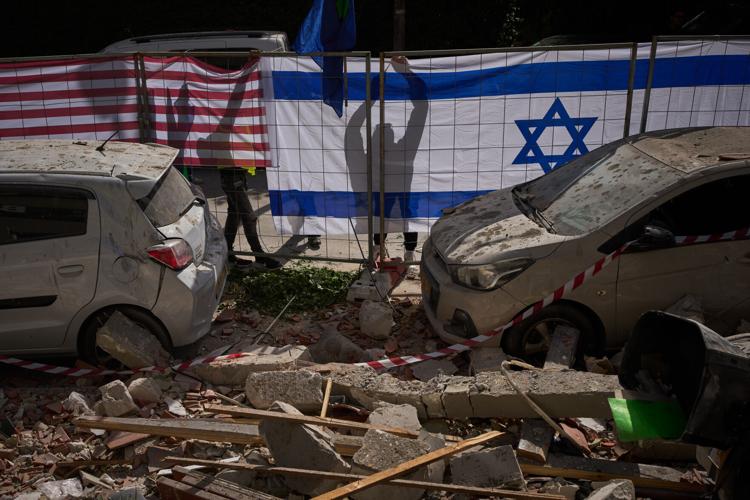
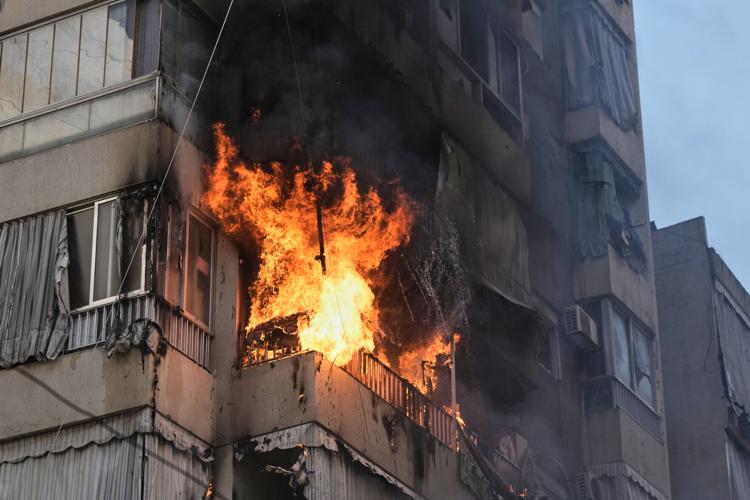
DUBAI, United Arab Emirates (AP) — Iran intensified its attacks on its Gulf Arab neighbors' energy infrastructure Thursday, setting Qatari liquified natural gas facilities ablaze as it hit back following an Israeli attack on its main natural gas field, a major escalation in the Mideast war that has sent global fuel prices soaring.
A ship burned off the coast of the United Arab Emirates and another was damaged off of Qatar, underscoring the ever-present danger facing vessels due to Iran's stranglehold on the Strait of Hormuz.
Qatar, a key source of natural gas for world markets, said firefighters had put out a blaze at a major LNG facility after it had been hit by Iranian missile attacks. Production had already been halted there after earlier attacks but it said the latest wave of missiles caused “sizeable fires and extensive further damage.”
Damage to the facility could delay Qatar in getting its supplies to the market even after the Iran war ends.
Authorities in Abu Dhabi said the country had been forced to shut down operations at its Habshan gas facility and Bab field, calling Iranian overnight attacks on the sites a “dangerous escalation” of the war.
Gulf states condemn Iranian attacks on energy infrastructure
Missile alert sirens sounded in multiple other areas around the Gulf, and Israel warned of incoming Iranian fire.
Qatar, Saudi Arabia and the United Arab Emirates all denounced the Iranian attacks, with Saudi Arabia’s top diplomat saying assaults on the kingdom meant “what little trust there was before has completely been shattered.”
In morning trading, Brent crude oil, the international standard, was above $110 a barrel, up more than 50% since Israel and the United States started the war Feb. 28 with strikes on Iran.
Iran strikes back after Israel hits critical gas field
The wave of Iranian attacks came after Israel hit South Pars, the world's largest gas field located offshore in the Persian Gulf and owned jointly by Iran and Qatar.
With some 80% of all power generated in Iran coming from natural gas, according to the Paris-based International Energy Agency, the attack directly threatens the country's electricity supplies. Natural gas is also used to supply household heating and cooking across the Islamic Republic.
Hitting the gas field is a “clear expansion of the conflict,” the New York-based Soufan Center said in a research note.
“Israel’s target selection in this war has heavily focused on the institutions, leaders and infrastructure ..." the think tank said. "It now seeks to inflict additional pressure on the regime by making the living conditions for civilians intolerable.”
Iran condemned the strike on South Pars, with Iranian President Masoud Pezeshkian warning of “uncontrollable consequences" that "could engulf the entire world.”
In Washington, President Donald Trump said that Israel would not attack South Pars again, but warned on social media that if Iran continued striking Qatar’s energy infrastructure, the U.S. would retaliate and “massively blow up the entirety” of the field.
“I do not want to authorize this level of violence and destruction because of the long term implications that it will have on the future of Iran,” Trump said on social media.
Energy infrastructure targeted around Gulf region
Qatar Energy said on X that it was a missile hit on its massive Ras Laffan liquefied natural gas facility that caused the blaze early Thursday.
A ship was also hit off the country's coast, according to the British military’s United Kingdom Maritime Trade Operations center. It was not clear whether it was deliberately targeted of was struck by falling debris as Qatar fired off missile interceptors at incoming Iranian barrages.
Saudi Arabia also reported downing Iranian drones targeting its natural gas facilities overnight, and authorities in Abu Dhabi said it had been forced to shut down its Habshan gas facility and Bab field after interceptions over the sites.
Another ship was set ablaze early Thursday off the coast of the United Arab Emirates. It was also unclear whether it was targeted or hit with debris, the UKMTO said.
It said the vessel was just off the coast of Khor Fakkan in the UAE, near the mouth of the Strait of Hormuz, through which a fifth of the world's oil is normally shipped.
More than 20 vessels have been attacked during the Iran war so far as Tehran has kept a tight grip on shipping traffic through the waterway, which leads from the Persian Gulf to the open ocean.
Iran insists the waterway is open, just not to the U.S. or its allies, and while some vessels have sailed through, it has only been a trickle.
Death toll climbs in third week of war
More than 1,300 people in Iran have been killed during the war. Israeli strikes have displaced more than 1 million Lebanese — roughly 20% of the population — according to the Lebanese government, which says 968 people have been killed.
In Israel, 14 people have been killed by Iranian missile fire. At least 13 U.S. military members have been killed.
Metz reported from Ramallah, West Bank, and Rising from Bangkok. Associated Press writers Julie Watson in San Diego and Sally Abou AlJoud in Beirut contributed to this report.