
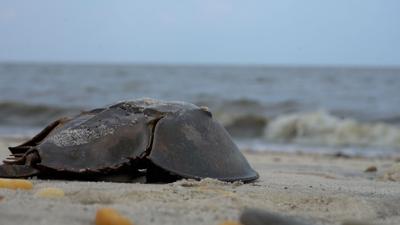

DELAWARE BAY, Del. - The Center for Biological Diversity has filed a lawsuit against the federal government seeking Endangered Species Act protections for American horseshoe crabs after the National Marine Fisheries Service declined to list the species earlier this year.
The lawsuit, filed Thursday in U.S. District Court for the District of Columbia, challenges NOAA Fisheries' February finding that federal protections for horseshoe crabs were not warranted. Environmentalists argue the agency improperly dismissed evidence showing population declines and failed to follow required procedures under the Endangered Species Act.
The legal challenge follows a petition filed in February 2024 by the Center for Biological Diversity and more than two dozen partner organizations requesting federal protection for the ancient species. NOAA Fisheries ultimately determined the petition did not present substantial scientific information indicating the species may warrant listing.
According to the lawsuit, horseshoe crab populations have experienced significant declines in recent decades due to overharvesting and habitat loss. The complaint argues the species faces growing threats from biomedical bleeding, bait harvesting, shoreline development, pollution and climate change.
Horseshoe crabs are harvested along the Atlantic Coast both for use as fishing bait and for their blue blood, which contains compounds used to test medical products for bacterial contamination. The Center contends synthetic alternatives are increasingly available and could reduce pressure on wild populations.
“Horseshoe Crab spawning has also decreased sharply,” the lawsuit reads. “For example, between 1990 and 2002, the number of Horseshoe Crabs spawning in Delaware Bay dropped from more than 1.2 million to 333,500 crabs—a decrease of 72 percent. The number of spawning Horseshoe Crabs has remained at that low number, with only 335,211 spawning in Delaware Bay in 2020.”
The Delaware Bay region is one of the world's most important horseshoe crab spawning areas, according to researchers. Horseshoe crabs have existed for hundreds of millions of years and are often described as "living fossils." Conservation groups argue the federal protections are necessary to prevent further declines in the species’ populations.
The lawsuit also argues that declining horseshoe crab populations affect other wildlife. Shorebirds such as the threatened red knot rely on horseshoe crab eggs as a critical food source during migration, while several species of sea turtles also feed on the animals.
Plaintiffs are now asking the court to vacate NOAA Fisheries' finding and require the agency to conduct a new review consistent with the Endangered Species Act.