
MARYLAND - New research from the Maryland Department of Natural Resources suggests one of the leading theories about the Chesapeake Bay’s struggling striped bass population may not be the answer after all.
For years, scientists and anglers alike have speculated on why the iconic rockfish isn’t bouncing back in strong numbers, even though hundreds of millions of adult striped bass still swim Maryland’s tidal waters. One idea was that newly hatched striped bass larvae were facing a scarcity of tiny animals in the water called zooplankton, which constitute the young sea bass’ diet. That lack of food at such a delicate stage would mean poor survival and weak year classes, the theory asserted.
But recent findings suggest the young fish aren’t suffering from a lack of zooplankton and have plenty to eat.
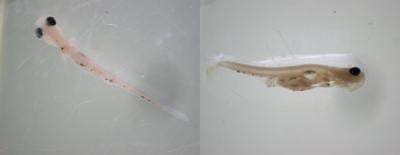
A new study, published late last year in the journal Marine and Coastal Fisheries, looked at weeks-old striped bass larvae collected from the Choptank River in 2023 and 2024 and compared what they were eating to historical data from the 1980s. That decade included both strong and weak year classes of fish, giving researchers a broad benchmark.
Biologists analyzed the stomach contents of tiny fish, many no bigger than a grain of rice, under microscopes back in the lab. They found that juvenile striped bass had plenty of tiny prey available to eat in those recent years. Researchers say that matched what was seen during healthy spawning in the past.
In other words, scientists say the larvae are finding food, and lots of it.
“When we got done, basically a strong year class like the one in the Choptank River in 1989 didn’t really look different from 2023 or 2024 in terms of feeding,” said DNR fisheries biologist Jim Uphoff, lead author on the study.
That does not mean striped bass numbers are healthy. Chesapeake Bay surveys still show years of poor juvenile recruitment, which means fewer young fish are surviving to grow up and sustain the population. But this research could rule out one major suspect. DNR says it does not appear that a mismatch between hatching and plankton availability is the main driver here.
The team says the answer likely lies before feeding even begins. Researchers point to factors like the timing of spawning, water temperatures, or river flow patterns, all of which can influence when eggs hatch and how well larvae survive their first critical weeks.
Striped bass spawn in late spring when water temperatures climb, and changing conditions can shift that timing. Scientists are continuing to study whether those shifts are narrowing the window for a successful spawn in Chesapeake tributaries.
“The amount of eggs is okay and the feeding larvae are okay, so now you’re looking at something in between,” Uphoff said. “The big drivers are water flow and temperature. More and more, it’s looking like a temperature issue here, related to climate change. By process of elimination, that’s the next place to look.”
DNR says protective fishing regulations and continued monitoring remain key, and this new research gives biologists a clearer roadmap for understanding what is, and what is not, driving poor year-class success of Maryland’s state fish.