
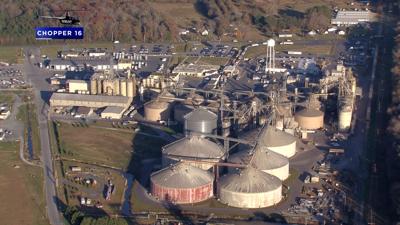

SALISBURY, Md. - The plaintiffs in a federal lawsuit alleging PFAS contamination near a Perdue AgriBusiness facility in Salisbury are asking a judge to lift a pause in the case and sanction the company following the cancellation of a planned mediation.
A motion filed on July 28 and acquired by WBOC is the latest development in a class-action lawsuit against Perdue Farms. The suit alleges pre- and polyfluoroalkyl substances, commonly known as PFAS, originated from Perdue’s agribusiness facility and contaminated surrounding groundwater, private wells, and residential properties.
That lawsuit was put on a brief hold earlier this year as both parties explored mediation to potentially resolve the dispute and as Perdue pursued third party complaints against separate firefighting tech companies.
Now, those potential mediation talks have apparently collapsed, with plaintiffs accusing Perdue of engaging in “bad-faith abuse” of the mediation process.
Perdue disputes the plaintiffs’ accusations, maintaining that it participated in mediation discussions in good faith and that disagreements over the potential sources of the contamination prevented meaningful progress.
Plaintiffs allege mediation process was abused
According to Tuesday’s filing, the parties agreed earlier this year to explore mediation with retired U.S. Magistrate Judge William G. Connelly. The court approved two stays of litigation deadlines while the parties evaluated mediation and prepared for a three-day session scheduled for July 27 through July 29.
The plaintiffs say the stays suspended case deadlines for a total of 137 days.
Four days after the parties requested the second stay, Perdue filed motions seeking permission to add Johnson Controls and 3M as third-party defendants. Those proposed claims involve aqueous film-forming foam, or AFFF, allegedly used at the Salisbury facility.
The plaintiffs argue Perdue had identified the firefighting foam as a potential PFAS source by November 2024 but waited approximately 18 months to seek the addition of the two companies.
According to the plaintiffs, Perdue repeatedly indicated that the mediation remained viable despite the proposed third-party claims.
Perdue canceled the mediation July 11, however, according to the motion. That was approximately two weeks before the mediation was scheduled to begin and two days before Perdue’s mediation statement was due, plaintiffs say.
The plaintiffs allege Perdue never submitted its own mediation statement.
“Perdue never had any serious intention of resolving this case in good faith,” said Philip C. Federico, a partner at Brockstedt Mandalas Federico who represents the plaintiffs. “Instead, Perdue used the stay to buy time, shift blame to other companies, and avoid confronting its own responsibility for the contamination affecting Salisbury families. Salisbury families deserve answers and action, not more delay and finger-pointing.”
Plaintiffs request $100,000
The plaintiffs say they incurred more than $270,000 in expert and consultant expenses while preparing for the cancelled mediation. They also report spending more than 500 hours of attorney time and more than 900 hours of paralegal time on the process.
The filing estimates the legal work was worth more than $400,000. However, the plaintiffs acknowledge that some of the work could still be useful as the litigation continues. They are asking the court to award $100,000 in sanctions against Perdue: $50,000 for attorney and paralegal work and another $50,000 for expert and consultant expenses.
The plaintiffs are also asking the judge to terminate the case’s pause, order Perdue to complete outstanding document production within 14 days, and establish a revised schedule for the remainder of the case.
They contend the mediation process and resulting stay may have delayed the litigation by a year or more.
Perdue disputes bad-faith allegations
In a statement to WBOC, Perdue’s General Counsel Herb Frerichs denied that it abused the mediation process and said it participated at the plaintiffs’ request.
“We participated in mediation discussions at plaintiff’s request and in good faith and we were prepared to discuss all aspects of the case, including the significant questions surrounding liability and the role of the companies that manufactured and sold the PFAS-containing firefighting foam, as well as other possible sources of contamination unrelated to Perdue,” Frerichs said.
Perdue alleges the plaintiffs’ attorneys attempted to prevent discussion during mediation about the source and cause of the PFAS.
“Plaintiffs’ conduct therefore has made it impossible to make meaningful progress towards a fair resolution,” the company’s General Counsel said.
Perdue maintains it does not use PFAS in its manufacturing operations. The company says the sole identified source of PFAS contamination on its property was AFFF firefighting foam manufactured and sold by companies independent of Perdue.
The plaintiffs’ attorneys knew about the possible responsibility of those companies before mediation discussions began, according to Frerichs.
The company also highlighted steps it says it has taken in response to the contamination concerns.
“Throughout this process, our focus has remained on the community we have called home for over a century,” Frerichs said. “Over the past two years we’ve tested wells, provided drinking water, installed treatment systems, and worked closely with the Maryland Department of the Environment to address this issue responsibly.”
Should the federal judge grant plaintiffs’ latest motion, the case would be allowed to move forward after about five months on hold.
Full statements
Plaintiff’s attorneys' full statements as well as Frerich’s on behalf of Perdue can be found below:
Perdue never had any serious intention of resolving this case in good faith. Instead, Perdue used the stay to buy time, shift blame to other companies, and avoid confronting its own responsibility for the contamination affecting Salisbury families. Salisbury families deserve answers and action, not more delay and finger-pointing.
-Philip C. Federico, partner at Brockstedt Mandalas Federico
Perdue has dragged their feet while Salisbury families continue to live with the consequences of its contamination This is not a problem that can be delayed or pushed onto someone else. Families need this emergency addressed now, and we will continue fighting to hold Perdue accountable, get this case moving, and secure a real solution for the people who have been left to deal with this contamination.
-Chase T. Brockstedt, partner at Brockstedt Mandalas Federico
Throughout this process, our focus has remained on the community we have called home for over a century. Over the past two years we’ve tested wells, provided drinking water, installed treatment systems, and worked closely with the Maryland Department of the Environment to address this issue responsibly.
We participated in mediation discussions at plaintiff’s request and in good faith and we were prepared to discuss all aspects of the case, including the significant questions surrounding liability and the role of the companies that manufactured and sold the PFAS-containing firefighting foam, as well as other possible sources of contamination unrelated to Perdue. Unfortunately, plaintiff’s counsel unilaterally attempted to avoid any discussion in the mediation about the actual source and cause of the PFAS. Plaintiffs’ conduct therefore has made it impossible to make meaningful progress towards a fair resolution.
Perdue does not use PFAS in its manufacturing operations. The sole source of the PFAS contamination on Perdue’s property has been identified as AFFF fire fighting foam, which was manufactured and sold by companies wholly independent of Perdue. Plaintiff’s counsel were well aware of the potential responsibility of those companies before mediation discussions began.
-Herb Frerich, General Counsel for Perdue