
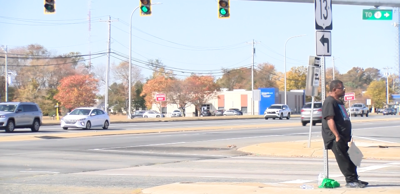

DOVER, Del. - Supporters of a proposed pedestrian safety ordinance gathered in Dover Monday evening, arguing the measure is needed to improve safety at some of the city's busiest intersections.
The "Reclaim Our Streets" rally focused on Ordinance 2025-21, a proposal that would prohibit people from remaining in certain roadways and medians near intersections unless they are actively crossing the street.
Supporters say the ordinance is designed to reduce driver distractions, traffic congestion and accidents involving pedestrians. The proposal would apply within 200 feet of intersections on major roads and 100 feet on local streets.
Dover City Councilman David Anderson, who introduced the ordinance, said the measure is intended to address safety concerns rather than ban panhandling.
"This is a comprehensive pedestrian safety ordinance designed to save lives," Anderson said.
According to Anderson, several pedestrian fatalities and dozens of injuries in recent years helped motivate the proposal.
"There have been three people over the past couple of years who have passed away and about three dozen injured," he said.
The ordinance would allow police officers to intervene when people remain in roadways or certain medians rather than actively crossing the street. It would not apply to sidewalks, private property, or medians wider than seven feet.
For some residents, the issue is rooted in safety.
"Standing in the middle of the street on the highway asking for assistance, that is dangerous," said Dover resident Rashawn Chapman.
However, Chapman said enforcement alone will not solve the challenges facing people who panhandle.
"Once again, there's not really no help. So what do they do? Where do they turn to?" Chapman said.
The proposal has sparked debate among residents and advocacy groups, with some critics arguing it could disproportionately impact people experiencing homelessness or those who rely on panhandling.
Others who work directly with the homeless population say the current situation is also failing vulnerable residents.
Sue Harris, vice president of Code Purple Kent County, said many people seen panhandling at intersections are struggling with addiction, mental illness or housing instability.
"I do not believe that enabling them to continue to live horrible lives is the answer," Harris said.
While Harris supports efforts to improve safety, she said the focus should remain on connecting people with services and treatment.
"How can we allow incompetent people to die in front of us?" Harris said. "There has to be a way to pull them in, get them to where their mind can come back to a place, and then maybe they'll make the choice we want them to make. But it isn't going to happen. Leaving them out there."
The ordinance remains under reconsideration and is expected to return to Dover City Council for further discussion at a future meeting.
As debate over the proposal continues, supporters and critics alike agree that addressing safety concerns at intersections must be balanced with efforts to help people facing homelessness, addiction and other challenges.