
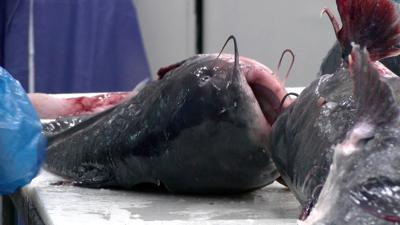

WASHINGTON, D.C. - A bipartisan bill aimed at tackling the growing problem of invasive blue catfish in the Chesapeake Bay has passed the U.S. House of Representatives.
The Mitigation Action & Watermen Support (MAWS) Act, sponsored by Rep. Sarah Elfreth of Maryland and Rep. Rob Wittman of Virginia, would establish a new market for Chesapeake blue catfish as pet and animal food.
Supporters say expanding that market could encourage watermen to catch more of the invasive species, which scientists say are harming the Bay’s ecosystem.
Under the proposal, the bill would create a two-year pilot program within the National Oceanic and Atmospheric Administration’s Chesapeake Bay Office. The program would provide grants to pet and animal food manufacturers to purchase blue catfish directly from watermen or seafood processors. The program would also collect data on how increased harvesting of the fish affects other species in the Bay, including fish and crabs.
Blue catfish are not native to the Chesapeake Bay. The species originally comes from the Mississippi River drainage and was introduced into Bay tributaries decades ago. Since then, the fish have spread widely through the region’s waterways. In some rivers, blue catfish now make up as much as 75 percent of the total fish weight, according to advocates.
Environmental groups say the fish pose a major threat to native species because of their aggressive feeding habits, preying on native species including menhaden, striped bass, shad, and blue crabs.
Keisha Sedlacek, senior policy director for the Chesapeake Bay Foundation, said the legislation could provide a practical way to address the issue.
“Blue catfish are a major threat to the Bay and the fish, crabs, and other species that call it home,” Sedlacek said in a statement. “This bill provides a resourceful solution to address this threat.”
She added that creating a pet food market for the fish could complement the growing demand for Chesapeake-caught blue catfish already being sold for people to eat.
“The more blue catfish watermen catch, the better for the Bay,” Sedlacek said.
The MAWS act now heads to the Senate for consideration.