
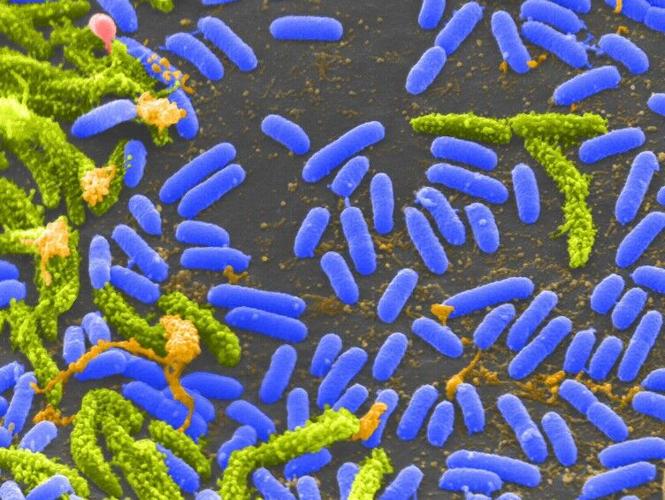
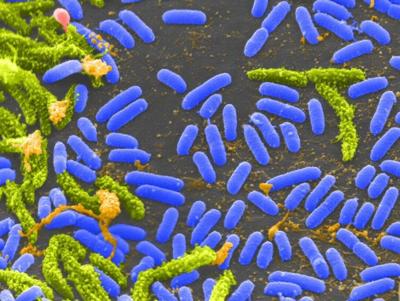
CHESAPEAKE BAY - As Chesapeake Bay waters warm during the peak of summer, health officials are urging people to take simple precautions against Vibrio, a naturally occurring bacteria that can cause serious illness in some cases.
The reminder comes as researchers have documented an increase in reported vibriosis cases in Maryland over the past two decades, while scientists continue to monitor environmental conditions that make the bacteria more likely to be present in the Bay.
Maryland study finds increase in infections
A recent study examining Maryland cases between 2006 and 2019 found that reported vibriosis infections have increased over time. Researchers documented a 39% increase in the state's average annual incidence of the disease between the first and second halves of the study period. Hospitalizations also rose significantly, with more patients requiring longer hospital stays.
The study also found increases in infections caused by both Vibrio vulnificus and Vibrio parahaemolyticus. Researchers say warming environmental conditions likely play a role because the bacteria thrive in warm, moderately salty water.
Vibrio bacteria naturally live in brackish and salt water, including the Chesapeake Bay and its tributaries. According to the Maryland Department of the Environment, the bacteria are not caused by pollution and are found in coastal waters around the world. They become more common during the summer and early fall as water temperatures rise.
Gussie McGuire, a Maryland staff scientist with the Chesapeake Bay Foundation, said Vibrio is not new to the Chesapeake.
"It's always been here, and it's been rare," McGuire said. "There are more cases now because the waters are getting warmer, but it still remains rare."
McGuire said the bacteria's preference for warmer water means changing temperatures can create more favorable conditions.
"Vibrio like warm water, which means that as our waterways get warmer, that means that they're more inclined to be here," McGuire said.
McGuire said climate change is one factor contributing to rising water temperatures, but changes within the watershed can also play a role. Removing trees near streams, for example, can eliminate shade and expose waterways to more direct sunlight and higher temperatures.
How people become infected
People can contract Vibrio in two primary ways: by eating raw or undercooked seafood such as oysters or by exposing an open cut or wound to contaminated salt or brackish water. In Maryland, health officials say infections have also occurred when people are cut while handling live crabs, crab pots, or fishing equipment.
Dr. Areej Khan of TidalHealth’s Infectious Disease in Delmar says foodborne infections typically result in diarrhea, abdominal pain, nausea, and vomiting. Healthy people often recover on their own, but infections can become much more severe in people with diabetes, liver disease, weakened immune systems, a history of alcohol abuse, or those taking immunosuppressive medications.
In open-wound exposures, Khan said even relatively small cuts, abrasions or recently acquired piercings or tattoos can provide an entry point for the bacteria, particularly among people with underlying health conditions.
In rare cases involving Vibrio vulnificus, infections can lead to necrotizing fasciitis, a rapidly progressing soft tissue infection sometimes described as "flesh-eating." Khan said the bacteria do not literally eat flesh but instead damage skin and underlying tissue, which can result in severe wounds if left untreated.
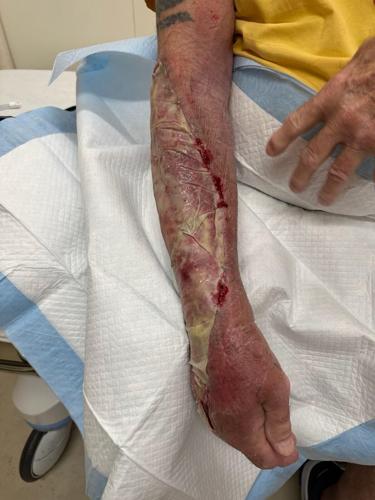
Vernon Lear, of Cambridge, knows how dangerous these infections can become. After suffering minor scrapes from the metal of his crab pot, Lear soon found himself with a serious Vibrio infection.
“The guy at the emergency room who was in charge recognized it as vibrio bacteria and they ordered a helicopter to fly me to shock trauma,” Lear tells WBOC.
“I was very lucky,” he continued. “I didn’t lose my arm, but it came close.”

Courtesy of Vernon Lear
CDC data show wound infections are often the most severe
According to the CDC's 2024 Vibrio surveillance data, 168 cases were reported in Maryland.
Most cases were classified as foodborne illnesses, but patients who contracted Vibrio through wound exposure were hospitalized at a much higher rate and were also more likely to die from their infections.
The median age of patients was 56, and nearly one-third of all reported cases required hospitalization, highlighting that while infections remain relatively uncommon, they can be severe.
What the Chesapeake Bay forecast shows
Scientists with the National Oceanic and Atmospheric Administration have developed forecasting models that estimate where environmental conditions are favorable for Vibrio vulnificus in the Chesapeake Bay.
The models use water temperature, salinity, and chlorophyll to estimate the probability that the bacteria are present. Current projections for Aug. 1 show elevated probabilities across portions of the Bay during the height of the summer season, including at the mouths of the Choptank and Nanticoke rivers.
However, the Maryland Department of the Environment stresses that these maps do not predict where people will become sick. They estimate where environmental conditions favor the bacteria and include both harmful and harmless strains. Officials also note there is no established threshold that links the model's predictions to an individual's risk of infection, meaning the maps should not be used to determine whether it is safe to swim, fish or crab.
McGuire pointed to NOAA's Vibrio predictive models as a resource for people who are particularly concerned about conditions.
What warming waters could mean for the Bay
Scientists say the increase in Vibrio is also one indication of broader changes occurring as Chesapeake Bay waters warm.
"It's definitely a warning sign about the warming conditions," McGuire said. "People said, 'It's gonna get warmer. There will be problems.' We're here. We're in it. It's warmer. There are more problems."
McGuire cautioned that Vibrio is not among the most widespread consequences of rising temperatures, but said it is "very much part of that suite of consequences" associated with warming.
Warmer conditions could also potentially extend the period when Vibrio finds favorable conditions in the Bay. McGuire said more data would be needed to determine whether cases are actually being reported over a longer period, but said if Bay waters reach favorable temperatures earlier in the year, "it does make sense that we would see a longer timeframe in which the risk would be heightened."
How to reduce your risk
Health officials recommend avoiding contact between open wounds and salt or brackish water whenever possible. If exposure cannot be avoided, wounds should be covered with a waterproof bandage and washed thoroughly with soap and clean water afterward.
They also encourage people handling crabs, shellfish, or fishing gear to wear protective gloves and advise against eating raw or undercooked oysters, particularly for those at higher risk of severe illness.
Khan emphasized that people shouldn't avoid enjoying the Chesapeake because of Vibrio, but instead take common-sense precautions.
"The main thing is not to give up your summer sports," Khan said. She recommends covering open wounds with waterproof bandages, avoiding swimming with fresh piercings or tattoos until they've healed, and wearing water shoes or sandals to reduce the risk of cuts while walking near the shoreline.
Despite the increased attention surrounding Vibrio, McGuire said people should not interpret the findings as a reason to stay away from the Chesapeake.
"Don't be afraid of your local waterways," McGuire said. "Be smart, be responsible."
She also said people should not be overly concerned about commercially harvested seafood, pointing to regulation of the seafood industry and forecasting tools that can help aquaculture operations make informed decisions about harvesting when risks are lowest.
McGuire said addressing warming water itself is another part of the equation. Maintaining and increasing tree cover around waterways can provide shade and help mitigate rising stream temperatures.
Khan echoed that message.
"I don't want to make people afraid of going to the waters and enjoying summer," she said. "But at the same time, just be cautious of it and just take precautions."
As more people head to the Chesapeake Bay to swim, boat, fish, and crab during the hottest months of the year, officials say a few simple precautions can go a long way toward preventing infection.