

















DELMARVA - Join WBOC as we take a look back at the most-read news stories of the year on WBOC.com and our News App while we count down to 2026. We’ll revisit 2025’s headlines in three-month intervals, beginning with January, February, and March to see what stories caught our viewers’ and readers’ attention the most.
January 2025
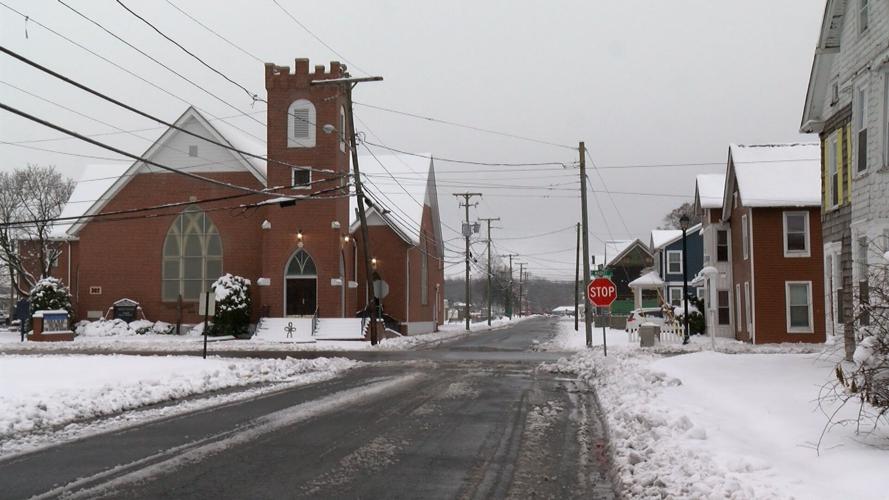
2025 began with a meteorological bang, seeing a significant snow storm hit Delmarva just days after the new year kicked off. The top article for January was WBOC Chief Meteorologist Mike Lichniak calling for an increased snowfall ahead of the storm, and numerous other articles about the snow dominated the headlines as winter storm watches and warnings were issued for Jan. 6, 2025.
Ultimately, much of Delmarva saw a 4-8” blanket of snow to start off the year. Then-Delaware Governor John Carney activated the Delaware National Guard for assistance in the wake of the major winter weather event.

(Photo: Leah Luzardo Magnone)
The weather would continue to be the center of attention in January, with plunging temperatures straining wallets as Delmarva Power customers reported massive increases in electric bills across the peninsula. Officials cited the cold, rate increases, and state fees for the upticks in cost. Delmarva Power offered tips on mitigating the higher power bills through their website and linked to energy assistance programs in response.
The City of Dover garnered significant attention in January with a State of Emergency declared due to a potential cyber security breach. According to Mayor Robin Christiansen, the emergency was declared after possible protected information had appeared online. The state of emergency would last well into February, and the city later hired a private firm to investigate a potentially criminal confidential records leak. The specific contents of that leak have not yet been shared.
Also in Dover, one of January’s top stories was that of a councilman’s arrest. William Hare, representing the 2nd District at the time, was charged with patronizing a prostitute on Jan. 28.

William Hare, 74, of Dover
Immigration and Customs Enforcement quickly ramped up their activity nationwide in 2025 under President Donald Trump’s fledgling second term. Just a week after the inauguration, the Easton Police Department confirmed ICE had made an arrest in Talbot County. Similar reports of federal immigration arrests across Delmarva would continue to make headlines throughout the year. In fact, a second report would top headlines just days later.
February 2025
On Feb. 5, the Georgetown Police responded to growing rumors of ICE activity in Sussex County and confirmed immigration officers had made a fugitive arrest that week. Georgetown Police said they were not involved with the investigation and did not receive any request for assistance, but were informing neighbors for the sake of transparency and to assuage fears. Georgetown’s Latino community makes up more than 50% of the town’s population, according to the U.S. Census Bureau, and some cited the confirmed ICE activity as a reason for neighbors being more fearful than ever.
A major development in the ongoing case surrounding the tragic 2022 hit-and-run death of 14-year-old Gavin Knupp broke in February. Tyler Mailloux, initially charged with 17 counts in connection to Knupp’s death, took a plea deal in Worcester County Circuit Court on Feb. 25. The plea followed numerous legal twists and turns in the case as Mailloux’s lawyers argued with prosecutors as to which court should hear the case, at one point escalating all the way to Maryland’s Supreme Court. Mailloux pleaded guilty to one felony count of failure to remain at the scene of an accident resulting in death, having known or should reasonably have known that the accident might result in the death of another person and death actually occurred to another. He would later be sentenced in March, again making top headlines.

Several other crime stories made their way into February’s most-read list. In Dover, a woman was charged with assault in an alleged road rage incident in which police said she had thrown a 73-year-old victim to the ground. In Lewes, a man was arrested following an investigation into a potential drug laboratory used for the production of Methamphetamine. Police say they discovered numerous chemical compounds, ingredients, paraphernalia, guns, and ammo following a search of the man’s home.
Another announcement from Dover caught Delmarva’s attention in February, this time with city officials saying the annual St. Patrick’s Day Parade in March would be cancelled due to a lack of volunteers. At the time, the mayor’s office said they were still looking for volunteers for next year’s parade. It remains to be seen if the city was successful in finding the help to ensure the parade returns in March of 2026.

Winter’s bite continued to be a top-talker in February, with yet another round of winter storm watches and warnings being issued early in the month. Hard-hit communities such as Easton, Denton, Harrington, and Milford were projected to see 6-10” of snow. Much of Delmarva saw significant snowfall during the event, though warmer temperatures later in the week made it a fleeting winter wonderland.

By mid-morning, side streets in Georgetown had been cleared off.
With the continuation of an active winter, so too did the conversation surrounding heating bills remain at the forefront. January’s article on the issue stayed in the top 10 for February as well, and the public outcry became significant enough to draw the attention of Delmarva lawmakers. State representatives in Dover called on the Delaware Public Advocate to look into the rate hikes and demanded an explanation for the soaring bills.
March 2025
Just shy of a month after taking his plea deal, Tyler Mailloux was officially sentenced on March 19 in connection to the death of Gavin Knupp. Mailloux faced a maximum sentence of 10 years, with prosecutors seeking a suspended sentence of 3 years and 227 days. After a nearly three hour hearing, including arguments from the Worcester County State’s Attorney and Mailloux’s legal representation, Worcester County Circuit Court Judge Brett W. Wilson sentenced the 24-year-old to ten years with all but 18 months suspended. Knupp’s family expressed their disappointment and frustration with the sentence to WBOC, noting they would be filing a separate civil case against Mailloux. That suit would later be filed in June.
Following his 18-month active sentence, Mailloux will serve three years probation. Should he violate that probation, he would be subject to the full 10-year sentence.
In Kent County, a woman attempting to guide a duck to safety on the side of the road was lucky to survive herself. On March 8, at about 1 a.m., Destiny Alioa got out of her car near Killens Pond to steer the bird away from traffic. Moments later, a car struck Alioa, knocking her unconscious. Delaware State Police say the car stopped momentarily before driving off. Luckily, Alioa survived, suffering a concussion and numerous scrapes and bruises. Alioa was filming the duck when she was hit, and the shocking recording would later go viral after her brother shared it on social media in an attempt to identify the driver.
March saw another St. Patrick’s Day Parade taking center-stage in 2025, this time in Ocean City. A group of homeowners frustrated with Ocean City’s restrictions on short-term rentals planned to hold a protest the same day as the parade, hoping the highly-visible venue would help draw more attention to their cause. Though the restrictions would later be overturned through a referendum, the debate over short-term rentals in the resort town has remained a contentious and ongoing one throughout 2025, with further developments expected in the new year.
Legislation in both Maryland and Delaware made top headlines in March. Maryland State Senator Johnny Mautz threw his support behind allowing electro-fishing in order to combat the growing threat posed by invasive blue catfish in the Chesapeake Bay. The technique uses an electric current to stun fish, making them easier to catch, and is frequently used by biologists and researchers. Mautz and other supporters hoped expanding the use of the method would contribute towards Maryland’s goal of removing 9 million more pounds of blue catfish from Chesapeake waters annually. The bill that would have established the electrofishing program ultimately died in committee.

Electrofishing
In Delaware, WBOC readers were especially interested in a possible change to senior property tax credits proposed in March. House Bill 72 would have amended Title 14 of the Delaware Code to reduce the mandatory period of residency in Delaware from ten years to three to allow property tax credits for seniors. The bill did not progress out of committee.
Senate Bill 21, however, did pass through Legislative Hall in March. The legislation aimed at changing how business deals between company leaders and major shareholders were handled in the First State, largely seen as the corporate capital of the country. Supporters of the bill argued it would help attract and keep incorporated businesses in-state by simplifying rules pertaining to transactions involving corporate officers. Detractors countered that the bill would give too much power to corporate boards and undermine legal protections for shareholders. SB 21 was passed unanimously in the State Senate on March 13. The new law, as a substitution, would later be passed by the House on March 25 and signed by Governor Matt Meyer the same day.
The most popular article in March centered on the federal government’s analysis of 68 bridges across 19 states that, according to federal inspectors, required urgent repair. Among those 68 was the Chesapeake Bay Bridge. With the collapse of the Key Bridge in Baltimore still fresh on Marylanders’ minds, the possibility of one of Delmarva’s main arteries being at risk drew widespread attention. The National Transportation Safety Board pointed to an alleged lack of vulnerability assessments by the Maryland Transportation Authority on the Francis Scott Key Bridge as a factor in its collapse and pressured the MDTA to conduct the same for the Bay Bridge.

“Over the past 50 years, hundreds of thousands of vessels transited under the Key Bridge without incident,” MDTA officials said in their response. “The Key Bridge, like other bridges in America, was approved and permitted by the federal government and in compliance with those permits. The safety of Maryland highways and bridges is always a top priority for MDTA; over the last ten years, the State of Maryland has spent more than $175 million on safety and security for the Bay Bridge alone.”
Continue to 2025's Second Quarter Review here.